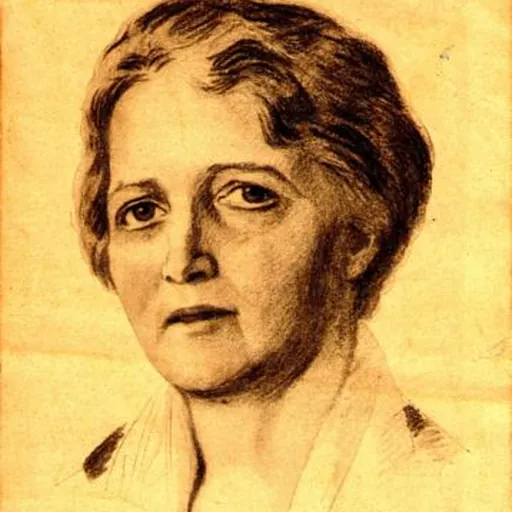
Mathilde Ludendorff
German physician, feminist, and nationalist-religious writer
About Mathilde Ludendorff
Lived 1877 – 1966 (aged 88). Mathilde Ludendorff was a German writer, psychiatrist, neurologist, politician, philosopher and physician.
Mathilde Friederike Karoline Ludendorff (born Mathilde Spieß; 4 October 1877 – 24 June 1966) was a German psychiatrist and author on several subjects such as philosophy, politics, and religion. She was a leading figure in the Völkisch movement known for her unorthodox (esoteric) and conspiratorial ideas. Her third husband was General Erich Ludendorff. Together with Ludendorff, she founded the Bund für Gotteserkenntnis (Society for the Knowledge of God), a small and rather obscure esoterical society of theists, which was banned from 1961 to 1977.
Early life and education Mathilde Spieß was born in Wiesbaden, Hesse in central Germany, the daughter of Prof. Dr. phil. Bernhard Spieß, from 1876 until 1906 teacher at the Wiesbaden Gymnasium. She attended a private and a public school for girls. Despite their modest means, the parents were able to give their daughters a practical professional education, which was unusual at the time. From 1893 until 1895 she trained to be a school teacher for girls, and in 1896 began to teach, initially at a boarding school for girls in Biebrich. She saved enough money to attend evening classes at the Gymnasium for Girls in Karlsruhe from 1900 until 1901, to gain her Abitur.
During the winter semester of 1901/1902, she began to study medicine at the Albert Ludwigs University in Freiburg, where she attended the lectures of August Weismann on common descent (Vorlesungen über Deszendenztheorie) amongst others.
In 1904, she married her lecturer, anatomist Gustav Adolf von Kemnitz, and moved to Munich in 1905, where she had a daughter, Ingeborg von Kemnitz (1906–1970) and the twins Asko (1909–1992) and Hanno (1909–1990). Two years later in 1911, she picked up her interrupted medical studies in Munich until 1912, followed by the Medizinalpraktikum (practical year) part-time in the gynecology department of the Universitätsklinik Bonn, followed by approbation in 1913. She also graduated in 1913 with a PhD degree in neurology with a thesis examining the hereditary nature of mental differences between genders.
Philosophy and science Her 1921 work Triumph des Unsterblichkeitwillens (Triumph of the Will for Immortality) examined the desire in humans for immortality and in doing so attempted a synthesis of philosophy and science which would underpin much of her later work. This was the case in her The Origin and Nature of the Soul, a book in three volumes: History of Creation (1923), which traces the soul from its beginnings and the emergence of the universe; Soul of Man (1925), which explains the soul as a will and a consciousness; and Self Creation (1927), which suggests ways of remodelling the soul.
A later work, Der Seele Wirken und Gestalten (The Action of the Soul and its Effect), dealt with similar themes and was also split up into three books: The Soul of the Child and the Parent's Duty (1930), a study in pedagogy; The Soul of the Nation and the Molders of its Power (1933), which argued that the Volk was an indivisible unit and was shaped by its leaders so that bad leadership could kill off a group; The God-Story of the Nations, (1935) which claimed that culture was more important to any people than civilisation and that it was tied into their will to creation itself.
She also advocated women's rights and equality of the sexes, although these issues did not form a central part of the wider political platform with which she would become associated. She dealt with this topic at length in her work Insanity Induced Through Occult Teachings (1933).
She launched a number of attacks on astrology, arguing that it had always been a Jewish perversion of astronomy and that it was being used to enslave the Germans and dull their reasoning.
On a personal level, Ludendorff's hatred of the occult also stemmed from her support for the völkisch movement and her desire to construct a new, specifically-German religion. As such, she feared that if Germany was won away from Christianity it would descend into existing occult practices instead, which she felt were no more German in origin than the Christian faith.
She believed that the Dalai Lama was controlling Jews in their supposed attempts to destroy Germany through Marxism, Roman Catholicism, capitalism and Freemasonry.
In spite of her personal hatred of occultism, her involvement in the völkisch movement and Germanic cultural identity meant that she co-operated with a number of devotees of occult practices. This was the case in the Edda Society of Rudolf John Gorsleben, of which she was a member and whose other members included Friedrich Schaefer, a follower of Karl Maria Wiligut, and Otto Sigfried Reuter, a strong believer in astrology, which she so roundly condemned.
Politico-religious activity As part of her dual assault on Christianity and the occult, Ludendorff drew on her interpretation of science to develop her own faith, Gotterkenntnis or 'God Knowledge', which emphasised notions of racial inheritance, culture, economy and justice. She considered the Bible a fraud and called for a pantheism rooted in blood and soil rhetoric, in which the soul of God permeated the land as a whole.
Post-war activity, 1945–1965 Ludendorff was largely sidelined after her husband's 1937 death, as Adolf Hitler had long since broken from the general. She continued to express anti-Semitic ideas after the war and was found guilty during the Denazification process, although her judgement was lessened in 1951.
Don’t just read it —
keep it.
Full-length biographies made to live with: read them, listen on the way to work, watch them tonight.
- E-book
- Audio
- Video
Instant download · yours to keep · every purchase keeps this site free
Important facts
Family & relationships
People in Mathilde Ludendorff's life
Named in this biography and alive at the same time
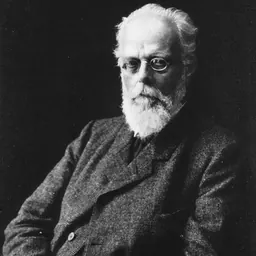



Related people
Same field, nearest in time




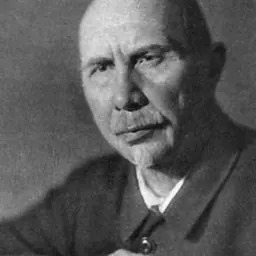
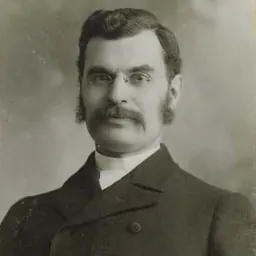
Contemporaries
People whose lives overlapped Mathilde Ludendorff's




Frequently asked questions
Who was Mathilde Ludendorff?
German physician, feminist, and nationalist-religious writer (1877–1966)
When was Mathilde Ludendorff born?
Mathilde Ludendorff was born on 4 October 1877 in Wiesbaden.
When did Mathilde Ludendorff die?
Mathilde Ludendorff died on 24 June 1966 in Tutzing.
What was Mathilde Ludendorff's occupation?
Mathilde Ludendorff was a writer, psychiatrist, neurologist, politician, philosopher and physician.
What nationality was Mathilde Ludendorff?
Mathilde Ludendorff was German.
Sources & further reading
· Wikipedia: Mathilde Ludendorff
· DBpedia: Mathilde Ludendorff
Cite this page
APA: Biography.guide. (2026). Mathilde Ludendorff. https://biography.guide/mathilde-ludendorff/
MLA: "Mathilde Ludendorff." Biography.guide, https://biography.guide/mathilde-ludendorff/.
Chicago: "Mathilde Ludendorff." Biography.guide. https://biography.guide/mathilde-ludendorff/.
Data last updated: 2026-09-22 · Spot an error? Report a correction.
Portrait: Wikimedia Commons · author & licence
Page generated 2026-09-27 05:04 UTC