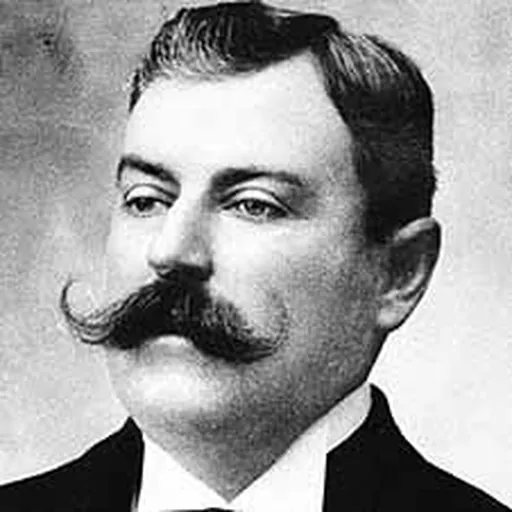
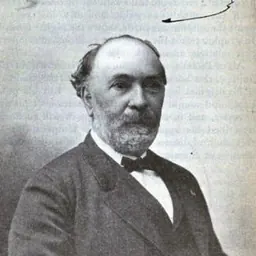
Mateo Banks
Argentinian murderer
About Mateo Banks
Lived 1872 – 1949 (aged 76). Mateo Banks was an Argentine.
Mateo Banks y Keena (18 November 1872 – 28 August 1949) was an Argentine spree killer who murdered six members of his family, in addition to two of the family's employees. The crimes occurred on two of the family's rural estates at Parish, near Azul, Buenos Aires Province, Argentina, on 18 April 1922.
Background Born in a family of Irish ancestry originally from Chascomús, by 1922 the Banks brothers owned two cattle ranches in Parish, a rural area several miles north of Azul, referred to as "El Trébol" ("The Shamrock") and "La Buena Suerte" ("The Good Luck"). "El Trébol" and "La Buena Suerte" were inherited from their father, the Irish immigrant Matthew Banks, who had died in 1909.
Mateo Banks lived away from the ranches in a luxurious house in the town, with his upper-class wife Máxima Gainza, three sons and a daughter.
A hidden criminal past Mateo Banks at his house in Azul, surrounded by his wife Máxima Gainza, his daughter Pepa Ana Banks and his youngest son Pedro Banks, barely months before the murders. The children would change their surname to Gainza after their father's conviction. Azul's historians Georgina Degano and Eduardo Aguero Mielhuerry carried out research on Mateo Banks' early life, and discovered some evidence of a criminal past.
When the Banks first arrived in Azul, in 1897, a young Mateo Banks was hired as a peon in "La Buena Suerte", then owned by Henry McCracken, a British subject. After improperly flirting with one of McCracken's daughters, Mateo Banks became involved in the theft of a sum of money from his employer (a couple also working in the ranch was accused and fired). When Banks claimed that he had found part of the stolen cash some days later, all suspicions fell on him. Sometime after this incident, McCracken's body was found hanging from a tree; it was never established whether this was suicide or murder, but once again all fingers pointed to Banks. After McCracken's demise, his family travelled back to Britain, leaving the ranch to be exploited by Matthew Banks as leaseholder.
He later bought "La Buena Suerte" and a nearby farm, "El Trébol". There were two more suspicious deaths by firearm at "La Buena Suerte"; the first, a visitor from Buenos Aires, shot dead in the course of a hunting trip in the ranch, and the second, one of Matthew's brothers. After the second shooting, Matthew advised his problematic son to move to San Luis Province, in western Argentina.
Once there, though the facts regarding locations and dates are scarce, it is known that Mateo got a job as manager of a ranch, and his financial situation improved dramatically. The historians claim that Mateo Banks returned to Azul in 1912, after the rural estate where he worked was robbed, and all its inhabitants killed, by unknown assailants, with the sole exception of Banks himself.
While living in San Luis, he married Máxima Gainza, the daughter of a rich Basque landowner from Olavarría, a town some miles away from Azul.
Murders On 18 April 1922 at dawn, Mateo Banks departed from Azul by train to the hamlet of Parish, accompanied by a young woman, María Josefa Gaitán, who had been hired as a maid by Banks unmarried sister, María Ana. María Josefa was the elder daughter of Juan Gaitán, one of his brother Dionisio's ranch hands. At 9:00 o'clock, Banks and the young woman arrived in El Trébol. Banks met a wirer and his brother who were working on a fence at Los Pinos, the Banks farm adjacent to El Trébol. They drank mate with Banks, who shortly after paid a visit to his brothers Miguel and Dionisio at El Trébol and La Buena Suerte, where they lived with their families. While staying with them he attempted to poison his relatives at lunchtime with strychnine in their puchero, but the bad smell and flavour resulted in the food being discarded. Eventually, the prosecution tied Banks to the purchase of the ammunition used in the murders and to the attempted poisoning of his family earlier on the day of the murders. He also confessed at one point, but later claimed it was under duress by the authorities
Motive In the course of the investigation it was revealed that Banks had lost his fortune to gambling Rejected by his wife and sons when he tried to settle in the city of Olavarria, where they were living by then, Banks moved to Buenos Aires under the assumed name of Eduardo Morgan, presumably with the financial help of his eldest son, Francisco. His remains were buried in an unmarked grave at La Chacarita cemetery.
Don’t just read it —
keep it.
Full-length biographies made to live with: read them, listen on the way to work, watch them tonight.
- E-book
- Audio
- Video
Instant download · yours to keep · every purchase keeps this site free
Important facts
People in Mateo Banks's life
Named in this biography and alive at the same time

Contemporaries
People whose lives overlapped Mateo Banks's


Frequently asked questions
Who was Mateo Banks?
Argentinian murderer
When was Mateo Banks born?
Mateo Banks was born on 18 November 1872 in Chascomús.
When did Mateo Banks die?
Mateo Banks died on 10 June 1949 in Buenos Aires.
What nationality was Mateo Banks?
Mateo Banks was Argentine.
Sources & further reading
Cite this page
APA: Biography.guide. (2026). Mateo Banks. https://biography.guide/mateo-banks/
MLA: "Mateo Banks." Biography.guide, https://biography.guide/mateo-banks/.
Chicago: "Mateo Banks." Biography.guide. https://biography.guide/mateo-banks/.
Data last updated: 2026-09-23 · Spot an error? Report a correction.
Portrait: Wikimedia Commons · author & licence
Page generated 2026-09-27 05:04 UTC