
About Masao Ohba
Lived 1949 – 1973 (aged 23). Masao Ohba was a Japanese boxer.
was a Japanese professional boxer. He became the WBA flyweight World Champion on October 22, 1970, defeating the reigning champion Berkrerk Chartvanchai in Tokyo and retained the championship for an impressive 5 title straight defenses. He died in a car accident at 23, still holding his world title. He was trained by Isamu Kuwata.He is Soh Ohba's uncle. Soh's adoptive father is Masao's younger brother, Isaburo Ohba, who is 5 years younger than him. Since 1994, Isaburo has served as the chairman of the Japan Renewal Party Yokohama City Rental Supporting Members Liaison Committee, the assistant secretary general of the New Frontier Party (Japan)(NFP) Kanagawa Prefectural Union, and a temporary staff member of the NFP successor party.
Childhood and early career Ohba was born on October 21, 1949. Ohba's father was a factory worker and a compulsive gambler, causing him to know poverty from an early age. His father followed professional boxing as an avid fan which influenced Ohba's childhood aspirations and dreams. By the time Ohba was in elementary school, he dreamt of becoming a world champion, and bringing himself and his family out of poverty. Because Ohba weighed only about 105 pounds and barely stood five feet when he entered the gym, the trainers doubted that he would be successful as a professional boxer. He trained hard, putting on the seven pounds of muscle he needed to box within the flyweight range by the time he made his debut. He later had trouble making the strict flyweight limit later in his career, and at nearly five feet six inches was somewhat tall for a flyweight.
Professional Boxing career Ohba made his professional debut on November 7, 1966, at the age of 17 against Kazuyoshi Watanabe in Tokyo. Between November 1966 and August 1968, he won all but one of his first eighteen bouts, with one draw. He fought all of these matches in his hometown of Tokyo.
Taking the WBA World Flyweight Title He got his first world title shot on October 22, 1970, at Nichidi Auditorium, Nihon University, in Tokyo, against Berkrerk Chartvanchai, who was the WBA World flyweight champion. He won by TKO in the 13th round before a crowd of 7000, becoming the eighth Japanese boxer to capture a world title. According to one source, the bout was postponed from its initial date when Chartvanchai took ill with a high fever. Chartvanchai was down three times before finally being called out for the full count. Enrique Jimenez refereed. Oba finished off Chartvanchai with a volley of punches to the head at 2:16 into the thirteenth round. Charvantchai had trouble making the weight limit, even after doing light exercise and taking a steam bath, which may have weakened him for the bout. Oba gained a considerable lead in points throughout the match. Chartvanchai was weakened both by a cut to his eye he received in the fourth round which gave him trouble and the efforts he took to make weight.
First four defenses of the WBA World Flyweight Title On January 21, 1971, he defeated Swiss boxer Fritz Chervet in a non-title fight technical knockout at Korakuen Hall in Tokyo, Japan. The bout was ended after 1:31 into the eighth round.
Ohba made his first three WBA World Flyweight Championship defenses by 15-round decisions, and his 4th defense by 5th-round KO, all at Nihon University Stadium in Tokyo. He also fought four non-title matches in between his defenses, winning all of them as well.
His second defense of the World Flyweight Title was also a fifteen-round Unanimous Decision on October 23, 1971, against Filipino boxer Fernando Cabanela.
He remarked to an interviewer after the bout that "I did not expect the Thai to put up such a good fight, it was my hardest fight so far." He also noted "I did not expect the long hook that hit me first and made me groggy", and "I did not expect the second that dropped me on my pants."
Premature death in car accident On the morning of January 25, 1973, only three weeks after his last defense, Ohba died in a car accident. He was returning to the Teiken Gym where he both trained and lived. Ohba was driving his new 1973 ivory Chevrolet Corvette down an expressway in Tokyo, when he hit a heavy duty eleven ton parked truck on the shoulder of the opposite lane. His Corvette had jumped the road divider when he was unable to negotiate a turn and he was unable to regain control. He was driving around 60, in a 36-mile per hour zone and was an inexperienced driver, having only obtained his driver's license three months before the crash. He was only 23 years old, and still in possession of the WBA title. As a dutiful son, he had just bought his parents a new home. On February 5, 1973, a funeral service was held by the World Boxing Association at Korakuen Hall in Tokyo, where he had once boxed. A separate service had been held at his home in Kasuwbe, twenty miles north of Tokyo.
Professional boxing record
Don’t just read it —
keep it.
Full-length biographies made to live with: read them, listen on the way to work, watch them tonight.
- E-book
- Audio
- Video
Instant download · yours to keep · every purchase keeps this site free
Important facts
People in Masao Ohba's life
Named in this biography and alive at the same time
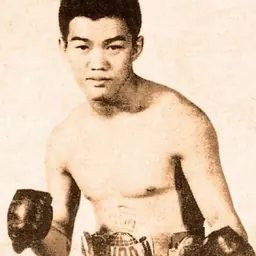
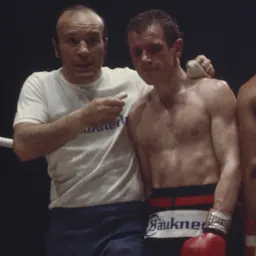
Related people
Same field, nearest in time


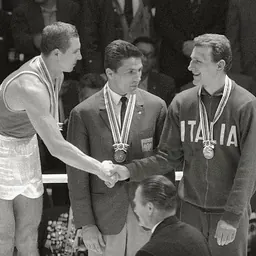


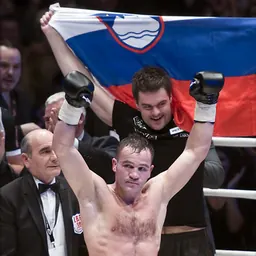
Contemporaries
People whose lives overlapped Masao Ohba's


Frequently asked questions
Who was Masao Ohba?
Japanese boxer (1949–1973)
When was Masao Ohba born?
Masao Ohba was born on 21 October 1949 in Tokyo.
When did Masao Ohba die?
Masao Ohba died on 25 January 1973 in Tokyo.
What was Masao Ohba's occupation?
Masao Ohba was a boxer.
What nationality was Masao Ohba?
Masao Ohba was Japanese.
Sources & further reading
Cite this page
APA: Biography.guide. (2026). Masao Ohba. https://biography.guide/masao-ohba/
MLA: "Masao Ohba." Biography.guide, https://biography.guide/masao-ohba/.
Chicago: "Masao Ohba." Biography.guide. https://biography.guide/masao-ohba/.
Data last updated: 2026-09-20 · Spot an error? Report a correction.
Page generated 2026-09-27 05:17 UTC