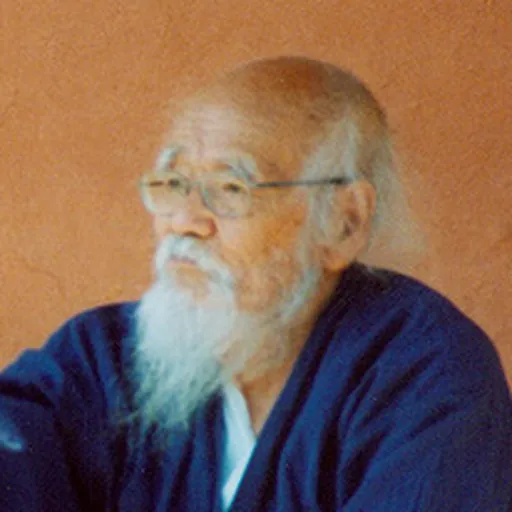
About Masanobu Fukuoka
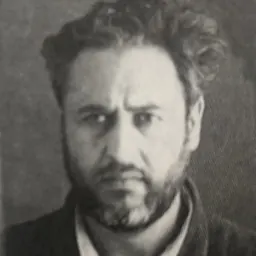
Lived 1913 – 2008 (aged 95). Masanobu Fukuoka was a Japanese agronomist, teacher, philosopher, writer, farmer and botanist, known for Natural farming.
was a Japanese farmer and philosopher celebrated for his natural farming and re-vegetation of desertified lands. He was a proponent of no-till, herbicide and pesticide-free cultivation methods from which he created a particular method of agriculture, commonly referred to as "natural farming" or "do-nothing farming".
Fukuoka was the author of several books, scientific papers and other publications, and was featured in television documentaries and interviews from the 1970s onwards. His influences went beyond farming to inspire individuals within the natural food and lifestyle movements. He was an outspoken advocate of the value of observing nature's principles.
Life Fukuoka was born on 2 February 1913 in Iyo, Ehime, Japan, the second son of Kameichi Fukuoka, an educated and wealthy land owner and local leader. He attended Gifu Prefecture Agricultural College and trained as a microbiologist and agricultural scientist, beginning a career as a research scientist specialising in plant pathology. He worked at the Plant Inspection Division of the Yokohama Customs Bureau in 1934 as an agricultural customs inspector. In 1937 he was hospitalised with pneumonia, and while recovering, he stated that he had a profound spiritual experience that transformed his world view and led him to doubt the practices of modern "Western" agricultural science. He immediately resigned from his post as a research scientist, returning to his family's farm on the island of Shikoku in southern Japan.
From 1938, Fukuoka began to practice and experiment with new techniques on organic citrus orchards and used the observations gained to develop the idea of "Natural Farming". Among other practices, he abandoned pruning an area of citrus trees, which caused the trees to become affected by insects and the branches to become entangled. He stated that the experience taught him the difference between nature and non-intervention. His efforts were interrupted by World War II, during which he worked at the Kōchi Prefecture agricultural experiment station on subjects including farming research and food production.
In 1940, Fukuoka married his wife Ayako, and they had five children together. After World War II, his father lost most of the family lands in postwar land reform and was left with three-eighths of an acre of rice land and the hillside citrus orchards his son had taken over before the war. Despite these circumstances, in 1947 he took up natural farming again with success, using no-till farming methods to raise rice and barley. He wrote his first book, Mu 1: The God Revolution, or in Japanese, during the same year, and worked to spread word of the benefits of his methods and philosophy. His later book, The One-Straw Revolution, was published in 1975 and translated into English in 1978.
From 1979, Fukuoka travelled the world extensively, giving lectures, working directly to plant seeds and re-vegetate areas, and receiving a number of awards in various countries in recognition of his work and achievements. By the 1980s, Fukuoka recorded that he and his family shipped some 6,000 crates of citrus to Tokyo each year, totalling about 90 tonnes. and was guided by his leading supporter and translation editor Larry Korn. They sowed seeds in desertified land and met with United Nations UNCCD representatives including Maurice Strong, who encouraged Fukuoka's practical involvement in the "Plan of Action to Combat Desertification".
In 1983, he travelled to Europe for 50 days holding workshops, educating farmers and sowing seeds. In 1985, he spent 40 days in Somalia and Ethiopia, sowing seeds to re-vegetate desert areas, including working in remote villages and a refugee camp. The following year he returned to the United States, speaking at three international conferences on natural farming and in May 2006 he appeared in an hour-long interview on Japanese television network NHK.
Masanobu Fukuoka died on 16 August 2008 at the age of 95, after a period of declining mobility that made him reliant on a wheelchair.
Natural farming
Fukuoka called his agricultural philosophy , most commonly translated into English as "natural farming". It is also referred to as "the Fukuoka Method", "the natural way of farming" or "Do-Nothing Farming".
The system is based on the recognition of the complexity of living organisms that shape an ecosystem and deliberately exploiting it. Fukuoka saw farming not just as a means of producing food but as an aesthetic and spiritual approach to life, the ultimate goal of which was "the cultivation and perfection of human beings".
The four principles of natural farming are that:
human cultivation of soil, plowing or tilling are unnecessary, as is the use of powered machines prepared fertilizers are unnecessary, as is the process of preparing compost weeding, either by cultivation or by herbicides, is unnecessary; instead, only minimal weed suppression with minimal disturbance should be used applications of pesticides or herbicides are unnecessary
Clay seed balls Fukuoka re-invented and advanced the use of clay seed balls. Clay seed balls were originally an ancient practice in which seeds for the next season's crops are mixed together, sometimes with humus or compost for microbial inoculants, and then are rolled within clay to form into small balls. This method is now commonly used in guerilla gardening to rapidly seed restricted or private areas.
Awards In 1988, Fukuoka received the Visva-Bharati University's Desikottam Award as well as the Ramon Magsaysay Award for Public Service in the Philippines, often considered "Asia's Nobel Prize".
In March 1997, the Earth Summit+5 forum in Rio de Janeiro presented him with the Earth Council Award, received in person at a ceremony in Tokyo on 26 May of that year, honouring him for his contributions to sustainable development.
Influence
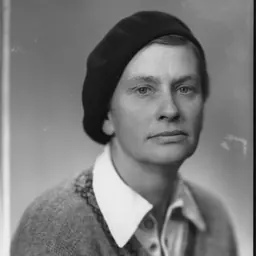
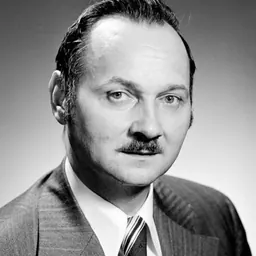
In the international development of the organic farming movement, Fukuoka is considered to be amongst the "five giant personalities who inspired the movement" along with Austrian Rudolf Steiner, German-Swiss Hans Müller, Lady Eve Balfour in the United Kingdom and J. I. Rodale in the United States.
His books are considered both farming compendiums and guides to a way of life. David Mas Masumoto and Yoshikazu Kawaguchi, and has significantly influenced alternative movements in the West, such as permaculture.
Rosana Tositrakul, a Thai activist and politician, spent a year studying with Fukuoka on his farm. She then organised a visit by Fukuoka to the Kut Chum District of Yasothon Province in northeastern Thailand, which, together with his books, were influential in the rapid and widespread adoption of organic and chemical-free rice farming in the district.
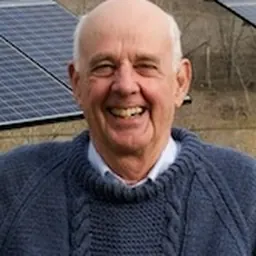
Reception In the preface to the US editions of The One-Straw Revolution, Wendell Berry wrote that Fukuoka's techniques are not "directly applicable to most American farms", but ultimately concludes that it would be "a mistake to assume that the practical passages of this book are worthless..." suggesting that Natural Farming would require farmers to have fresh eyes and the right kind of concern for their land in order to come up with methods relevant to their own farms.
Fukuoka's techniques have proven difficult to apply, even on most Japanese farms, and have been described as a sophisticated approach despite their simple appearance. and that the system cannot interact effectively with conventional agricultural systems.
More recently however, the FAO (along with multiple research universities and organizations such as the Union of Concerned Scientists) have found conventional industrial agriculture systems to be rooted in unsustainable practices that ignore basic biology and the needs of ecosystems. Many of Fukuoka's principles are now being incorporated into modern forms of farming that are more biodiverse, less reliant on chemicals and machines, and which produce similar yields while increasing the health of the soil and surrounding environment. In particular, the concepts of non-tillage, relay cropping, cover-cropping, and plant biodiversity have been shown to prevent soil loss, reduce or eliminate the need for pesticides or fertilizers, and reduce flooding, while increasing water retention, and providing habitat for insects that contribute positively to both crop and ecosystem health.
In Japan, where Fukuoka had few followers or associates, his critics argue that the "inner world and the connection between humans and nature does not, however, exhaust reality" and that he did not give sufficient attention to interpersonal relationships or society. These criticisms were in some ways addressed by the next generation of natural farmers in Japan such as Yoshikazu Kawaguchi, who started a movement of widespread free schools, and yearly conferences to help spread the mindset of natural farming. There are now over 40 learning sites and more than 900 concurrent students in the Japanese natural farming network.
Selected works
Articles
Don’t just read it —
keep it.
Full-length biographies made to live with: read them, listen on the way to work, watch them tonight.
- E-book
- Audio
- Video
Instant download · yours to keep · every purchase keeps this site free
Important facts
People in Masanobu Fukuoka's life
Named in this biography and alive at the same time



Related people
Same field, nearest in time




Contemporaries
People whose lives overlapped Masanobu Fukuoka's





Frequently asked questions
Who was Masanobu Fukuoka?
Japanese farmer and philosopher (1913-2008)
When was Masanobu Fukuoka born?
Masanobu Fukuoka was born on 2 February 1913 in Iyo.
When did Masanobu Fukuoka die?
Masanobu Fukuoka died on 16 August 2008 in Iyo.
What was Masanobu Fukuoka's occupation?
Masanobu Fukuoka was an agronomist, teacher, philosopher, writer, farmer and botanist.
What was Masanobu Fukuoka known for?
Masanobu Fukuoka was known for Natural farming.
What nationality was Masanobu Fukuoka?
Masanobu Fukuoka was Japanese.
Sources & further reading
Cite this page
APA: Biography.guide. (2026). Masanobu Fukuoka. https://biography.guide/masanobu-fukuoka/
MLA: "Masanobu Fukuoka." Biography.guide, https://biography.guide/masanobu-fukuoka/.
Chicago: "Masanobu Fukuoka." Biography.guide. https://biography.guide/masanobu-fukuoka/.
Data last updated: 2026-09-21 · Spot an error? Report a correction.
Portrait: Wikimedia Commons · author & licence
Page generated 2026-09-27 05:00 UTC