
About Masabumi Kikuchi
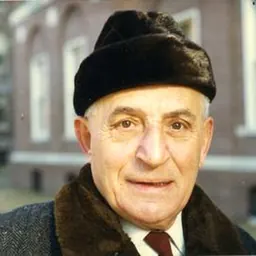
Lived 1939 – 2015 (aged 75). Masabumi Kikuchi was a Japanese pianist, jazz musician, keyboardist and musician.
was a Japanese jazz pianist and composer known for his unique playing style.
Biography Masabumi Kikuchi was born in Tokyo in 1939. Following the firebombing of Tokyo in 1945, his family moved out of the city and settled in the rural Aizuwakamatsu, Fukushima prefecture, where his parents were born.
He studied music at the Tokyo Art College High School. While a student, he began buying second-hand records, most likely left behind by American soldiers. His early influences were Duke Ellington, Miles Davis and Thelonious Monk. He started a quintet with Terumasa Hino but soon after left for the US after winning a scholarship to study at Berklee College of Music.
He died from a subdural hematoma on 6 July 2015 at a hospital in Manhasset, New York. At the time of his death, he lived in Manhattan, New York City.
Discography
As leader
As co-leader Gary Peacock, Hiroshi Murakami, Masabumi Kikuchi, Eastward (CBS/Sony, 1970) Hōzan Yamamoto + Masabumi Kikuchi – Ginkai (Philips [Japan], 1971) also with Gary Peacock and Hiroshi Murakami. recorded in 1970. reissued in 1994 Masabumi Kikuchi, Masahiko Togashi, Gary Peacock, Poesy: The Man Who Keeps Washing His Hands (Philips [Japan], 1971) Gary Peacock, Hiroshi Murakami, Masahiko Togashi, Masabumi Kikuchi, Voices (Sony, 1971) Elvin Jones / Masabumi Kikuchi, Hollow Out (Philips [Japan], 1973) – recorded in 1972 Masahiko Togashi + Masabumi Kikuchi, Concerto (Ninety-One, 1991) – 2CD Terumasa Hino, Masahiko Togashi, Masabumi Kikuchi, Triple Helix (Enja, 1993) – live P.M.P. (Poo Masabumi Kikuchi, Marc Johnson, Paul Motian) Miles Mode (Sony, 1993) – tribute to Miles Davis Masabumi Kikuchi & , Tandem (Verve, 2000) Masabumi Kikuchi, Ben Street, Thomas Morgan, Kresten Osgood, Kikuchi/Street/Morgan/Osgood (Ilk music, 2015) – Recorded in 2008
As a member Terumasa Hino-Masabumi Kikuchi Quintet Hino=Kikuchi Quintet (Columbia/Takt Jazz Series, 1969) – rec. 1968 Acoustic Boogie (Blue Note, 1995) Moment: Alive at Blue Note Tokyo (EMI/Somethin' Else, 1996) – live rec. 1995
Kochi (Ensemble with Al Foster, Anthony Jackson, Dave Liebman, James Mtume, Reggie Lucas, Steve Grossman and Terumasa Hino) Wishes= ウィッシズ (East Wind, 1976; Inner City, 1978)
AAOBB (All Night All right Off White Boogie Band)(with Conrad Adderley, Victor Jones, Aïyb Dieng, Kosuke Mine, Kelvyn Bell, Tomas Doncker, William "Spaceman" Patterson) AAOBB (Tokuma Japan, 1990)
Tethered Moon (Trio with Paul Motian and Gary Peacock) First Meeting (Winter & Winter, 1997) - rec. 1990–91 Tethered Moon (King/Paddle Wheel, 1992, Evidence, 1993) Triangle (King/Paddle Wheel, 1992) Plays Jimi Hendrix+ (Polydor, 1997) Tethered Moon Play Kurt Weill (JMT, 1995; reissued on Winter & Winter, 2005) Chansons d’Édith Piaf (Winter & Winter, 1999) Experiencing Tosca (Winter & Winter, 2004)
Slash Trio (Trio with Masaaki Kikuchi and Tatsuya Yoshida) Slash 1° (PJL, 2001) Slash 2° (PJL, 2002) Slash 3°: Live At Motion Blue Yokohama Vol.1 (PJL, 2002) Slash 4°: Live at Motion Blue yokohama Vol.2 (PJL, 2003)
Soundtrack album Hairpin Circus / A Short Story For Image: Original Soundtrack (Bridge, 2006) – Movie 1972
As sideman With Gil Evans Gil Evans Live at the Royal Festival Hall London 1978 (RCA, 1979) - live The Rest of Gil Evans at the Royal Festival Hall 1978 (Mole Jazz, 1981) - live Live at the Public Theater (New York 1980) vol. 1 (Trio, 1980) – live Live at the Public Theater (New York 1980). Vol. 2 (Trio, 1981) – live
With Paul Motian Trio 2000 + One (Winter & Winter, 1997) Live at the Village Vanguard (Winter & Winter, 2006) – live Live at the Village Vanguard Vol. II (Winter & Winter, 2006) – live Live at the Village Vanguard Vol. III (Winter & Winter, 2006) – live
With others Pee Wee Ellis, Blues Mission (Gramavision, 1993) Joe Henderson, Joe Henderson and Kikuchi, Hino in Concert (Fontana, 1974) – rec. live 1971 Helen Merrill, You and the Night and the Music (Verve, 1998) Mal Waldron, Mal: Live 4 to 1 (Philips, 1971)
Legacy in New York State Property Law
In the late 1970s, Kikuchi lived in New York City and rented a loft apartment on W. 20th Street. The large apartment, over 1700 square feet, was in a formerly commercial building adapted to artists spaces and mixed studio and apartment space. His space was filled with musical instruments and recording equipment; it contained a creative work space as well as living space. In late 1977, a health spa equipment sales business moved into the floor above Kikuchi's studio. A series of damaging water leaks, noise, and eventually large-scale building renovations began. These leaks and activities severely interfered with his work and daily living; eventually, Kikuchi sued his landlord, asserting that the combined events and activities breached the covenant of quiet enjoyment of his apartment. Importantly, he also claimed that the construction work effectively excluded his use of a generous swath of the loft apartment, that is he was constructively evicted by the landlord's acts and failure to act (related to the upstairs tenant). Despite the massive disruptions, he continued living in the apartment during the legal dispute. As per common law, an essential element of claiming constructive eviction is the tenant's moving out; the logic of the common law rule is rooted in proof: the landlord's actions must be so severe and materially impact the tenant that no one would continue to stay there under the circumstances.
The case was finally decided by the N.Y. Appellate Division in 1988. The Court's ruling in favor of Kikuchi established the notion of partial constructive eviction; that is, a partial exclusion from the quiet use and enjoyment of the property. The rule established in this case entitled a partially constructively evicted tenant to a pro rata rent reduction in proportion to the portion of the property they were unable to use. Importantly, the court held that leaving the premises was not required under this new concept. This rule has not been widely adopted in the United States and is a minority rule. The case, 528 N.Y.S.2d 554 (App. Div. 1988), is featured in contemporary property law case books to illustrate the concept of partial constructive eviction.
Don’t just read it —
keep it.
Full-length biographies made to live with: read them, listen on the way to work, watch them tonight.
- E-book
- Audio
- Video
Instant download · yours to keep · every purchase keeps this site free
Important facts
People in Masabumi Kikuchi's life
Named in this biography and alive at the same time





Related people
Same field, nearest in time

Contemporaries
People whose lives overlapped Masabumi Kikuchi's




Frequently asked questions
Who was Masabumi Kikuchi?
Japanese keyboardist (1939-2015)
When was Masabumi Kikuchi born?
Masabumi Kikuchi was born on 19 October 1939 in Tokyo.
When did Masabumi Kikuchi die?
Masabumi Kikuchi died on 6 July 2015 in New York City.
What was Masabumi Kikuchi's occupation?
Masabumi Kikuchi was a pianist, jazz musician, keyboardist and musician.
What nationality was Masabumi Kikuchi?
Masabumi Kikuchi was Japanese.
Sources & further reading
Cite this page
APA: Biography.guide. (2026). Masabumi Kikuchi. https://biography.guide/masabumi-kikuchi/
MLA: "Masabumi Kikuchi." Biography.guide, https://biography.guide/masabumi-kikuchi/.
Chicago: "Masabumi Kikuchi." Biography.guide. https://biography.guide/masabumi-kikuchi/.
Data last updated: 2026-09-20 · Spot an error? Report a correction.
Page generated 2026-09-27 05:09 UTC