
About Maryse Condé
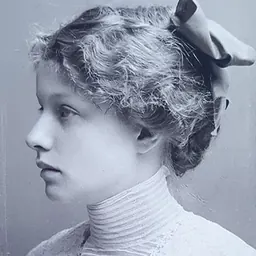
Lived 1934 – 2024 (aged 90). Maryse Condé was a French writer, university teacher, children's writer, playwright, literary scholar and journalist.
Maryse Condé (née Marise Liliane Appoline Boucolon; 11 February 1934 – 2 April 2024) was a French novelist, critic, and playwright from the French Overseas department and region of Guadeloupe. She was also an academic, whose teaching career took her to West Africa and North America, as well as the Caribbean and Europe. As a writer, Condé is best known for her novel Ségou (1984–1985).
Condé's writings explore the African diaspora that resulted from slavery and colonialism in the Caribbean. She won various awards, such as the Grand Prix Littéraire de la Femme (1986), and the New Academy Prize in Literature (2018) for her works.
Early life Born in Pointe-à-Pitre, Guadeloupe, on 11 February 1934, she was the youngest of eight children. Her parents were among the first black instructors in Guadeloupe. Her mother, Jeanne Quidal (who was from Marie-Galante, an island which would often feature in Condé's creative writing), directed her own school for girls. Her father, Auguste Boucolon – previously an educator – founded the small bank "La Caisse Coopérative des prêts", which was later renamed "La Banque Antillaise."
Condé's father, Auguste Boucolon, had two sons from his first marriage: Serge and Albert. Condé's three sisters were Ena, Jeanne, and Gillette, and her brothers were Auguste, Jean, René, and Guy.
Between the years 1960 and 1972, she taught in Guinea, Ghana and Senegal. However, she became disillusioned with being "witness to many contradictory events", and accusations against her of suspected subversive activity resulted in Condé's deportation from Ghana.
After leaving West Africa, she worked in London as a BBC producer for two years. Then in 1973, she returned to Paris and taught Francophone literature at Paris VII (Jussieu), X (Nanterre), and Ill (Sorbonne Nouvelle). She was the author of works of criticism that included Le profil d'une oeuvre (Hatier, 1978), La Civilisation du Bossale (L'Harmattan, 1978), and La Parole des femmes (L'Harmattan, 1979).
She did not publish her first novel, Hérémakhonon, until she was nearly 40, as "[she] didn't have confidence in [herself] and did not dare present [her] writing to the outside world." Her second novel, Une saison à Rihata, was published in 1981; however, Condé would not reach prominence as a contemporary Caribbean writer until the publication of her third novel, Ségou (1984). Following the success of Ségou, in 1985, Condé was awarded a Fulbright scholarship to the United States to teach "Literature and Culture of the Caribbean" at Occidental College, Los Angeles (September 1985–May 1986). In 1987, she was a Rockefeller Foundation Bellagio writer-in-residence, and she was also awarded a Guggenheim Foundation Fellowship. In 1991, her play The Hills of Massabielle was staged in New York at the Ubu Repertory Theater. In 1995, Condé became a professor of French and Francophone literature at Columbia University in New York City,
Condé taught at various universities, including the University of California, Berkeley; UCLA, the Sorbonne, the University of Virginia, and the University of Nanterre. She retired from teaching in 2005.
In 2011, Collège Maryse-Condé on the island of La Désirade was inaugurated in her honour.
Literary significance Condé's novels explore racial, gender, and cultural issues in a variety of historical eras and locales, including the Salem witch trials in I, Tituba: Black Witch of Salem (1986); the 19th-century Bambara Empire of Mali in Ségou (1984–1985); and the 20th-century building of the Panama Canal and its influence on increasing the West Indian middle class in Tree of Life (1987). Her novels trace the relationships between African peoples and the diaspora, especially the Caribbean. and she was often quoted as stating: "I write in Maryse Condé."
Her first novel, Hérémakhonon (in the Malinke language, the title means "waiting for happiness"), was published in 1976. While the story closely parallels Condé's own life during her first stay in Guinea, and is written as a first-person narrative, she stressed that it is not an autobiography. The book is the story, as she described it, of an anti-moi', an ambiguous persona whose search for identity and origins is characterized by a rebellious form of sexual libertinage". and Victoire (2006), a fictional biography of her maternal grandmother during a period when the black population of Guadeloupe asserted their rights to education and political power.
Who Slashed Celanire's Throat (2000) was inspired by a true story and uses a blend of magical realism and fantasy in a novel about a woman who wants to uncover the truth of her past and avenge her childhood mutilation.
The 2017 translation by Richard Philcox of Condé's What Is Africa to Me? Fragments of a True-to-Life Autobiography was described by Noo Saro-Wiwa in a review for The Times Literary Supplement as "refreshingly frank ... an entertaining and occasionally humorous account of the twelve years the author spent in Africa during the late 1950s and 60s. ... and by the book's end the author concedes that she still doesn't know what Africa means to her – a brave admission in a world that hankers for defined narrative arcs."
In 2018, Condé was awarded the New Academy Prize in Literature, established as a one-off alternative to the Nobel Prize in Literature (for which she was often considered a favourite but which was not awarded that year, as a consequence of a sexual abuse scandal among the award committee), with the jury praising Condé as a "grand storyteller whose authorship belongs to world literature, describing the ravages of colonialism and the postcolonial chaos in a language which is both precise and overwhelming."
In 2022, she was honoured as one of 12 Royal Society of Literature International Writers, alongside Anne Carson, Tsitsi Dangarembga, Cornelia Funke, Mary Gaitskill, Faïza Guène, Saidiya Hartman, Kim Hyesoon, Yōko Ogawa, Raja Shehadeh, Juan Gabriel Vásquez and Samar Yazbek.
Condé's 2023 novel, The Gospel According to the New World, was longlisted for the International Booker Prize and, at the age of 86, she was the oldest writer ever to be longlisted for the prize. The creation of the novel was by means of dictation to her husband and translator Richard Philcox, as she had a degenerative neurological disorder that made it difficult to speak and see. Together, they were the first wife-and-husband author-translator team to be longlisted, and subsequently shortlisted, for the award.
Archives Maryse Condé's literary archives (Maryse Condé papers, 1979–2012) are held at Columbia University Libraries.
Selected bibliography Novels
Plays
An Tan Révolisyion, published in 1991, first performed in Guadeloupe in 1989 Comédie d'Amour, Dieu nous l'a donné, first performed in Guadeloupe in 1987 Pension les Alizés, Comme deux frères (2007). Like Two Brothers.
Criticism and other non-fiction "Three Female Writers in Modern Africa : Flora Nwapa, Ama Ata Aidoo and Grace Ogot" (1972), Présence Africaine, 82:132–143. Le profil d'une oeuvre, Hatier, 1978 La Parole des femmes: Essai sur des romancières des Antilles de langue française., Paris: L'Harmattan, 1979 "The Role of the Writer" (1993), World Literature Today, 67(4): 697–699. Le cœur à rire et à pleurer : souvenirs de mon enfance (1999). Tales From the Heart: True Stories From My Childhood, trans. Richard Philcox (2001). "Order, Disorder, Freedom, and the West Indian Writer" (2000), Yale French Studies 97: 151. Victoire, les saveurs et les mots (2006). Victoire: My Mother's Mother, trans. Richard Philcox (2006). La Vie sans fards (2012). What Is Africa to Me? Fragments of a True-to-Life Autobiography, trans. Richard Philcox (2017). The Journey of a Caribbean Writer (2013). Collection of essays, trans. Richard Philcox. Mets et merveilles (2015). Of Morsels and Marvels, trans. Richard Philcox (2015).
As editor Anthologie de la littérature africaine d'expression française. Ghana Institute of Languages, 1966. 1987: Prix de l'Académie française (La vie scélérate) 1988: Liberatur Prize (Ségou) 1993: Puterbaugh Prize 1997: Prix Carbet de la Caraibe (Desirada) 2007: Prix Tropiques de l'Agence française de développement (Victoire, les saveurs et les mots) 2008: Trophée des Arts Afro-Caribéens for Les Belles Ténébreuses. Paris 2009: Trophée des Arts Afro-Caribéens for Lifetime Achievement. Paris 2018: New Academy Prize in Literature 2021: Prix mondial Cino Del Duca 2021: PEN Translates award from English PEN for The Gospel According to the New World 2022: Royal Society of Literature International Writer
Don’t just read it —
keep it.
Full-length biographies made to live with: read them, listen on the way to work, watch them tonight.
- E-book
- Audio
- Video
Instant download · yours to keep · every purchase keeps this site free
Important facts
People in Maryse Condé's life
Named in this biography and alive at the same time
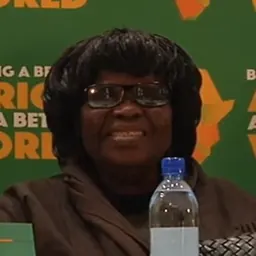

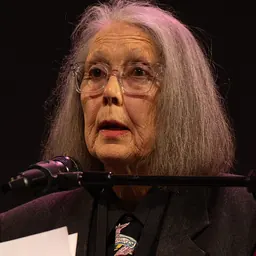

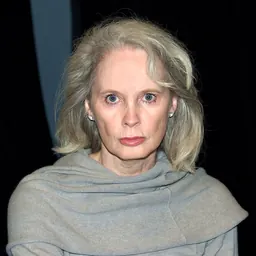
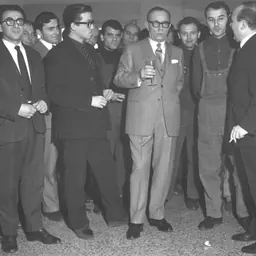
Related people
Same field, nearest in time



Contemporaries
People whose lives overlapped Maryse Condé's




Frequently asked questions
Who was Maryse Condé?
French author from Guadeloupe
When was Maryse Condé born?
Maryse Condé was born on 11 February 1934 in Pointe-à-Pitre.
When did Maryse Condé die?
Maryse Condé died on 2 April 2024 in Apt.
What was Maryse Condé's occupation?
Maryse Condé was a writer, university teacher, children's writer, playwright, literary scholar and journalist.
What nationality was Maryse Condé?
Maryse Condé was French.
Sources & further reading
Cite this page
APA: Biography.guide. (2026). Maryse Condé. https://biography.guide/maryse-conde/
MLA: "Maryse Condé." Biography.guide, https://biography.guide/maryse-conde/.
Chicago: "Maryse Condé." Biography.guide. https://biography.guide/maryse-conde/.
Data last updated: 2026-09-20 · Spot an error? Report a correction.
Page generated 2026-09-27 05:28 UTC