
Mary Warnock, Baroness Warnock
Philosopher of morality, education and mind, and writer on existentialism
About Mary Warnock, Baroness Warnock
Lived 1924 – 2019 (aged 94). Mary Warnock, Baroness Warnock was a British philosopher, university teacher, politician and writer, known for Existentialism, Philosophy of education and Philosophy of mind.
Helen Mary Warnock, Baroness Warnock, (née Wilson; 14 April 1924 – 20 March 2019) was an English philosopher of morality, education, and mind, and a writer on existentialism. She is best known for chairing an inquiry whose report formed the basis of the Human Fertilisation and Embryology Act 1990. She served as Mistress of Girton College, Cambridge, from 1984 to 1991.
Early life and education Warnock was born Helen Mary Wilson on 14 April 1924 in Winchester, England, and was the youngest of seven children. Her mother Ethel was the daughter of the successful banker and financier Felix Schuster.
Warnock was brought up by her mother and a nanny. She never knew her eldest brother, Malcolm (1907–1969), who had autism and was cared for in a nursing home, spending his last days in a Dorset hospital. Another brother died when very young. Her other brother, Duncan Wilson (1911–1983), was a British diplomat who became Ambassador to the Soviet Union before taking up an appointment as master of Corpus Christi College, Cambridge. When Warnock was seven months old the family moved to Kelso House, a three-floor Victorian house, now the music centre at Peter Symonds College. She and her sister Stefana were cared for primarily by the family nanny. Warnock was educated as a boarder at St Swithun's School, Winchester, followed by Prior's Field School in the town of Guildford in Surrey. She retired in 1992, but continued to serve on public committees and to write and edit books, including The Uses of Philosophy (1992), Imagination and Time (1994) and An Intelligent Person's Guide to Ethics (1998). These lectures would form some of the chapters of her Imagination and Time (1994). In 2000, she was a visiting professor of rhetoric at Gresham College, London.
Warnock wrote extensively on ethics, existentialism, and philosophy of mind.
Education In the early 1960s, whilst still teaching at St Hugh's College, Warnock took a seat on the Oxfordshire Local Education Authority. From 1966 to 1972, she was Headmistress at the Oxford High School for Girls, giving up the position when her husband was appointed principal of Hertford College, Oxford.
From 1979 to 1984, she sat on a Royal Commission on environmental pollution. From 1982 to 1984, she chaired the Committee of Inquiry into Human Fertilisation and Embryology. Her report on this occasion gave rise to the Human Fertilisation and Embryology Act 1990, which governs human fertility treatment and experiments using human embryos. Aged 90, Warnock took part enthusiastically in a review of her public life as documented by BBC Sound Archives (12 July 2014).
Charity appointments Warnock was the President of Listening Books, a charity providing audiobooks for people who struggle to read due to an illness, disability, learning difficulty or mental health issue. She was a patron of The Iris Project, a charity that promotes the teaching of classics.
Appointments and honours In the 1984 New Year Honours, she was appointed a Dame Commander of the Order of the British Empire (DBE). Warnock was created a life peer on 6 February 1985, taking the title Baroness Warnock, of Weeke, in the City of Winchester. She sat in the House of Lords as a crossbencher until her retirement from the House on 1 June 2015. Warnock was appointed a member of the Order of the Companions of Honour (CH) in the 2017 New Year Honours for services to charity and to children with special education needs.
Warnock was elected an honorary Fellow of the British Academy (FBA) in 2000 and an Honorary Fellow of the Academy of Medical Sciences (FMedSci) in 2011. She was awarded an honorary D.Litt. degree by the University of Bath in 1987. She was made an Honorary Fellow of Lady Margaret Hall, Oxford in 1984, and of Hertford College, Oxford in 1997.
In 2018, she was named as one of the TES ten most influential people in education, in recognition of her work on special educational needs. That same year, she was awarded the 2018 Dan David Prize for her work in bioethics.
Personal life Warnock married Geoffrey Warnock, later vice-chancellor of Oxford University, in 1949. They had two sons and three daughters; he died in 1995. She died at her home in London on 20 March 2019.
Works As chair of committees of inquiry: The Warnock Report (1978): Special Educational Needs. London: HMSO (report by the Committee of Enquiry into the Education of Handicapped Children and Young People) The Warnock Report (1984): Report of the Committee of Enquiry into Human Fertilisation and Embryology. London: HMSO Warnock, Mary (1978). Meeting Special Educational Needs: A brief guide by Mrs Mary Warnock to the report of the Committee of Enquiry into Education of Handicapped Children and Young People. London: HMSO
As author: Ethics Since 1900 (Oxford University Press, 1960); The Philosophy of Sartre (Hutchinson University Press, 1963) Existentialist Ethics (London: Palgrave Macmillan, New York: Springer, 1967) Existentialism (Oxford Paperbacks, 1970) Imagination (1976) Schools of Thought (Faber and Faber, 1977); Memory (1987) The Uses of Philosophy (Blackwell, 1992) Imagination and Time (Blackwell Publishers, 1994) An Intelligent Person's Guide to Ethics (1998); Mary Warnock: A Memoir – People and Places (Duckworth, 2001); , Making Babies: Is There a Right To Have Children? (2001) Nature and Mortality: Recollections of a Philosopher in Public Life (2004); Easeful Death, with Elisabeth MacDonald (OUP, 2008) Dishonest to God: On Keeping Religion Out of Politics (Continuum, 2010); Critical Reflections on Ownership (Edward Elgar, 2015); Ronald W. Hepburn's Agnosticism, in Szécsényi, Endre (ed.), Aesthetics, Nature and Religion: Ronald W. Hepburn and his Legacy (Aberdeen UP, 2020), pp. 1 - 12, - ["This book is dedicated to the memory of Mary Warncok (1924-2019)"]
As editor: Sartre: A Collection of Critical Essays (1971) Women Philosophers, London, J. M. Dent (1996) Art for All?: Their Policies and Our Culture (2000; with Mark Wallinger)
Don’t just read it —
keep it.
Full-length biographies made to live with: read them, listen on the way to work, watch them tonight.
- E-book
- Audio
- Video
Instant download · yours to keep · every purchase keeps this site free
Important facts
Family & relationships
People in Mary Warnock, Baroness Warnock's life
Named in this biography and alive at the same time




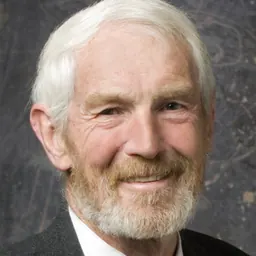
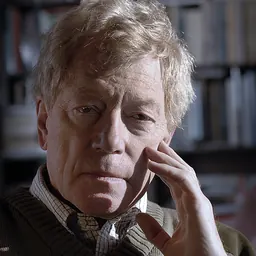
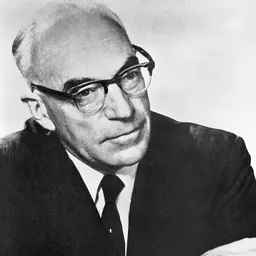
Related people
Same field, nearest in time


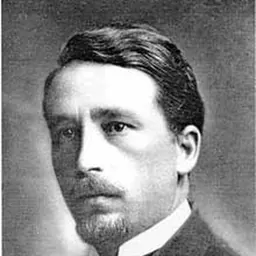
Contemporaries
People whose lives overlapped Mary Warnock, Baroness Warnock's



Frequently asked questions
Who was Mary Warnock, Baroness Warnock?
Philosopher of morality, education and mind, and writer on existentialism (1924-2019)
When was Mary Warnock, Baroness Warnock born?
Mary Warnock, Baroness Warnock was born on 14 April 1924 in Winchester.
When did Mary Warnock, Baroness Warnock die?
Mary Warnock, Baroness Warnock died on 20 March 2019.
What was Mary Warnock, Baroness Warnock's occupation?
Mary Warnock, Baroness Warnock was a philosopher, university teacher, politician and writer.
What was Mary Warnock, Baroness Warnock known for?
Mary Warnock, Baroness Warnock was known for Existentialism, Philosophy of education and Philosophy of mind.
What nationality was Mary Warnock, Baroness Warnock?
Mary Warnock, Baroness Warnock was British.
Sources & further reading
· Wikipedia: Mary Warnock, Baroness Warnock
· DBpedia: Mary Warnock, Baroness Warnock
Cite this page
APA: Biography.guide. (2026). Mary Warnock, Baroness Warnock. https://biography.guide/mary-warnock-baroness-warnock/
MLA: "Mary Warnock, Baroness Warnock." Biography.guide, https://biography.guide/mary-warnock-baroness-warnock/.
Chicago: "Mary Warnock, Baroness Warnock." Biography.guide. https://biography.guide/mary-warnock-baroness-warnock/.
Data last updated: 2026-09-20 · Spot an error? Report a correction.
Page generated 2026-09-27 05:05 UTC