
About Mary Strangman
Lived 1872 – 1943 (aged 70). Mary Strangman was an Irish academic and general practitioner.
Mary Strangman (1872–1943), was an Irish doctor, public health advocate and women's suffragist. She was also Waterford's first woman Councillor.
Early life and education She was born Mary Somerville Parker Strangman on 16 March 1872, the second last of seven children to Thomas Handcock Strangman of Carriganore, Killotteran, County Waterford and Sarah White Hawkes, originally of Castle White, County Cork. She had four brothers and two sisters. Since her father was a gentleman, Strangman was educated at home. Both she and her sister Lucia attended the Royal College of Surgeons in Ireland in 1891. It was the first medical school in the either Ireland or Great Britain to allow women to attend on equal terms with men. Strangman graduated in 1896 and moved to England to gain experience. She worked initially as a clinical assistant at the Northumberland county asylum. Later, she worked as both an assistant anaesthetist and assistant obstetrician in a private hospital for women in London. During her position in London, she also lectured in midwifery to student nurses.
Strangman was the second woman to be awarded fellowship of the RCSI in 1902; the first was Emily Winifred Dickson in 1893. A year later, Strangman moved to Waterford city and set up a practice. There she also volunteered at local women's charities. During this time she focused on the treatment of alcoholism and morphine addiction. She published on the subject in the British Medical Journal and the Journal of Mental Science.
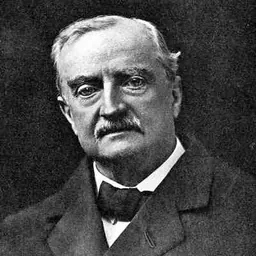
Suffrage Having proven she was a capable doctor, Strangman also believed in equality for women. She was a member of the Irish Women's Suffrage and Local Government Association and the Irish Women's Franchise League. Strangman formed a branch of the less militant organisation the Munster Women's Franchise League and spent time as a member of the executive committee of the Irishwomen's Suffrage Federation from 1911 to 1917. John Redmond was MP for Waterford and was an anti-suffragist. Strangman's strongly held views on the topic and position on the local corporation put her at odds with him. It made a difficult position more challenging.
She continued to practice medicine almost until her death. She died on 30 January 1943 in her sister's home in Dún Laoghaire near Dublin.
The Royal College of Surgeons in Ireland along with Accenture and Business to Arts decided to create a series of portraits of historical female leaders in healthcare which was unveiled as part of the Women On Walls series.
References and sources
Don’t just read it —
keep it.
Full-length biographies made to live with: read them, listen on the way to work, watch them tonight.
- E-book
- Audio
- Video
Instant download · yours to keep · every purchase keeps this site free
Important facts
People in Mary Strangman's life
Named in this biography and alive at the same time



Related people
Same field, nearest in time



Contemporaries
People whose lives overlapped Mary Strangman's





Frequently asked questions
Who was Mary Strangman?
doctor, health advocate and suffragist
When was Mary Strangman born?
Mary Strangman was born on 16 March 1872 in County Waterford.
When did Mary Strangman die?
Mary Strangman died on 30 January 1943.
What was Mary Strangman's occupation?
Mary Strangman was an academic and general practitioner.
What nationality was Mary Strangman?
Mary Strangman was Irish.
Sources & further reading
Cite this page
APA: Biography.guide. (2026). Mary Strangman. https://biography.guide/mary-strangman/
MLA: "Mary Strangman." Biography.guide, https://biography.guide/mary-strangman/.
Chicago: "Mary Strangman." Biography.guide. https://biography.guide/mary-strangman/.
Data last updated: 2026-09-20 · Spot an error? Report a correction.
Page generated 2026-09-27 05:27 UTC