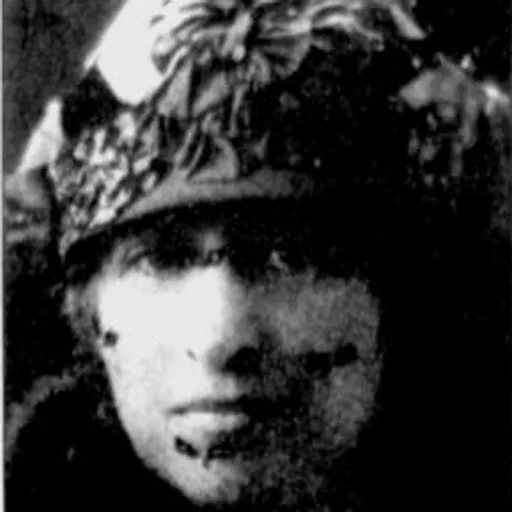
About Mary Rockwell Hook
Lived 1877 – 1978 (aged 101). Mary Rockwell Hook was an American architect.
Mary Rockwell Hook (September 8, 1877 – September 8, 1978) was an American architect and a pioneer for women in architecture. She worked principally from Kansas City, Missouri but designed throughout the United States. She was denied admission to the American Institute of Architects (AIA) due to her gender.
However, she did obtain recognition for her work, including by the AIA, later, on her 100th birthday. And according to an article in the newsletter of the International Archive of Women in Architecture, "Mary Rockwell Hook will be remembered, not because she was a woman working in a 'man's field,' but because she was a successful designer who made her mark in the field of architecture." Between 1910–30, there were actually five women who worked as architects in the Kansas City area. Hook was the only one to achieve any wider recognition. Her marriage put an end to her architectural career for two years, until she worked up the courage to ask her husband "if he had any objection to [her] doing architecture professionally. When [she] finally asked him, he said, 'Certainly not, go ahead.'" The couple adopted two boys, Eugene and Edward.
Mary Rockwell Hook died on her 101st birthday at her home on Siesta Key, an island off the coast of Sarasota, Florida.
Education Mary Rockwell was educated in the Dana Hall School, a preparatory school for girls in Wellesley, Massachusetts. Afterwards, she attended Wellesley College, which she graduated from in 1900. According to her autobiography, she decided to become an architect after a 1902 family trip abroad:It was during this trip home from the Philippines that I decided someone needed to improve the design of the buildings used by our government abroad. I made up my mind to go home and study architecture.
In 1903, she enrolled as the only woman in her class in the architecture department at the Art Institute of Chicago. As a female student in a predominantly male school, Rockwell (Hook) faced gender discrimination. While preparing for her entrance examinations in the Ecole des Beaux-Arts, she learned that she was only the second woman to ever take the exam. She next designed a log house for Pettit. Hook worked with local resources in her designs, including chestnut, poplar, oak, and boulders. Even though a mill was installed on campus, it took more than a year to cut and dry lumber for Laurel House, the school's dining hall.
Buildings at Pine Mountain School
Undated: Science Building with Printshop and Workshop "Open House" for Mary Rockwell, Ethel McCullough, and Margaret Butler.
1914: Old Log House Restoration Miss Pettit's House Laurel House
1919: Office
1922-24: Chapel
1940: Replacement of Laurel House after a fire.
Hook and Remington In 1923, Hook returned to Kansas City and started the Hook and Remington architectural firm with partner Eric Douglas Macwilliam Remington (1893-1975).
White House Despite blindness in her later years, Hook imagined designs and offered ideas to modify the White House and other buildings.
Works in Kansas City on the National Register include House at 54 E. 53rd Terrace, 54 E. 53rd Terr., Kansas City, Missouri, 1908 Bertrand Rockwell House, 1004 W. 52nd St., Kansas City, Missouri, 1908–09 Emily Rockwell Love House, 5029 Sunset Dr., Kansas City, Missouri, 1915 Robert Ostertag House, 5030 Summit St., Kansas City, Missouri, 1922 "Pink House", 5012 Summit St., Kansas City, Missouri, 1922 House at 5011 Sunset Drive, 5011 Sunset Dr., Kansas City, Missouri, 1922–23 Floyd Jacobs House, 5050 Sunset Dr., Kansas City, Missouri, 1925 Mary Rockwell Hook House, 4940 Summit St., Kansas City, Missouri, 1925–27 Four Gates Farm / Marvin Gates Residence, at 13001 Little Blue Road, RFD #3, Kansas City, Missouri, 1925–27
Many of Hook's early houses were commissioned for members of her family. She later also received several commissions from non-family members.
California While the Rockwell family traveled widely for the enrichment of their daughters' education, Bertrand Rockwell sought the mild climate of Northern California to improve his health on the advice of his brother-in-law, a medical doctor in Santa Rosa. There, Mary's sister Florence met and married James Edwards. Around 1908, Mary built a house for them in Santa Rosa. The asymmetrical house was designed in the First Bay Area Tradition. For many years, the architect of the house was unknown and assumed to be Julia Morgan or Brainerd Jones of Petaluma. The house is listed under the name of the second owner as the Wasserman House on the National Register of Historic Places.
However, the listing does not include the well-documented findings of architectural historian Jeffrey Elliott such as the names of the first owners, James and Florence Edwards, nor the architect's name, Mary Rockwell (Hook). The house was transformed into an office building with careful attention to the original design.
The second house in California was designed at the height of her career in 1926 as an impressive French mansion called "Le Soleil" for Francis and Katherine Crosby in Woodside, an hour south of San Francisco. Francis Crosby was the president of the Key System transportation service and owner of several small telephone companies. The design of "Le Soleil" was a collaboration of three Rockwell sisters: Mary Rockwell Hook and her partner Eric Douglas Remington were the architects; Katherine Rockwell Crosby, the owner, designed the interior, acquired the furniture and designed the French gardens, and Bertha Rockwell Venanzi, an artist living in Italy, painted floral murals in the grand ballroom. The estate has many formal rooms for entertaining with requisite kitchen and cellar rooms, a total of seven bedroom suites, and a garage for nine cars, all on a large property of several beautifully landscaped acres with a pool and tennis court.
Works in California 1908 James and Florence Edwards House, 930 Mendocino Avenue, Santa Rosa, also known as the Wasserman House;
1926 Francis and Katherine Crosby House "Le Soleil", 320 Harcross Road, Woodside.
Siesta Key After purchasing of Gulf-front property on Siesta Key, Florida in 1935, Hook developed part of the area with her designs. In Whispering Sands, she designed a resort hotel and vacation homes as a sanctuary for writers and artists. Another subdivision called Sandy Hook was intended to be a residential area for architects and incubator for the Sarasota School of Architecture. In 1952, Hook developed another area called Sandy Cove
Works on Siesta Key 1936 and later: Whispering Sands: Resort Hotel, Glass House for guests, two vacation houses, house for her family
1945: Whispering Sands: House for Hook's son Dick and his family
1945 Sandy Hook: House by Hook for herself and her husband, Plans for a small architectural school (never realized) Houses designed by other architects, mostly from the Sarasota School of Architecture (such as Paul Rudolph)
1952 and later: Sandy Cove: 12-acre development with 113 homes Two winter cottages off Ocean Boulevard Hook's own octagon-shaped home where she died.
Architectural innovations
Employing natural terrain Mary Rockwell Hook was the first Kansas City architect to incorporate natural formations in her designs. When she continued this style on Siesta Key, local newspaper Sarasota Herald-Tribune described Hook as "bringing the outdoors in, and many of the homes she designed on Siesta Key reflected the trend long before it became popular."
Don’t just read it —
keep it.
Full-length biographies made to live with: read them, listen on the way to work, watch them tonight.
- E-book
- Audio
- Video
Instant download · yours to keep · every purchase keeps this site free
Important facts
People in Mary Rockwell Hook's life
Named in this biography and alive at the same time




Related people
Same field, nearest in time



Contemporaries
People whose lives overlapped Mary Rockwell Hook's


Frequently asked questions
Who was Mary Rockwell Hook?
American architect
When was Mary Rockwell Hook born?
Mary Rockwell Hook was born on 8 September 1877 in Junction City.
When did Mary Rockwell Hook die?
Mary Rockwell Hook died on 8 September 1978 in Siesta Key, Florida.
What was Mary Rockwell Hook's occupation?
Mary Rockwell Hook was an architect.
What nationality was Mary Rockwell Hook?
Mary Rockwell Hook was American.
Sources & further reading
· Wikipedia: Mary Rockwell Hook
Cite this page
APA: Biography.guide. (2026). Mary Rockwell Hook. https://biography.guide/mary-rockwell-hook/
MLA: "Mary Rockwell Hook." Biography.guide, https://biography.guide/mary-rockwell-hook/.
Chicago: "Mary Rockwell Hook." Biography.guide. https://biography.guide/mary-rockwell-hook/.
Data last updated: 2026-09-21 · Spot an error? Report a correction.
Portrait: Wikimedia Commons · author & licence
Page generated 2026-09-27 05:00 UTC