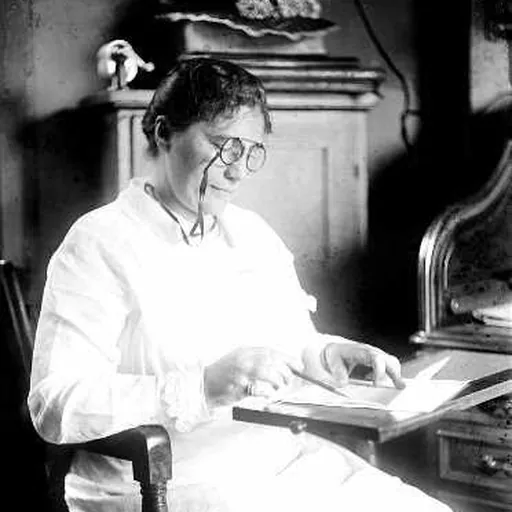
About Mary O'Toole
Lived 1874 – 1954 (aged 80). Mary O'Toole was an American judge and suffragist.
Mary O'Toole (April 4, 1874 – July 24, 1954) was the first woman municipal judge of the United States. Mayor Muriel Bowser declared 21 July 2022 "Mary O'Toole Day" in Washington, D.C. In 2023, a children's book on O'Toole, titled "The Trailblazing Life of Mary O'Toole: A Pioneering Woman on the Bench", co-authored by Nichola D. Gutgold and O'Toole's grand-niece Paula Mulhall, was published by Eifrig Publishing.
Early life O'Toole was born in Hacketstown, County Carlow, Ireland to Nicholas O'Toole and Brigid O'Toole (née O'Connor). Her father Nicholas was imprisoned in Naas Gaol in 1882 because he was a follower of Charles Stewart Parnell's no-rents campaign.
O'Toole emigrated to the United States at age 16. and afterwards became the first woman to be appointed official stenographer in Steuben County. At the time of her appointment, there were only three woman judges in the United States. In August 1921, she was the first judge in the District of Columbia to perform a marriage ceremony.
In 1924, she was a delegate at a meeting of the American Bar Association, held in London. She was re-appointed to the Municipal Court by President Coolidge in 1925.
O'Toole was a member of the board of trustees of the Washington College of Law,
In January 1928, E. E. Dudding, national president of the Prisoner's Aid Society, wrote to the Department of Justice nominating O'Toole to fill the vacancy on the bench of the District of Columbia Supreme Court caused by the resignation of Judge Adolph Hoehling, stating, "There is no better lawyer in Washington or anywhere else. She knows the law. She is judicial. She would make one of the best judges to be found and would, I think, raise public opinion of Federal courts".
O'Toole was reappointed to the Municipal Court by President Hoover in 1929. Referring to O'Toole as a "pioneering woman member of the bench" and "a fixture in Washington's judiciary system", The Washington Post in 1934 reported on how, prior to her initial appointment, "the very mention of her name as a prospective member of the bench made usually dignified men pace the floor and use undignified language".
O'Toole was also a member of the Phi Delta Delta Women's Legal Fraternity and the District of Columbia Women's Bar Association.
Views
Capital punishment In September 1929, The Washington Daily News reported that O'Toole was "one of the most ardent anti-capital punishment workers in the District [of Columbia]". She is stated to have said, "I am convinced that experience, history, and psychology teach us that the death penalty is wrong. In any event, it does not suit our times and the upward and onward progress of our civilisation. That we constantly try to mitigate its horrors for ourselves by seeking and selecting the least painful methods of inflicting it, by limiting the number of witnesses, and so on, is the sure argument for its abolishment". She was quoted in the interview as saying, "A woman seeks divorce for one of three main reasons: To protect herself from a person no longer tolerable; to be free, perhaps to acquire other bonds; or to free her husband, her economic independence lulling the fear of want and poverty, so large a factor in the life of women of an earlier day". a member of the Executive Council of the National American Woman Suffrage Association, She campaigned for women's suffrage and voting rights for citizens of the District of Columbia. She wrote an article for a local newspaper that started, "Why do I favour suffrage for the District? As well ask me why I want to eat. One seems quite as obvious as the other". She assisted Mary Summer Boyd, Secretary of the Data Department, National American Woman Suffrage Association, with an analysis of equal guardianship laws "which give the mother equal rights with the father in respect to custody, control of education, religion, medical care, etc., of her children, equal rights to their earnings and an equal inheritance right in respect to them", which was published in the Woman Suffrage Year Book, 1917. which was founded in 1919. On the club's ethos, O'Toole said the group hoped to attract not only women in the academic and professional sphere, but housewives as well. The Club's charter called for a "better understanding among women, and a place for women to meet and socialise". the Columbia Historical Society, the American Association of University Women, the Women's National Republican Club, the League of Republican Women of the District, and the American Legion Auxiliary.
Don’t just read it —
keep it.
Full-length biographies made to live with: read them, listen on the way to work, watch them tonight.
- E-book
- Audio
- Video
Instant download · yours to keep · every purchase keeps this site free
Important facts
People in Mary O'Toole's life
Named in this biography and alive at the same time

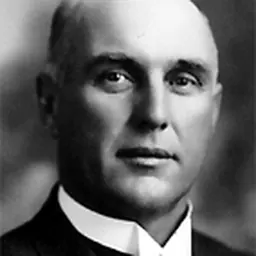

Related people
Same field, nearest in time
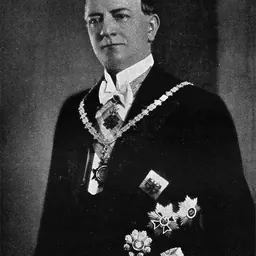
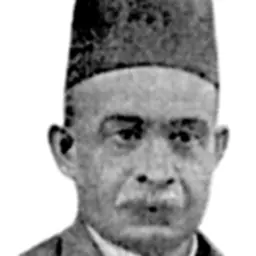

Contemporaries
People whose lives overlapped Mary O'Toole's


Frequently asked questions
Who was Mary O'Toole?
(1874-1954)
When was Mary O'Toole born?
Mary O'Toole was born on 4 April 1874 in Hacketstown.
When did Mary O'Toole die?
Mary O'Toole died on 24 July 1954 in Washington, D.C..
What was Mary O'Toole's occupation?
Mary O'Toole was a judge and suffragist.
What nationality was Mary O'Toole?
Mary O'Toole was American.
Sources & further reading
Cite this page
APA: Biography.guide. (2026). Mary O'Toole. https://biography.guide/mary-o-toole/
MLA: "Mary O'Toole." Biography.guide, https://biography.guide/mary-o-toole/.
Chicago: "Mary O'Toole." Biography.guide. https://biography.guide/mary-o-toole/.
Data last updated: 2026-09-23 · Spot an error? Report a correction.
Portrait: Wikimedia Commons · author & licence
Page generated 2026-09-27 05:07 UTC