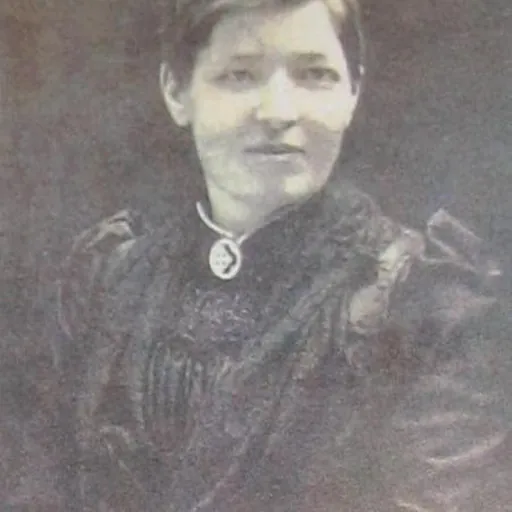
About Mary Mitchell Slessor
Lived 1848 – 1915 (aged 66). Mary Mitchell Slessor was a British missionary and explorer, known for Women's rights.
Mary Mitchell Slessor (2 December 1848 – 13 January 1915) was a Scottish Presbyterian missionary to Nigeria. Once in Nigeria, Slessor learned Efik, one of many local languages, then began teaching. Because of her understanding of the native language and her bold personality Slessor gained the trust and acceptance of the locals and was able to spread Christianity while promoting women's rights and protecting native children. She is most famous for her role in helping to stop the common practice of infanticide of twins in Okoyong, an area of Cross River State, Nigeria.
Early life
Mary Mitchell Slessor was born on 2 December 1848 in Gilcomston, Aberdeen, Scotland, to a poor working-class family who could not afford proper education. She was the second of seven children of Robert and Mary Slessor. Her father, originally from Buchan, was a shoemaker by trade. Her mother was born in Oldmeldrum, Aberdeenshire, and was a deeply religious woman.
Her mother was a devout Presbyterian who read each issue of the Missionary Record, a monthly magazine published by the United Presbyterian Church (later the United Free Church of Scotland) to inform members of missionary activities and needs. Slessor developed an interest in religion, and when a mission was instituted in Quarry Pend (close by the Wishart Church), she wanted to teach.
Slessor was assigned to the Calabar region in the land of the Efik people. After 16 months in Scotland, Slessor returned to Calabar, this time to a new assignment three miles farther into Calabar, in Old Town. Since Slessor assigned a large portion of her salary to support her mother and sisters in Scotland, she economised by eating the native food. Mary Slessor is pictured with adopted children Jean, Alice, Maggie and May, in an image taken in Scotland.
Issues Slessor confronted as a young missionary included the lack of Western education, as well as widespread human sacrifice at the death of a village elder who it was believed required servants and retainers to accompany him into the next world. According to biographer W. P. Livingstone, when two deputies went out to inspect the mission in 1881–82, they were much impressed. They stated, "… she enjoys the unreserved friendship and confidence of the people and has much influence over them". This they attributed partly to the ease with which Slessor spoke the language.
Slessor was a driving force behind the establishment of the Hope Waddell Training Institute in Calabar, which provided practical vocational training to Efiks. The superstitious threat against twins was also prominent in the Igbo town of Arochukwu in western Calabar..
Among the Okoyong and Efik
In August 1888, Slessor travelled north to Okoyong, an area where male missionaries had been killed. She thought her teachings and the fact she was a woman would be less threatening to unreached tribes. For 15 years, Slessor lived with the Okoyong and the Efik people. She learned to speak the native Efik language, and made close personal friendships wherever she went, becoming known for her pragmatism and humour. Slessor lived a simple life in a traditional house with Efiks. Her insistence on lone stations often led her into conflict with the authorities and gained her a reputation for eccentricity. However, her exploits were heralded in Britain, and she became known as the "white queen of Okoyong". Slessor continued her focus on evangelism, settling disputes, encouraging trade, establishing social changes and introducing Western education.
It was the belief in the area that the birth of twins was considered a particularly evil curse. Natives feared that the father of one of the infants was a 'devil child', and that the mother had been guilty of a great sin. Unable to determine which twin was fathered by the evil spirit, the natives often abandoned both babies in clay pots to die. In most of Calabar the practice had been eliminated by the missionaries and King Eyo Honesty II. Slessor left the area of Calabar and moved further in to Okoyong. She adopted every child she found abandoned and sent out twins' missioners to find, protect and care for them at the mission house. Some mission compounds had numerous babies.
Death
For the last four decades of her life, Slessor suffered intermittent fevers from the malaria she had contracted during her first station to Calabar. However, she downplayed the personal costs and never gave up her mission work to return permanently to Scotland. The fevers eventually weakened Slessor to the point she could no longer walk long distances in the rainforest but had to be pushed along in a handcart. In January 1915, while at her remote station near Use Ikot Oku, she suffered a particularly severe fever. Slessor died on 13 January 1915.
Honours and legacy Slessor's work in Okoyong earned her the Efik honorary title of Obongawan Okoyong (Queen of Okoyong). This title is still used commonly to refer to her in Calabar.
Several memorials in and around the Efik provinces of Calabar and Okoyong testify to the value placed on her work. Some of these include: a high school in Arochukwu Mary Slessor Road in Calabar Mary Slessor Roundabout Mary Slessor Street in Coventry Mary Slessor Church Statues of her (usually carrying twins) at various locations in Calabar
A female hostel in the University of Nigeria Nsukka is named Mary Slessor Hall in her honour. A girls' house, "Slessor House", was named after her in Achimota School, Ghana. In Scotland, a bust of Slessor is in the Hall of Heroes of the National Wallace Monument in Stirling. In Aberdeen a memorial used to stand in the city's Union Terrace Gardens prior to their redevelopment in 2024. In Dundee, a city park is named 'Slessor Gardens' in her honour. There are streets named after her in Glasgow, Dundee and Oldmeldrum in Scotland, and in Coventry in England.
Slessor was honoured on a 1997 banknote by Clydesdale Bank for the World Heritage Series and Famous Scots Series. She is featured on the back of the bank's £10 note, highlighting her work in Calabar. The note also features a map of Calabar, a lithographic vignette depicting her work with children, and a sailing ship emblem. Main-belt asteroid 4793 Slessor (1988 RR4) named to mark her centenary celebrations on 13 January 2015. In 1950, anthropologist Charles Partridge, a friend of Slessor when both were in Nigeria, donated letters from her, along with a recording of her voice, now The Slessor Collection at Dundee Central Library; he said of her: "She was a very remarkable woman. I look back on her friendship with reverence - one of the greatest honours that have befallen me."
She is remembered in the Church of England with a commemoration on 11 January.
Gallery
Don’t just read it —
keep it.
Full-length biographies made to live with: read them, listen on the way to work, watch them tonight.
- E-book
- Audio
- Video
Instant download · yours to keep · every purchase keeps this site free
Important facts
People in Mary Mitchell Slessor's life
Named in this biography and alive at the same time


Related people
Same field, nearest in time

Contemporaries
People whose lives overlapped Mary Mitchell Slessor's




Frequently asked questions
Who was Mary Mitchell Slessor?
(1848-1915) Scottish Presbyterian missionary
When was Mary Mitchell Slessor born?
Mary Mitchell Slessor was born on 2 December 1848 in Aberdeen.
When did Mary Mitchell Slessor die?
Mary Mitchell Slessor died on 13 January 1915 in Calabar.
What was Mary Mitchell Slessor's occupation?
Mary Mitchell Slessor was a missionary and explorer.
What was Mary Mitchell Slessor known for?
Mary Mitchell Slessor was known for Women's rights.
What nationality was Mary Mitchell Slessor?
Mary Mitchell Slessor was British.
Sources & further reading
· Wikipedia: Mary Mitchell Slessor
Cite this page
APA: Biography.guide. (2026). Mary Mitchell Slessor. https://biography.guide/mary-mitchell-slessor/
MLA: "Mary Mitchell Slessor." Biography.guide, https://biography.guide/mary-mitchell-slessor/.
Chicago: "Mary Mitchell Slessor." Biography.guide. https://biography.guide/mary-mitchell-slessor/.
Data last updated: 2026-09-23 · Spot an error? Report a correction.
Portrait: Wikimedia Commons · author & licence
Page generated 2026-09-27 05:05 UTC