
About Mary Ellen Bute
Lived 1906 – 1983 (aged 76). Mary Ellen Bute was an American animator, film director, filmmaker, screenwriter, director and film producer.
Mary Ellen Bute (November 21, 1906 – October 17, 1983) was a pioneer American film animator, producer, and director. She was one of the first female experimental filmmakers, and was the creator of some of the first electronically generated film images. Her specialty was visual music; while working in New York City between 1934 and 1958, Bute made fourteen short abstract musical films. Many of these were seen in regular movie theaters, such as Radio City Music Hall, usually preceding a prestigious film. Several of her abstract films were part of her Seeing Sound series.
Biography A native of Houston, Mary Ellen Bute studied at the Pennsylvania Academy of the Fine Arts, then stage lighting at Yale University's Drama School. She studied the tradition of color organs, as a means of painting with light. She worked with Leon Theremin and Thomas Wilfred and was also influenced by the abstract animated films of Oskar Fischinger. Bute's film-making has two relatively distinct modes. She created a series of abstract films exploring the relationship of sound and image in cinema, and a second body of work focused on the relation of language and cinema through adaptation of literary sources. Bute began her filmmaking career collaborating with Joseph Schillinger on the animation of visual representations of music. Her later films were made in partnership with the cinematographer Ted Nemeth, whom she married in 1940. In fact, all her films were produced by Ted Nemeth Studios until 1952.
Before she began making films, she gave a lecture to the New York Musicological Society in 1932 titled 'Light as an Art Material and its Possible Synchronization with Sound.' In this talk, she discussed major trends in painting turning toward abstraction and dynamism, and that she believed that art should be more kinetic, to which she looked to music as the solution. However, she argued that there was no relationship between music and visual forms, her primary area of study. Thus, she determined that while musical composition could offer useful lessons in creating kinetic art forms with light, it should not be a determinant. She wanted to create new forms of art, rather than expand on pre-existing art forms. This lecture can elucidate her first completed film, Rhythm in Light (1934), a 5-minute black and white film set to Edvard Grieg's Pier Gynt Suite.
Bute died of heart failure at New York City's Cabrini Medical Center. She was five weeks short of her 77th birthday. Six months earlier, on April 4, she received a special tribute and a retrospective of her films at the Museum of Modern Art. In 2024 the George Eastman Museum exhibited Mary Ellen Bute: Rhythms in Light a collection of five of her films: Rhythm in Light (1934) 5 minutes, Spook Sport (1940) 9 minutes, Tarantella (1940) 5 minutes, Rhapsodie (1948) 6 minutes, and Abstronic (1952) 7 minutes, rented from Center for Visual Music archive, which has also loaned her Color Rhapsodie to a current exhibition at the Academy Museum of Motion Pictures in Los Angeles.
Filmography
Synchromy – 1933, collaboration with Joseph Schillinger and Lewis Jacobs [unfinished]. Rhythm in Light – 1934 (b&w, 5 min.) in collaboration with Melville Webber and Ted Nemeth. Synchromy No. 2 – 1935 (b&w, 5.5 min.) music: Evening Star from Tannhäuser by Richard Wagner. Dada (1936 film) – 1936 (b&w, 3min.) short for Universal Newsreel. Parabola (1937 film) – 1937 (b&w, 9 min.) music: Création du monde by Darius Milhaud. Synchromy No. 4 - Escape (1937 film) – 1937 (color, 4.5 min.) music: Toccata in D Minor by J.S. Bach. Spook Sport – 1940 (color, 8 min.) music: Danse macabre by Camille Saint-Saëns. Animation by Norman McLaren. Tarantella (1940 film) – 1940 (color, 5 min.). Animation by Norman McLaren. Polka Graph – 1947 (color, 4.5 min.) music: Dmitri Shostakovich's Polka from The Age of Gold. Color Rhapsodie (1937 film) – 1948 (color, 6 min.) Pastorale (1950 film) – 1950 (color, 9 min.) music: Bach's Sheep May Safely Graze. Abstronic – 1952 (color, 7 min.) music: Aaron Copland's Hoe Down and Don Gillis's Ranch House Party. Mood Contrasts – 1953 (color, 7 min.) Imagination (1957 film) – 1957 (color) compilation background for musical sequence, Steve Allen Show (November 17, 1957) The Boy Who Saw Through – 1958 (b&w, 25 min.) (producer) stars a young Christopher Walken [not abstract]. New Sensations in Sound – 1959 (color, 3 min.) advertising film for RCA. Passages from James Joyce's Finnegans Wake – 1965–67 (b&w, 97 min.) (director and co-writer) screened at the Cannes Film Festival [not abstract].
Don’t just read it —
keep it.
Full-length biographies made to live with: read them, listen on the way to work, watch them tonight.
- E-book
- Audio
- Video
Instant download · yours to keep · every purchase keeps this site free
Important facts
People in Mary Ellen Bute's life
Named in this biography and alive at the same time
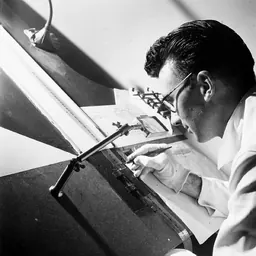
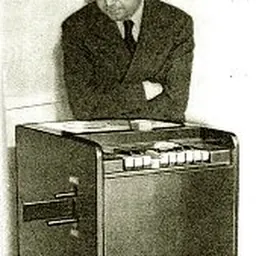

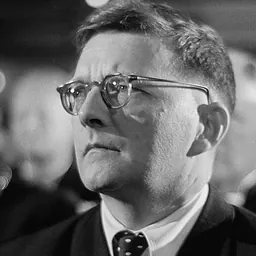

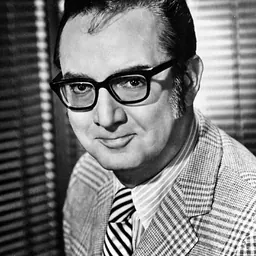
Related people
Same field, nearest in time



Contemporaries
People whose lives overlapped Mary Ellen Bute's

Frequently asked questions
Who was Mary Ellen Bute?
American film director and animator (1906–1983)
When was Mary Ellen Bute born?
Mary Ellen Bute was born on 21 November 1906 in Houston.
When did Mary Ellen Bute die?
Mary Ellen Bute died on 17 October 1983 in New York City.
What was Mary Ellen Bute's occupation?
Mary Ellen Bute was an animator, film director, filmmaker, screenwriter, director and film producer.
What nationality was Mary Ellen Bute?
Mary Ellen Bute was American.
Sources & further reading
Cite this page
APA: Biography.guide. (2026). Mary Ellen Bute. https://biography.guide/mary-ellen-bute/
MLA: "Mary Ellen Bute." Biography.guide, https://biography.guide/mary-ellen-bute/.
Chicago: "Mary Ellen Bute." Biography.guide. https://biography.guide/mary-ellen-bute/.
Data last updated: 2026-09-20 · Spot an error? Report a correction.
Page generated 2026-09-27 05:04 UTC