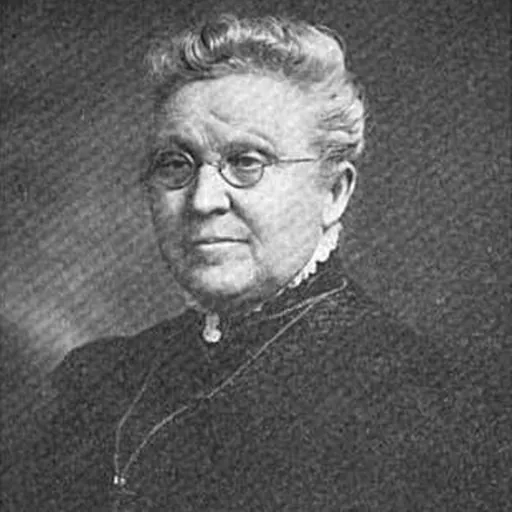
Mary Collins
American missionary, writer, and proponent for Native American rights in the Dakota Territory of the USA
About Mary Collins
Lived 1846 – 1920 (aged 74). Mary Collins was an American missionary.
Mary Collins (April 18, 1846 - May 25, 1920) was a missionary, writer, and proponent for Native American rights in the Dakota Territory of the United States of America. She was a prolific member of the American Missionary Association, having spent thirty-five years of her life living amongst the Sioux tribe acting as a teacher, translator, and diplomat between the Sioux and white settlers. She was a noted friend and correspondent of Sitting Bull, one of the most famous Native Americans in United States history. Despite her actions and lifelong commitment to peaceful relations with the Sioux, Collins is a relatively unknown character in American history.
Early life Mary Clementine Collins was born in 1846 to Ephraim and Margaret Collins, in the town of Upper Alton, Illinois. Her father was a Northerner, and her mother a Southerner. Both her parents were children of American Revolutionary War veterans. Collins credited her ancestry, along with the physical training of her brothers, with providing her with the "pioneer spirit" that came to define her life. She rode horses, boated, climbed trees, and lifted weights alongside her brothers. Her close relationship with Sitting Bull, along with her quest for peaceful cooperation between both Natives and the expanding white settlements, led her to ask Sitting Bull to stop encouraging the Ghost Dance, which was believed to have contributed to Lakota resistance. This dance was seen as a threat by U.S. Army troops and policemen sent to the Dakota region, who misinterpreted the dance as a prelude to armed attack. Sitting Bull and his tribe persisted, and on December 15, 1890, Sitting Bull was arrested, and subsequently shot and killed in the ensuing mayhem. Following the Wounded Knee Massacre later that month, the practice of Ghost Dancing was outlawed.
Death and legacy
In 1910, failing health compelled Collins to give up her work in the field with the Sioux. She returned to Keokuk to live with her sister (there is no evidence that Collins ever married). Illness set in during the early summer of 1919, and confined Collins to her bed until her death in 1920.
In Keokuk, she had continued to be an active member of the American Missionary Association. Her writings, many of them in the Dakota language, remained an important part of Dakota culture long after her death. Frank White, a representative of the American Missionary Association, paid tribute to her life by characterizing her as "pioneer in the nth power."
Don’t just read it —
keep it.
Full-length biographies made to live with: read them, listen on the way to work, watch them tonight.
- E-book
- Audio
- Video
Instant download · yours to keep · every purchase keeps this site free
Important facts
People in Mary Collins's life
Named in this biography and alive at the same time
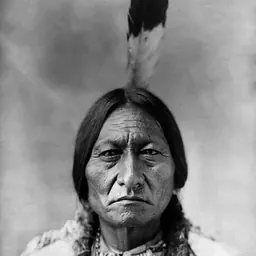

Related people
Same field, nearest in time


Contemporaries
People whose lives overlapped Mary Collins's



Frequently asked questions
Who was Mary Collins?
American missionary, writer, and proponent for Native American rights in the Dakota Territory of the USA (1846-1920)
When was Mary Collins born?
Mary Collins was born on 18 April 1846.
When did Mary Collins die?
Mary Collins died on 25 May 1920.
What was Mary Collins's occupation?
Mary Collins was a missionary.
What nationality was Mary Collins?
Mary Collins was American.
Sources & further reading
· DBpedia: Mary Collins (missionary)
Cite this page
APA: Biography.guide. (2026). Mary Collins. https://biography.guide/mary-collins/
MLA: "Mary Collins." Biography.guide, https://biography.guide/mary-collins/.
Chicago: "Mary Collins." Biography.guide. https://biography.guide/mary-collins/.
Data last updated: 2026-09-23 · Spot an error? Report a correction.
Portrait: Wikimedia Commons · author & licence
Page generated 2026-09-27 05:08 UTC