
About Mary Clarke Nind
Lived 1825 – 1905 (aged 79–80). Mary Clarke Nind was a British missionary.
Mary Clarke Nind (16 August 1825 – 1 January 1905), known as "Our Little Bishop", was a British philanthropist and worker for social justice. It was during her time living in Minnesota that she fulfilled her calling into missionary work through the Woman's Foreign Missionary Society of the Methodist Episcopal Church.
Early life Mary Clarke was born in Essex, England, the daughter of Ebenezer and Louisa Clarke. "I was born six miles from London, England, the child of pious parents, who led their six children to the Savior, converted before five years of age. The memory of my conversion is still fresh and delightful."
She was teaching in the Sabbath school by the age of 12 and at the age of 14, she was united with a Congregational Church. In 1850 she came to the United States, the bride of James G. Nind.
Career In her spiritual life, Mary was tormented. She could see others much older than she was struggling to achieve a life of salvation. "Must I go on to thirty, forty, fifty, sixty years, and still have to fight against my easily besetting sins, and every now and then be conquered? Is there no hope of victory all the time?"
It was not until she was introduced to the Methodist movement that she began to move "into the light." A pastor of her Congregational Church aligned with the Methodist movement and began to teach about sanctifying grace. When the pastor was dismissed from the Congregational Church, about 40 members moved to the Free Methodist Church. Mary occasionally went to the Methodist meetings and was more than once disciplined and charged with "schism" - holding Methodist doctrines in a Congregational Church. Mary was tormented over her devotion to the Congregational Church and her desire to reach a "higher life" through sanctification. One day after church, she encountered a woman who had lived through many afflictions and Mary opened up to her about her torment. She replied, "Mrs. Nind, we shall all miss you if you decide to leave the Congregational Church; but if I were you I would go into the Methodist Church. You will be more happy and more useful there, for there is more liberty for women to exercise their gifts." Taking this as a sign from God, she abruptly left the Congregational Church and joined the Methodist Episcopal Church.
"I raised a new Ebenezer of gratitude, 'for hitherto the Lord had helped me.' Anew I consecrated myself to the Lord and His service, and with new consecrations came new joy." Mary wrote the story of her spiritual struggle and final victory in a leaflet titled "Into the Light"; the leaflet was widely used during the Civil War as a source of inspiration. The WFMS is one of the forerunners of the United Methodist Women. In 18 years during the 1870s and 1880s, Mary raised $17.5 million for the WFMS on "two cents and a prayer a day" from the women of the Methodist Church.
She traveled the nation, China, Tibet, India, Japan, Africa, and South America bearing messages of salvation and became known worldwide as an evangelist. She also became known as "Mother" Nind in the WFMS. In Methodist circles, she was also known as "Our Little Bishop." (1922 for the M.E. Church, South).
At the close of the General Conference, discouraged, Nind went to London and attended the World's Missionary Conference. After that she traveled around the world, visiting the chief mission stations. When she returned she moved to Detroit in about 1891 or 1892.
In 1894, she travelled to Japan and toured around the country beginning in May.
Death and legacy In September 1905, she traveled to Massachusetts where she had a son living in Boston. On 1 September 1905, "Mother" Nind was at a missionary day celebration in Northampton, Massachusetts. There she was afforded a place of honor. She conducted the opening services with a Bible reading on the resurrection of Jesus and offered a prayer "of marvelous beauty and devotion, which seemed to our informant to indicate 'a wonderful spirituality and nearness of approach to God.'" The next day she was visiting friends in Littleton, Massachusetts. Mary retired for the evening in an upper bedroom of the home. Shortly after, a fire started in the house, which rapidly filled with smoke. Mary died just a few months from her 80th birthday.
Her children published her biography, Mary Clarke Nind: A Memorial.
Her Bible is held with the Lacy family papers at Yale University.
Family She married James G. Nind and they moved to Illinois. They had five children, losing one at the age of 3. Two of her daughters later became missionaries, one going to Fuzhou and the other to Madeira Islands. Several of her grandchildren, including George Carleton Lacy, also served as missionaries.
Don’t just read it —
keep it.
Full-length biographies made to live with: read them, listen on the way to work, watch them tonight.
- E-book
- Audio
- Video
Instant download · yours to keep · every purchase keeps this site free
Important facts
People in Mary Clarke Nind's life
Named in this biography and alive at the same time
Related people
Same field, nearest in time


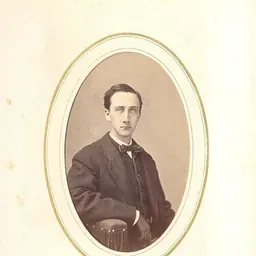
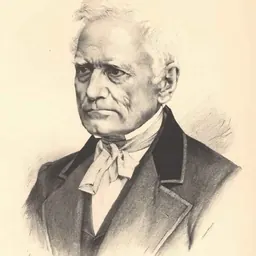
Contemporaries
People whose lives overlapped Mary Clarke Nind's




Frequently asked questions
Who was Mary Clarke Nind?
American missionary
When was Mary Clarke Nind born?
Mary Clarke Nind was born in 1825 in Essex.
When did Mary Clarke Nind die?
Mary Clarke Nind died on 1 January 1905 in Littleton.
What was Mary Clarke Nind's occupation?
Mary Clarke Nind was a missionary.
What nationality was Mary Clarke Nind?
Mary Clarke Nind was British.
Sources & further reading
Cite this page
APA: Biography.guide. (2026). Mary Clarke Nind. https://biography.guide/mary-clarke-nind/
MLA: "Mary Clarke Nind." Biography.guide, https://biography.guide/mary-clarke-nind/.
Chicago: "Mary Clarke Nind." Biography.guide. https://biography.guide/mary-clarke-nind/.
Data last updated: 2026-09-20 · Spot an error? Report a correction.
Page generated 2026-09-27 05:29 UTC