
About Mary Cholmondeley
Lived 1859 – 1925 (aged 66). Mary Cholmondeley was a British novelist, writer and satirical novelist.
Mary Cholmondeley ( ; 8 June 1859 – 15 July 1925) was an English novelist. Her bestseller Red Pottage satirised religious hypocrisy and the narrowness of country life. It was adapted as a silent film in 1918.
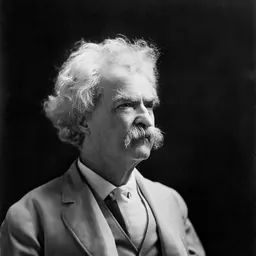
Family Mary Cholmondeley was born at Hodnet near Market Drayton in Shropshire, the third of eight children of Rev Richard Hugh Cholmondeley (1827–1910) and his wife Emily Beaumont (1831–1893). Her great-uncle was a hymn-writing bishop, Reginald Heber, and her niece a writer, Stella Benson. An uncle, Reginald Cholmondeley of Condover Hall, was a host of the American novelist Mark Twain on his visits to England. Her sister Hester, who died in 1892, wrote poetry and kept a journal: selections appear in Mary's family memoir, Under One Roof (1918).
After brief periods in Farnborough, Warwickshire and Leaton, Shropshire, the family returned to Hodnet when her father took over from his father as rector in 1874. Much of the first 30 years of her life passed in helping her sickly mother to run the household and her father to do his parish work, although she herself suffered from asthma. She entertained her brothers and sisters with stories from an early age. She placed initially some stories in The Graphic and elsewhere. Her first novel was The Danvers Jewels (1887), a detective story that won a small following. It appeared in the Temple Bar magazine published by Richard Bentley, after fellow novelist Rhoda Broughton had introduced her to George Bentley. It was followed by Sir Charles Danvers (1889), Diana Tempest (1893) and A Devotee (1897). Bentley paid £40 for The Danvers Jewels and £50 for Sir Charles Danvers, both in two volumes, but increased an offer of £250 for the three-volume Diana Tempest to £400, the first of her books to appear under her name.
The satirical Red Pottage (1899) sold well both sides of the Atlantic and is still reprinted. It satirises religious hypocrisy and the narrowness of country life, but was denounced from a London pulpit as immoral. It was equally sensational when exploring "the issues of female sexuality and vocation", recurring topics in late Victorian debates about the New Women. Despite the book's great success, however, the author received little money for it later as she had sold the copyright.
Later works such as Moth and Rust (1902) and Notwithstanding (1913) were less successful. The Lowest Rung (1908) and The Romance of his Life (1921) were story collections. The latter, her final book, was dedicated to the essayist and critic Percy Lubbock. Lubbock later commemorated her in Mary Cholmondeley: A Sketch from Memory (1928).
Selected works
Don’t just read it —
keep it.
Full-length biographies made to live with: read them, listen on the way to work, watch them tonight.
- E-book
- Audio
- Video
Instant download · yours to keep · every purchase keeps this site free
Important facts
People in Mary Cholmondeley's life
Named in this biography and alive at the same time


Related people
Same field, nearest in time




Contemporaries
People whose lives overlapped Mary Cholmondeley's



Frequently asked questions
Who was Mary Cholmondeley?
British writer (1859-1925)
When was Mary Cholmondeley born?
Mary Cholmondeley was born on 8 June 1859 in Shropshire.
When did Mary Cholmondeley die?
Mary Cholmondeley died on 15 July 1925 in Kensington.
What was Mary Cholmondeley's occupation?
Mary Cholmondeley was a novelist, writer and satirical novelist.
What nationality was Mary Cholmondeley?
Mary Cholmondeley was British.
Sources & further reading
· Wikipedia: Mary Cholmondeley
Cite this page
APA: Biography.guide. (2026). Mary Cholmondeley. https://biography.guide/mary-cholmondeley-novelist/
MLA: "Mary Cholmondeley." Biography.guide, https://biography.guide/mary-cholmondeley-novelist/.
Chicago: "Mary Cholmondeley." Biography.guide. https://biography.guide/mary-cholmondeley-novelist/.
Data last updated: 2026-09-22 · Spot an error? Report a correction.
Page generated 2026-09-27 05:20 UTC