
About Mary Calderone
Lived 1904 – 1998 (aged 94). Mary Calderone was an American physician, sexologist and photographer, known for Sex education.
Mary Steichen Calderone (born Mary Rose Steichen; July 1, 1904 – October 24, 1998) was an American physician, author, public speaker, and public health advocate for reproductive rights and sex education.
In 1953, Mary Calderone became the first female medical director of Planned Parenthood. During her tenure, the organization started advocating for reform in abortion laws. Under her leadership, Planned Parenthood organized a national conference of medical professionals on the subject in 1955, known as “Abortion in the United States." This conference marked the first instance of physicians and professionals advocating for the reform of abortion laws, contributing significantly to the creation of a movement for the reform of abortion laws in the U.S.
In 1960, after the Food and Drug Administration (FDA) approved the first oral contraceptive, Calderone lobbied the American Medical Association (AMA) to endorse contraception as standard medical practice. After a four-year effort, she successfully reversed the AMA's policy against providing birth control information to patients, helping to integrate birth control into mainstream American medicine. Following her birth, the Steichen family relocated to Paris, France, and then later to Voulangis, France, a small farming village approximately 32 km east of Paris. Her younger sister, Charlotte "Kate" Rodina Steichen, was born in Paris on May 27, 1908.
While in Voulangis, the family frequently received visits from various artists and colleagues of Edward Steichen, including Constantin Brâncuși, Auguste Rodin, Isadora Duncan, Paul Cézanne, Henri Matisse, and Pablo Picasso. Biographer Jeffrey Moran suggests that Mary's upbringing in a bohemian environment, with her well-known father, her uncle, the poet Carl Sandburg, and Quaker background played a role in shaping her liberal perspective on sex and her passionate nature. For instance, at the age of six, she expressed her opinions about Constantin Brâncuși's sculptures, particularly his horizontal-headed bird pieces, which she believed would hinder the birds from singing. Brâncuși subsequently adjusted his artistic approach.
When the First World War began in 1914, the family fled to New York. Calderone's parents separated soon after and sent Mary to live in New York City at the home of their friends, Dr. Leopold and Elizabeth Stieglitz, brother and sister-in-law of Steichen's friend and photography colleague, Alfred Stieglitz. Calderone's interest in medicine began as she accompanied Leonard Stieglitz on his hospital rounds.
While in New York, Calderone attended the Brearley School for her secondary education. She then matriculated at Vassar College, earning her A.B. in Chemistry in 1925. Initially, she pursued a career in theater and studied at the American Laboratory Theatre for three years. Notably, she served as the model for the figures on the Pratt Institute flagpole, a bronze sculpture created by her uncle, Willard Dryden Paddock, and erected in 1926 to commemorate the soldiers who served in World War I.
In 1926, Calderone married actor W. Lon Martin and had two daughters, Nell (1926) and Linda (1928). The Calderone Prize, the most prestigious prize in the field of public health, is named after him. The couple had two daughters, Francesca (1943) and Maria (1946).
Career Planned Parenthood Calderone served as a physician in the Great Neck, New York public school system from 1949 to 1953. Her work in this role gained her recognition in public health circles, as she attended the American Public Health Association's annual conferences during a time when female public health professionals and physicians were relatively rare. In 1953, William Vogt, the National Director of the Planned Parenthood Federation of America, offered Calderone the position of Medical Director. Despite being advised by her public health colleagues that taking the job would be "professional suicide", Calderone accepted the position with the hope of legitimizing family planning in the fields of medicine and public health.
Calderone's 11-year tenure at Planned Parenthood was marked by several significant contributions. In 1955, she organized "Abortion in the United States", a national conference of medical professionals that instigated the movement to legalize abortion. This was the first instance of physicians and other professionals advocating reform of the laws that criminalized abortion, and it played a key role in creating a movement for the reform of abortion laws in the U.S.
Calderone's efforts also played a role in changing Planned Parenthood's approach to abortion. Before her involvement, the organization and its founder, Margaret Sanger, had avoided addressing the subject of abortion, focusing instead on promoting birth control as a means to prevent unwanted pregnancies. Today, Planned Parenthood is the largest single provider of reproductive health services and the largest single provider of abortion in the United States.
Furthermore, Calderone worked as a liaison between Planned Parenthood and the public health establishment to advocate for the mainstream integration of birth control into American medicine. She successfully lobbied professional medical groups such as the American Public Health Association (APHA) and the American Medical Association (AMA) to endorse contraception as a standard medical practice. In 1959, the APHA issued a public statement endorsing family planning as part of routine medical care, emphasizing the importance of individual choice. Her most significant success came in 1964 when she persuaded the more conservative AMA to overturn its long-standing policy against providing birth control information to patients and to endorse contraception as part of standard medical practice.
During her tenure at Planned Parenthood, Calderone authored various articles for both popular and professional publications, as well as books such as Release from Sexual Tensions (1960) and Manual of Contraceptive Practice (1964), which was a pioneering medical text.
Driven by Calderone's dynamic nationwide lectures and guided by its mission statement, which aimed to establish human sexuality as a health-related subject, SIECUS functioned as an umbrella organization for school administrators, sex educators, physicians, social activists, and parents seeking resources for sexuality education. Calderone soon became a household name and "a magnet for publicity [as] articles in Seventeen, Look, McCall’s, Life Magazine, Parade, Playboy, and other popular magazines profiled her life and analyzed her arguments, [while] her appearances on TV shows such as the Dick Cavett Show and Sixty Minutes reached millions of viewers.”
Attacks While Calderone gained significant recognition for her positive approach to sex education, she also faced criticism. Her assertion that sex education should start in kindergarten, with age-appropriate lessons on topics like basic anatomy and consent, provoked opposition from right-wing politicians and religious conservative groups like Mothers Organized for Moral Stability (MOMS) and the John Birch Society, which spent an estimated $40 million on a smear campaign to discredit her. Soon after, SIECUS and Calderone became targets of a nationwide smear campaign, with Calderone’s speaking appearances drawing picket lines and protests from ultra-conservative groups who followed her across the country.
From 1968 to 1971, Congressman John Rarick of Louisiana read a series of denunciations of sex education, featuring Mary Calderone and SIECUS, into the Congressional Record. Rarick’s testimony emphasized insinuations of SIECUS’s ties to a global communist conspiracy. He wrote, “Through the promotion of pornography, drug use and the ‘New Morality,’ the will to resist the International Communist Conspiracy is being weakened... the downgrading of the influence of the family and religion play right into the hands of the Communists.”
By the mid-1970s, these attacks weakened Calderone's influence, and SIECUS's funding and resources began to dwindle. In 1978, she stepped down as the Executive Director but remained as President. Nevertheless, Calderone's commitment to sex education with a positive and morally neutral approach persisted, expanding the focus beyond the physical act of sex to address topics like puberty, consent, and sexism. Calderone, a practicing Quaker and grandmother, held personal convictions that did not align with the sexual revolution of the late 1960s. While she was adamant about sexual freedom, she personally believed that sex should be reserved for marriage and that the highest expression of sexuality was within a permanent, monogamous bond.
Awards and honors Calderone has received numerous awards and honors both posthumously and over the course of her life.
Browning Award for Prevention of Diseases, American Public Health Association Elizabeth Blackwell Award for Distinguished Services to Humanity, Hobart and William Smith Colleges Lifetime Achievement Award from the Schlesinger Library of Radcliffe/Harvard College The Award for Human Service from the Mental Health Association of New York Humanist of the Year from the American Humanist Association (1974) Margaret Sanger Award from Planned Parenthood Federation of America (1980) National Women’s Hall of Fame inductee (1998)
Honorary degrees
D.Med. Science (honorary), Women's Medical College (now Drexel University College of Medicine), 1967. Doctor of Humane Letters (honorary), Newark State College (now Kean University), 1971. Doctor of Humane Letters (honorary), Dickinson College, 1981. Doctor of Humane Letters (honorary), Jersey City State College (now New Jersey City University), 1982. Doctor of Science (honorary), Adelphi University, 1971. Doctor of Science (honorary), Worcester Foundation Experimental Biology (now University of Massachusetts Medical School), 1974. Doctor of Science (honorary), Brandeis University, 1975. Doctor of Science (honorary), Haverford College, 1978. Doctor of Science (honorary), Columbia University, 1985. Doctor of Laws (honorary), Kenyon College, 1972. Ped.D. (honorary), Hofstra University, 1978. Doctor of Humanities (honorary), Bucknell University, 1982.
Selected works and publications
Don’t just read it —
keep it.
Full-length biographies made to live with: read them, listen on the way to work, watch them tonight.
- E-book
- Audio
- Video
Instant download · yours to keep · every purchase keeps this site free
Important facts
People in Mary Calderone's life
Named in this biography and alive at the same time


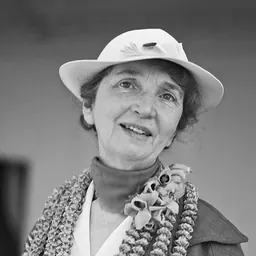
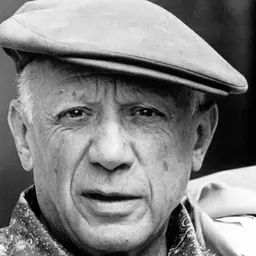

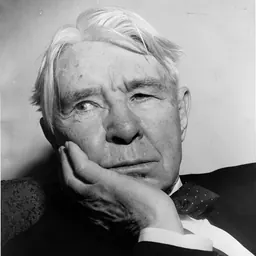

Related people
Same field, nearest in time
Contemporaries
People whose lives overlapped Mary Calderone's





Frequently asked questions
Who was Mary Calderone?
American physician (1904-1998)
When was Mary Calderone born?
Mary Calderone was born on 1 July 1904 in New York City.
When did Mary Calderone die?
Mary Calderone died on 24 October 1998 in Kennett Square.
What was Mary Calderone's occupation?
Mary Calderone was a physician, sexologist and photographer.
What was Mary Calderone known for?
Mary Calderone was known for Sex education.
What nationality was Mary Calderone?
Mary Calderone was American.
Sources & further reading
Cite this page
APA: Biography.guide. (2026). Mary Calderone. https://biography.guide/mary-calderone/
MLA: "Mary Calderone." Biography.guide, https://biography.guide/mary-calderone/.
Chicago: "Mary Calderone." Biography.guide. https://biography.guide/mary-calderone/.
Data last updated: 2026-09-26 · Spot an error? Report a correction.
Page generated 2026-09-27 05:15 UTC