
About Mary Brodrick
Lived 1858 – 1933 (aged 75). Mary Brodrick was a British archaeologist and egyptologist.
Mary (May) Brodrick (5 April 1858 – 13 July 1933) was a British archaeologist and Egyptologist who was one of the first female excavators in Egypt. She persisted in her studies despite the initial opposition of her tutors and fellow students and achieved distinction in her field. The Daily Mail described her in 1906 as "perhaps the greatest lady Egyptologist of the day".
Early life Brodrick was born at 18 Navarino Terrace, Dalston, Middlesex (now London), in 1858, and the 1861 census shows the family living within the Liberty of the Close, in the grounds of Salisbury Cathedral, Wiltshire. Mary Brodrick had sisters Edith and Ethel. A brother, Thomas, born around 1862, died in South Africa in 1888.
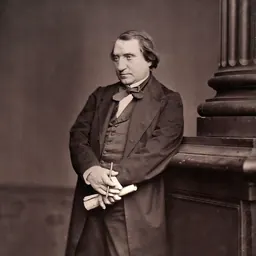
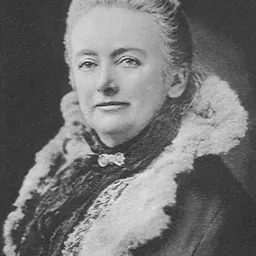
Brodrick was the first woman to study Egyptology under Gaston Maspero at the Sorbonne, and Hebrew and Semitic archaeology under Ernest Renan at the Collège de France. Neither had been encouraging at first. Maspero had objected, "But we do not take little girls here", and Renan had vowed "I have never taught a woman in my life, and I never will". When Brodrick insisted on attending, Maspero took the matter up with the Sorbonne council who found nothing in the rules to prevent a woman attending. According to Brodrick, Maspero warned her that she would "probably have a very bad time" and indeed when she first attended she found the students to be rough, rude, and smelly. On one occasion they poured ink down her back. Brodrick simply laughed their tricks off and eventually became great friends with them. She lectured at the British Museum on Saturdays, charging 21 shillings for a series of lectures titled 'Ancient Egyptian History and Antiquities '. The lectures were open to both men and women. She was awarded the degree of Doctor of Philosophy in 1893 by the College of the Sisters of Bethany, University of Kansas, the same institution that had also awarded a PhD to Amelia Edwards.
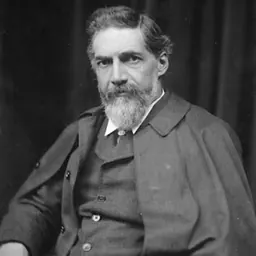
Brodrick then studied Egyptology under Flinders Petrie in 1893–94 and 1894–95. and had an interest in women’s experiences in the ancient world. Alongside her friend and fellow Egyptologist Anna Anderson Morton she began leading paid tours for parties of women in Egypt. She was elected a member (later fellow) of the Royal Geographical Society in 1916. The Mary Brodrick Prize for Geography was given by University College, London. and also edited Murray's Syria and Palestine volume.
A selection of her papers and lectures on Egypt, edited by Eversley Robinson, were published posthumously in 1937.
Death Brodrick died on 13 July 1933 in Hindhead, Surrey. Her funeral was at St. Alban's Church in that town. As far as is known, Brodrick never married and left no descendants. Years in Egypt had taken their toll and she was not in robust health in her later years. In the year of her death she gave two addresses to College Hall, titled "Retrospect and Prospect" and "Farewell and All Hail". It was that, not inconsiderable, residue that provided the funds necessary to allow the completion of the long-planned extension to College Hall in 1934 which was named The Mary Brodrick Wing in her honour. Her personal collection of antiquities have found their way to the Petrie Museum and her academic books to the Edwards Library.
Selected publications Brugsch-Bey, Heinrich. Egypt under the Pharaohs: A history derived entirely from the monuments. John Murray, 1891. (Editor) Mariette, Auguste. Outlines of Ancient Egyptian History. Scribner's, New York, 1892. (Translator and editor) "The Tomb of Pepu ankh (khua), near Sharona". PSBA, 21 (1899), pp. 26–33. (With Anna Anderson Morton) The Life and Confession of Asenath, The Daughter of Pentephres of Heliopolis Narrating How The All-Beautiful Joseph Took Her To Wife. P. Wellby, London, 1900. (With Peter Le Page Renouf) A Handbook for Travellers in Lower and Upper Egypt, including descriptions of the course of the Nile through Egypt and Nubia, Alexandria, Cairo, the Pyramids, Thebes, the First and Second Cataracts to Khartûm, the Suez Canal, the Peninsula of Mount Sinai, the Oases, the Fayyûm, etc.. 9th edition. John Murray, London, 1896. (Editor) (also 10th edition, 1900) A Concise Dictionary of Egyptian Archaeology: A handbook for students and travellers. Methuen, London, 1902. (With Anna Anderson Morton) A Handbook for Travellers in Syria and Palestine, including a short account of the geography, history, and religious and political divisions of these countries, together with detailed descriptions of Jerusalem, Damascus, Palmyra, Baalbek, and the interesting ruined cities of Moab, Gilead, and Bashan. Revised edition. Edward Stanford, London, 1903. (Editor) The Trial and Crucifixion of Jesus Christ of Nazareth. John Murray, London, 1908. Egypt: Papers and Lectures by the Late Mary Brodrick. De La More Press, London, 1937. (Selected and edited by Eversley Robinson)
Don’t just read it —
keep it.
Full-length biographies made to live with: read them, listen on the way to work, watch them tonight.
- E-book
- Audio
- Video
Instant download · yours to keep · every purchase keeps this site free
Important facts
People in Mary Brodrick's life
Named in this biography and alive at the same time




Related people
Same field, nearest in time

Contemporaries
People whose lives overlapped Mary Brodrick's


Frequently asked questions
Who was Mary Brodrick?
British archaeologist and egyptologist (1858-1933)
When was Mary Brodrick born?
Mary Brodrick was born on 5 April 1858.
When did Mary Brodrick die?
Mary Brodrick died on 13 July 1933.
What was Mary Brodrick's occupation?
Mary Brodrick was an archaeologist and egyptologist.
What nationality was Mary Brodrick?
Mary Brodrick was British.
Sources & further reading
Cite this page
APA: Biography.guide. (2026). Mary Brodrick. https://biography.guide/mary-brodrick/
MLA: "Mary Brodrick." Biography.guide, https://biography.guide/mary-brodrick/.
Chicago: "Mary Brodrick." Biography.guide. https://biography.guide/mary-brodrick/.
Data last updated: 2026-09-20 · Spot an error? Report a correction.
Page generated 2026-09-27 05:30 UTC