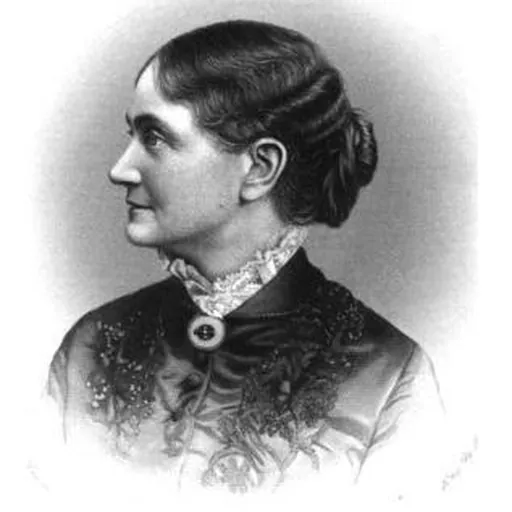
About Mary Barr Clay
Lived 1839 – 1924 (aged 84). Mary Barr Clay was an American politician, suffragist and sports journalist, known for Women's suffrage.
Mary Barr Clay (October 13, 1839 – October 12, 1924) was a leader of the American women's suffrage movement. She also was known as Mary B. Clay and Mrs. J. Frank Herrick.
Family background The elder daughter of Cassius Marcellus Clay and his wife Mary Jane Warfield, Mary Barr Clay was born on October 13, 1839, in Lexington, Kentucky. Clay married John Francis "Frank" Herrick, of Cleveland, Ohio, on October 3, 1866. The couple had three sons: Cassius Clay Herrick (July 17, 1867 – March 1935); Francis Warfield (February 9, 1869 – May 16, 1919); and Green (August 11, 1871 – 10 Jan 1962). The couple divorced in 1872. After divorce she dropped the Herrick surname and took back her surname of Clay. She also changed the last names of her two youngest sons to Clay.
In 1878, Clay's parents divorced after more than 40 years of marriage. Her mother Mary Jane Warfield Clay was left homeless after she had managed White Hall, the family estate, for 45 years. This inequality in property rights galvanized Clay into joining the women's rights movement. She soon brought her three younger sisters with her. Laura Clay, the youngest, also became very active in the movement.
Public career In May 1879, Mary B. Clay went to St. Louis, Missouri to attend the tenth anniversary of the National Woman Suffrage Association. She soon became a Kentucky delegate for that organization, serving as a vice-president. She was already a Vice President for the American Woman Suffrage Association. There she met Susan B. Anthony and arranged for the suffrage leader to speak in Richmond, Kentucky.
Clay became the first Kentuckian to hold the office of president in a national woman's organization when she was elected president of the American Woman Suffrage Association in 1883. Mary B. Clay was also the first Kentucky woman to speak publicly on women's rights.
She corresponded with Susan B. Anthony, Lucy Stone, Alice Stone Blackwell and other leading suffragists. She is credited with drawing her younger sister Laura Clay into the women's rights movement. The younger Clay became better known in history as a women's rights advocate.
Death Her public life largely ended in 1902, as she dealt with ill health and family obligations. Clay died on October 12, 1924, one day shy of her 85th birthday, and is interred at Lexington Cemetery.
Don’t just read it —
keep it.
Full-length biographies made to live with: read them, listen on the way to work, watch them tonight.
- E-book
- Audio
- Video
Instant download · yours to keep · every purchase keeps this site free
Important facts
People in Mary Barr Clay's life
Named in this biography and alive at the same time
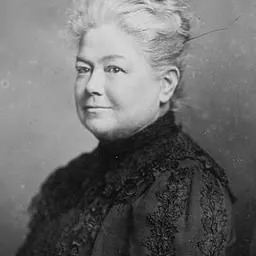
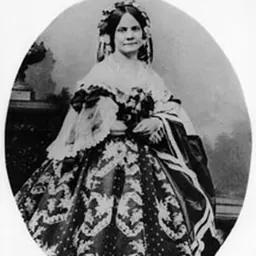

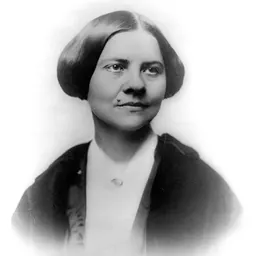


Related people
Same field, nearest in time




Contemporaries
People whose lives overlapped Mary Barr Clay's

Frequently asked questions
Who was Mary Barr Clay?
American suffragist leader (1839-1924)
When was Mary Barr Clay born?
Mary Barr Clay was born on 13 October 1839 in Lexington.
When did Mary Barr Clay die?
Mary Barr Clay died on 12 October 1924 in Richmond.
What was Mary Barr Clay's occupation?
Mary Barr Clay was a politician, suffragist and sports journalist.
What was Mary Barr Clay known for?
Mary Barr Clay was known for Women's suffrage.
What nationality was Mary Barr Clay?
Mary Barr Clay was American.
Sources & further reading
Cite this page
APA: Biography.guide. (2026). Mary Barr Clay. https://biography.guide/mary-barr-clay/
MLA: "Mary Barr Clay." Biography.guide, https://biography.guide/mary-barr-clay/.
Chicago: "Mary Barr Clay." Biography.guide. https://biography.guide/mary-barr-clay/.
Data last updated: 2026-09-23 · Spot an error? Report a correction.
Portrait: Wikimedia Commons · author & licence
Page generated 2026-09-27 05:06 UTC