
About Mary Barnard
Lived 1909 – 2001 (aged 91). Mary Barnard was an American translator, poet, biographer and writer.
Mary Ethel Barnard (December 6, 1909 – August 25, 2001) was an American poet, biographer and Greek-to-English translator. She is known for her elegant rendering of the works of Sappho, a translation which has never gone out of print. to Samuel Melvin and Bertha Hoard Barnard. Her father worked in the timber industry; growing up, she saw much of the backwoods in the vicinity as she accompanied her father to logging camps. She studied at Reed College, just south of the Columbia River in Portland, Oregon, graduating in 1932. While at Reed, Barnard began to read modernist poets, such as T. S. Eliot, Ezra Pound, H. D., and E. E. Cummings.
After graduating from Reed, Barnard worked for a few years as a social worker for the Emergency Relief Administration. In 1935, Barnard was awarded the Levinson Prize by the journal Poetry; she used the prize money to fund a move to New York state the following year. Barnard won Yaddo residencies in 1936 and 1938. In 1939, through the influence of Ezra Pound, she was made the first curator of The Poetry Collection at the Lockwood Memorial Library (University at Buffalo, New York); in that role she arranged readings and amassed the writing of many modern poets. Some of her first poetry was published in 1940, in Five Young American Poets, published by New Directions Publishing founded by James Laughlin.
She worked from 1945 to 1950 as research assistant for Carl van Doren, biographer of Benjamin Franklin and generalist historian of Americana. Van Doren and Barnard had a common interest in the poet Elinor Wylie. Barnard also worked as a freelance writer. Barnard was also a member of the American Association of University Women (AAUW).
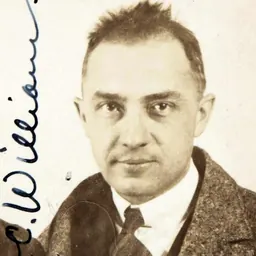
Barnard was mentored via airmail from Italy by Ezra Pound after she sent him six poems, and was introduced to the likes of William Carlos Williams and Marianne Moore. This generated a lifetime of lengthy correspondence with the former in addition to comprehensive instruction on the art of poetry from Pound. Pound encouraged Barnard to use translations to hone her poetic abilities.
She returned to Vancouver in 1957 after fifteen years on the East Coast and continued to write, mostly original poetry and prose, until her death.
Works A Few Poems (1952) Sappho: A New Translation (University of California Press, 1958) Mythmakers (Ohio University Press, 1966) Collected Poems (Breitenbush Books, 1979, introduction by William Stafford) Three Fables (Breitenbush Books, 1983) Assault on Mt. Helicon: A Literary Memoir (University of California Press, 1984) Time and the White Tigress (Breitenbush Books, 1986, linocuts by Anita Bigelow) Nantucket Genesis: The Tale of My Tribe (1988, memoir in verse)
Don’t just read it —
keep it.
Full-length biographies made to live with: read them, listen on the way to work, watch them tonight.
- E-book
- Audio
- Video
Instant download · yours to keep · every purchase keeps this site free
Important facts
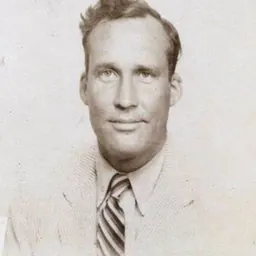
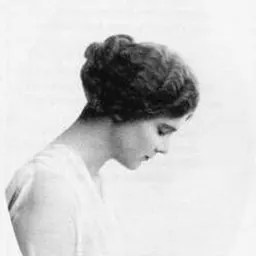
People in Mary Barnard's life
Named in this biography and alive at the same time





Related people
Same field, nearest in time


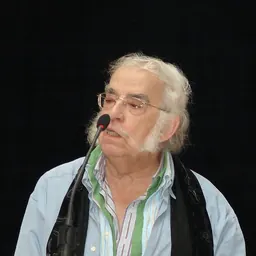

Contemporaries
People whose lives overlapped Mary Barnard's



Frequently asked questions
Who was Mary Barnard?
American poet and translator (1909-2001)
When was Mary Barnard born?
Mary Barnard was born on 6 December 1909 in Vancouver.
When did Mary Barnard die?
Mary Barnard died on 25 August 2001.
What was Mary Barnard's occupation?
Mary Barnard was a translator, poet, biographer and writer.
What nationality was Mary Barnard?
Mary Barnard was American.
Sources & further reading
Cite this page
APA: Biography.guide. (2026). Mary Barnard. https://biography.guide/mary-barnard/
MLA: "Mary Barnard." Biography.guide, https://biography.guide/mary-barnard/.
Chicago: "Mary Barnard." Biography.guide. https://biography.guide/mary-barnard/.
Data last updated: 2026-09-20 · Spot an error? Report a correction.
Page generated 2026-09-27 05:04 UTC