
About Mary Anne Rawson
Lived 1801 – 1887 (aged 85–86). Mary Anne Rawson was a British activist, philanthropist and abolitionist.
Abolitionism and campaigning Her abiding interest from the mid-1820s to the 1850s was a campaign in the Sheffield area against slavery. Rawson was a founding member in 1825 of the Sheffield Female Anti-Slavery Society, which campaigned for the rights of slaves in the British Empire. The society used lectures and pamphlets to achieve a decrease in sales of slave-produced West Indian goods, such as coffee and sugar. It formally wound up after the passage of the Slavery Abolition Act 1833.
In 1837 Rawson became secretary of the Sheffield Ladies Association for the Universal Abolition of Slavery,
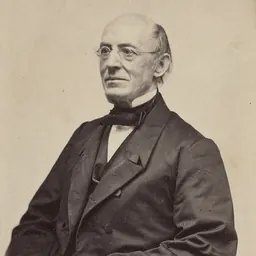
Rawson corresponded with figures such as George Thompson in Britain as well as Frederick Douglass and William Lloyd Garrison in the United States.
Her father having died subsequent to his financial difficulties and loss of Wincobank Hall, Rawson's early widowhood allowed her to return and pay off her father's debts. She and her mother resumed residence at Wincobank Hall, both leading politically active lives.
The painting shows Rawson in a commemorative painting of the world's first international anti-slavery conference, which attracted delegates from America, France, Haiti, Australia, Ireland, Jamaica and Barbados in 1840.
In 1841, Rawson and her sister, Emily Read, arranged for a day school to be created in the chapel on the grounds of Wincobank Hall. The school was open to local children. In 1860 the sisters created a trust to provide for its financial endowment and management. The school continued until 1905.
In 1899, Wincobank Hall was opened as a ‘rescue home’ by the Salvation Army, which ran on the site until 1915. By 1921, Wincobank Hall was said to be in ‘a state of desolation’. The hall was subsequently demolished to make way for the Flower Estate, a housing estate so-called as all the streets are named after flowers and plants.
Today the chapel has been restored for community use.
Personal life She married William Bacon Rawson, a Nottingham banker and iron founder, but the marriage was short-lived due to William's early death in 1829. Their only child, Elizabeth, died in 1862 aged 33.
Publications In 1834, Rawson compiled a collection of original writings against slavery and in favour of its abolition in the British colonies. The contributions came from fifty writers. The University of Sheffield holds a collection of Rawson's materials related to the poet James Montgomery.
Don’t just read it —
keep it.
Full-length biographies made to live with: read them, listen on the way to work, watch them tonight.
- E-book
- Audio
- Video
Instant download · yours to keep · every purchase keeps this site free
Important facts
People in Mary Anne Rawson's life
Named in this biography and alive at the same time



Related people
Same field, nearest in time



Contemporaries
People whose lives overlapped Mary Anne Rawson's






Frequently asked questions
Who was Mary Anne Rawson?
British activist
When was Mary Anne Rawson born?
Mary Anne Rawson was born in 1801 in Sheffield.
When did Mary Anne Rawson die?
Mary Anne Rawson died in 1887 in Wincobank.
What was Mary Anne Rawson's occupation?
Mary Anne Rawson was an activist, philanthropist and abolitionist.
What nationality was Mary Anne Rawson?
Mary Anne Rawson was British.
Sources & further reading
Cite this page
APA: Biography.guide. (2026). Mary Anne Rawson. https://biography.guide/mary-anne-rawson/
MLA: "Mary Anne Rawson." Biography.guide, https://biography.guide/mary-anne-rawson/.
Chicago: "Mary Anne Rawson." Biography.guide. https://biography.guide/mary-anne-rawson/.
Data last updated: 2026-09-22 · Spot an error? Report a correction.
Page generated 2026-09-27 05:18 UTC