
Mary Agnes Chase
U.S. botanist, botanical collector and scientific illustrator
About Mary Agnes Chase
Lived 1869 – 1963 (aged 94). Mary Agnes Chase was an American botanist, agrostologist, botanical collector, suffragist, scientific illustrator and botanical illustrator.
Mary Agnes Chase (April 29 1869 – September 24 1963) was an American botanist who specialized in agrostology, the study of grasses. Although lacking formal education past elementary school, Chase was able to rise through the ranks as a botanist at the United States Department of Agriculture, beginning as an illustrator under the tutelage of Albert Spear Hitchcock, and eventually becoming a senior botanist, overseeing the USDA's Systematic Agrostology department. Chase conducted fieldwork abroad in Europe and South America and published several books, including the First Book of Grasses: The Structure of Grasses Explained for Beginners, which was later translated into Spanish and Portuguese. Chase was recognized for her work as an agrostologist with numerous awards, including a Certificate of Merit issued by the Botanical Society of America in 1956. Although Chase's participation in this movement was not always well received by her peers in the scientific community, she remained committed to the cause of women's suffrage.
Life and early career Mary Agnes Meara was born on April 29 1869, in rural Iroquois County, Illinois but moved to Chicago several years later following the death by lynching of her father (an Irish railway worker named Martin John Meara, accused of killing his 11 year old son), at which point the family changed their last name to Merrill. Mary Agnes was the third of six children and, upon moving to Chicago, was raised by her mother, Mary Brannick Meara, and maternal grandmother. Although Chase attended school as a child, her formal education ended after she completed elementary school. Beginning in 1905 Chase worked under the instruction of Albert Spear Hitchcock who, after observing Chase's skill as an illustrator, came to regard her as his collaborator instead of his mentee.
In 1910 and 1915 Chase and Hitchcock coauthored two works on North American species of grasses from the genus Panicum, and in 1917 they released Grasses of the West Indies, which drew heavily on Chase's fieldwork in Puerto Rico four years earlier. After Hitchcock returned from this expedition he requested that the remaining $54 of his grant be given to Chase to help fund her own fieldwork. This request was denied by a Smithsonian official who responded, "I doubt the advisability of engaging the services of a woman for the purpose [of the expedition]." Women unfurled a banner saying "Votes for Women" down into the White House gallery while in the attendance of a House of Representatives meeting; In response to these demonstrations, many women in the NWP were arrested and sent to workhouses, with Paul and Chase included. She visited the Hackel Herbarium in the National History Museum of Vienna, and collaborated with Eduard Hackel to collect alpine grass specimens. the University of Michigan Herbarium, the Gray Herbarium within the Harvard University Herbaria, the Swedish Museum of Natural History and the herbarium at the Royal Botanic Gardens, Kew.
Mentioned Awards and honors 1956, Certificate of Merit from the Botanical Society of America 1958, Honorary doctorate from the University of Illinois 1958, Honorary fellowship of the Smithsonian Institution 1961, Fellow from the Linnean Society of London
Mentioned publications 1915, Hitchcock, A. S. & A. Chase. Tropical North American species of Panicum. Washington: Government Printing Office. . 1917, Hitchcock, A. S. & A. Chase. Grasses of the West Indies. Washington: Government Printing Office. https://doi.org/10.5962/bhl.title.53799. 1922, Chase, A. First book of grasses: The structure of grasses explained for beginners. New York: The Macmillan Company. . 1951, Chase, A. & A. S. Hitchcock. Manual of the grasses of the United States, Second Edition. Washington, DC: U.S. Department of Agriculture.
Don’t just read it —
keep it.
Full-length biographies made to live with: read them, listen on the way to work, watch them tonight.
- E-book
- Audio
- Video
Instant download · yours to keep · every purchase keeps this site free
Important facts
more
Mary Agnes Meara, W. I. Chase, Mrs W. I. Chase, Mary Agnes Mera, M. Agnes ChasePeople in Mary Agnes Chase's life
Named in this biography and alive at the same time



Related people
Same field, nearest in time
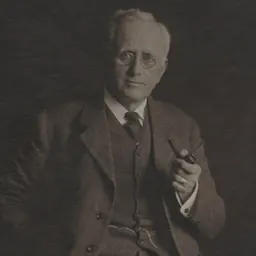

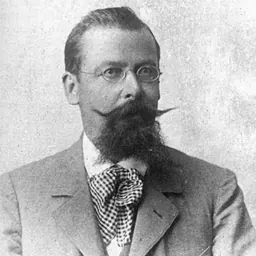
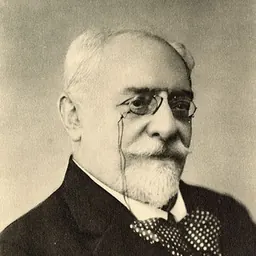
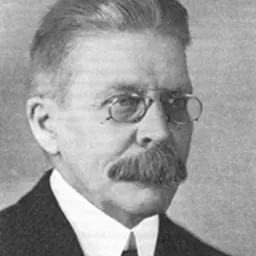

Contemporaries
People whose lives overlapped Mary Agnes Chase's


Frequently asked questions
Who was Mary Agnes Chase?
U.S. botanist, botanical collector and scientific illustrator (1869–1963)
When was Mary Agnes Chase born?
Mary Agnes Chase was born on 29 April 1869 in Iroquois County.
When did Mary Agnes Chase die?
Mary Agnes Chase died on 24 September 1963 in Bethesda.
What was Mary Agnes Chase's occupation?
Mary Agnes Chase was a botanist, agrostologist, botanical collector, suffragist, scientific illustrator and botanical illustrator.
What nationality was Mary Agnes Chase?
Mary Agnes Chase was American.
Sources & further reading
Cite this page
APA: Biography.guide. (2026). Mary Agnes Chase. https://biography.guide/mary-agnes-chase/
MLA: "Mary Agnes Chase." Biography.guide, https://biography.guide/mary-agnes-chase/.
Chicago: "Mary Agnes Chase." Biography.guide. https://biography.guide/mary-agnes-chase/.
Data last updated: 2026-09-20 · Spot an error? Report a correction.
Page generated 2026-09-27 05:34 UTC