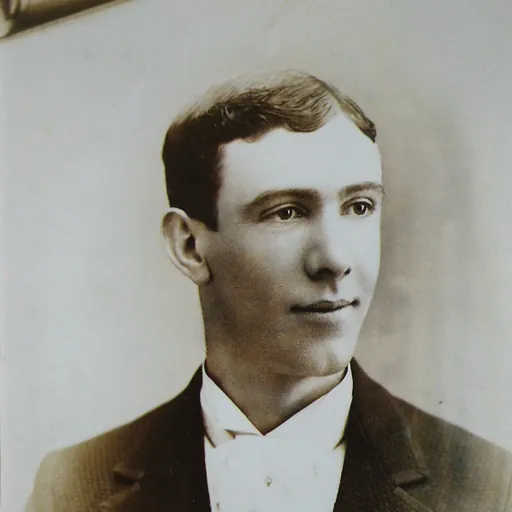
About Marty Hogan
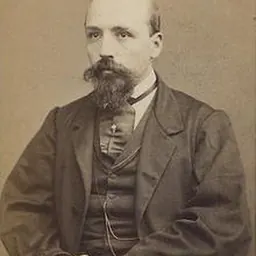
Lived 1869 – 1923 (aged 53). Marty Hogan was an American baseball player.
Martin Francis Hogan (October 25, 1869 – August 15, 1923), nicknamed "the Indianapolis Ringer", was an English-born right fielder in Major League Baseball (MLB) who played for the Cincinnati Reds and St. Louis Browns (1894–1895). After leaving the National League, Hogan moved on to the minor league Indianapolis Hoosiers. Some sources suggest he set a national baserunning record in the 1890s.
When his playing career ended, he worked as a minor league baseball manager in Ohio, Pennsylvania, and Wisconsin. As a manager, Hogan groomed several pitchers who excelled in the major leagues. He signed future stars Stan Coveleski and Sam Jones to their first professional contracts and helped launch the career of Roy Castleton, the first native of Utah to play in the major leagues. For reasons that are unclear, he did not actually manage a franchise in the short-lived alternative league and resumed his career as a minor league manager. Hogan eventually settled in his adopted hometown of Youngstown, Ohio, where he died in 1923.
Early years Hogan was born to Patrick J. Hogan, Sr., and his wife, the former Margaret Gillen, in the industrial town of Wednesbury, Staffordshire (now West Midlands, England.)
The Hogan family settled on Youngstown's near west side, in a working-class district known as Westlake's Crossing. In Youngstown, Hogan's father, Patrick J. Hogan, Sr., secured employment as a steelworker, while his older brother, Patrick J. Hogan, Jr., worked his way up to the position of "roller" at the Union Steel Company (later consolidated with U.S. Steel). Martin Hogan moved in the direction of an athletic career, gaining early recognition as a "foot racer". and a third indicated he was well liked among players with whom he worked.
Playing career The 1894 St. Louis Browns (Hogan in second row, second from left). alt=Poster depicting portraits of several men, most of whom have their heads tilted slightly. Before joining the major leagues, Hogan played for minor league baseball teams in the northeastern United States, including the Akron (Ohio) Summits and Scranton (Pennsylvania) Miners. He began his career as a major league player with the Cincinnati Reds, on August 4, 1894, but played only six games before switching to the St. Louis Browns (later known as the Cardinals). By this time, St. Louis had been eliminated from league championship contention, after being tied with Cleveland and Boston for first place in April. Hogan participated in 29 games with St. Louis in the 1894 season. According to the 1895 edition of Spalding's Official Baseball Guide, he ranked tenth among league outfielders with a percentage of .941 for put-outs, assists, and errors. Among his teammates, Hogan held the second highest percentage of stolen bases for games played. "On the bases and in the field the lad is a wonder", the paper stated. "His only fault is weakness at the bat, but increasing confidence and familiarity with [National] League players will undoubtedly improve him in this respect". On May 17, 1895, the Youngstown Daily Vindicator reported that Hogan had been "farmed out" as a center fielder to the Indianapolis Hoosiers, a club connected to the well-organized Western League, the predecessor of the American League. The Vindicator added, "At any time by giving a proper notification the St. Louis team, of which club Hogan is a member, can again secure his services".
At Indianapolis, Hogan led at the bat, The Vindicator went on to quote the Indianapolis Journal as follows: "Among the features of the forenoon game was Hogan's batting. He got five hits, one a home run, and his bunting was even cleverer than usual, and that is saying a great deal". The World Almanac and Encyclopedia 1906, for instance, reported that Hogan "lowered the base-running record" in 1895, noting that "he distance around the bases is 120 yards". The article stated that, while Hogan was "said to have beaten Berthrong's base-circling record of 13 2–5 seconds by a fifth of a second", this alleged feat was not "performed under official sanction". (A similar description of Hogan's claim appeared elsewhere in the same edition of Sporting Life; a brief news item suggested he claimed to set the record "in Indianapolis in the 80's". ) Baseball historian Jon Daly traced Hogan's contested record to 1898; he speculated that Ben Morgan, an official of the National Association, "disputed that claim when doing a study of field day records". Newspaper reports suggest he defended his position as baserunning champion of the Western League in various pre-game competitions. On August 2, 1895, the Vindicator noted that the outfielder had "a rival for the base running honors in the western league in George Nichol of the Milwaukees who, it is claimed, can get down to first quicker than Hogan". The article added, "A race between the two is talked of". "The Hoosiers have in Mart Hogan a pretty good extra card", the article added. "Indianapolis goes around the land, and their sprinting outfielder meets all comers in foot races before the game. He has not yet been defeated".
In February 1896, Hogan received an offer to manage the Youngstown (Ohio) Puddlers, a minor league team associated with the Interstate League. The Vindicator reported that the outfielder refused the offer. "Hogan expects to play again with the St. Louis team in the National League", the Vindicator stated. Sporting Life reported, in May 1896, that Hogan was unsuccessful in his efforts to obtain a final release from the Browns, who retained him as an "extra" right fielder. "Marty has not been given any kind of trial by the manager of the Browns, although he stood high in batting and base running in the Western League last year", the article stated. "Marty Hogan...through an inadvertent mix-up of pugilism and baseball...tried to hammer the face off the ball, which had tantalized the other Hoosiers", the article stated, "and when Marty's work was done, the ball was out of the lot and he was on second base". "Marty Hogan...made a bad fumble, and then looked up at the sky to see if it had moved while he was locating the ball", the paper reported. "It was a good bluff, but the crowd discovered Marty's weakness before the end of the game". The article called Hogan "one of the fastest outfielders and baserunners in the Western League" and predicted he would "greatly strengthen the Grand Rapids outfield". Less than four months later, in May 1897, he was released by the Indianapolis ball club. In June 1897, the Kansas City Journal indicated Hogan had moved on to the Dayton (Ohio) Old Soldiers, a team affiliated with the Class B Interstate League, where he was "playing a sensational center field". In October of the same year, Sporting Life speculated Hogan would remain with Dayton during the upcoming 1898 season. "Marty Hogan's contract with Dayton is such that he cannot be reserved, as are the rest of the players", the article stated. "Unless Marty has a better offer to play with some other team it is safe to say that he will be with Dayton next year". Further research is required to determine how long Hogan continued to play as an outfielder in the minor leagues. (His obituary indicated that he also worked as a major league trainer. In February 1903, Sporting Life reported that the former baseball player's friends were "anxious to get him appointed on the staff of American League umpires". In 1902, Hogan was hired as manager of the Youngstown Ohio Works, an independent ball club sponsored by Joseph A. McDonald, superintendent of the Ohio Works of the Carnegie Steel Company. Then, in January 1904, Sporting Life reported that Hogan had "declined the proposition to put a Central League into Youngstown". In May 1905, however, the Youngstown club was one of eleven teams to join the Protective Association of Independent Clubs, which formed the basis of the Class C Division Ohio–Pennsylvania League. Ultimately, the league trimmed down to eight teams from the following cities: Akron, Ohio; Homestead, Pennsylvania; Lancaster, Pennsylvania; Newark, Ohio; Niles, Ohio; Sharon, Pennsylvania; Youngstown, and Zanesville, Ohio. That September, the Youngstown Ohio Works won the league championship, although sources disagree on the team's final record. As baseball researcher John Zajc writes: "The Reach Guide (1906) credits Youngstown with an 84–32 won-lost record where the Spalding Guide of the same year lists a 90–35 record. The Encyclopedia of Minor League Baseball (1993) tells a third story, giving Youngstown an 88–35 mark". The manager had no difficulty compensating for these losses, however. The sports paper reported, in October 1905, that future major-leaguer Louis "Lew" Schettler, "the star twirler of the Sharon team", was anxious to join the Ohio Works team. The paper added that Schettler "would like a year under Marty Hogan". In December 1905, the paper confirmed that Hogan had secured catcher Lee Fohl and pitcher Schettler, "the star battery of this league for last season". The paper added that the manager had "signed two young Cleveland players in outfielder Hugh Donovan and first baseman Harry [Schwartz]". In addition, Hogan attempted to sign on as pitcher Walter Purdue, "second rush of the Youngstown polo team". "Assurances have been received that representatives from Akron, Youngstown, Zanesville, Newark, Lancaster, Mansfield, New Castle, East Liverpool, Steubenville and Erie, Pa., will be present", the paper reported, "and from there an eight or ten club circuit will probably be formed, with McKeesport, Butler and Ashtabula as applicants also". Among others, Hogan announced the "engagement" of Utah-born pitcher Roy Castleton. According to Sporting Life, Hogan predicted the club would win the pennant at the close of the upcoming season. with an 84–53 record, The article added that Hogan "was presented with a ring and each player was given a pair of gold cuff link inscribed 'O. & P. Champs 1906'".
The following month, in November 1906, Hogan responded to rumors that Walter East, manager of the Akron Rubbernecks, had agreed to "lay down" to the Youngstown club, enabling them to win the pennant. "Instead of laying down to us, Akron loaded up with catcher [Red] Munson and pitcher Bob Spade", Hogan said in an interview with the Pittsburgh Press. "They worked their heads off to down us, but could not do so". Hogan went on to assert that the Akron club, and its manager, received generous incentives to defeat Youngstown. "The Akron owner offered the players a bonus of $500 if they would beat us out in addition to a $300 wad for East", Hogan said. Then, he accused East himself of attempting to "fix" a game during the 1906 season, claiming that the Akron manager had "tried to get another club to take things easy against Akron so that Akron could beat us for the pennant". In December 1906, Sporting Life reported that the team's backers, Joseph and Thomas McDonald, who served as superintendent and assistant superintendent, respectively, of the Ohio Works of the Carnegie Steel Company, were compelled to invite additional investors because of planned (and costly) improvements at the steel plant. the Ohio Works manager appeared unwilling to negotiate the terms of a new contract without leverage. According to the Vindicator, Hogan publicly mulled an offer presented by a team in Nashville, whose representatives followed him to the train station. The same newspaper article indicated that Hogan later reached a verbal agreement with Ohio Works co-owners Joseph and Thomas McDonald, announcing soon afterwards that he would remain with the local ball club. The paper observed that "a move in offering the Youngstown franchise for sale had created a furor in the league". Then, on January 13, The New York Times reported that the Youngstown team would participate in an eight-team "outlaw league" comprising clubs from Elmira, New York; Lancaster, Pennsylvania; Pittsburgh, Reading, Pennsylvania; Scranton, Pennsylvania; Wilkes-Barre, Pennsylvania; and Williamsport, Ohio. The Times described the envisioned league as "the most powerful 'outlaw' league the National Association of Professional Baseball Clubs was ever called upon to oppose", and stated that Hogan would "be at the head of" the Youngstown team. These rather confusing reports were followed by the abrupt sale and relocation of the Ohio Works team in February 1907.
Zanesville On February 18, 1907, the Zanesville Signal reported that Hogan had received permission from the McDonald brothers to negotiate a $3,000 deal for the sale of the Youngstown club, including its players, to a group of investors in Zanesville, Ohio. The Zanesville investors reportedly raised an additional $15,000 to enter the team into the Ohio–Pennsylvania League, although they were forced to settle for the less prestigious Pennsylvania–Ohio–Maryland League. The eight-team P-O-M league included clubs from Braddock, Pennsylvania; Charleroi, Pennsylvania; East Liverpool, Ohio; McKeesport, Pennsylvania; Steubenville, Ohio; Uniontown, Pennsylvania; and Washington, Pennsylvania. Meanwhile, Hogan reportedly had some difficulty securing new players for the team. In June 1907, the Marion Daily Mirror described Zanesville's efforts to sign Bill Dithridge, a player in the Baltimore Eastern League, as "merely another of the pipe dreams of one Marty Hogan". The article added, "Dithridge is not to be sold to Zanesville, and he has informed Hogan that he will play with his team under no conditions whatever". The paper did observe, however, that Hogan had signed a Cleveland player named Tate and planned to secure another outfielder, "when three members of the present team will be canned". After settling in Zanesville, Hogan apparently received offers from other teams. Sporting Life reported in June 1907 that Hogan was invited to manage a team in Rochester, New York, but had turned down the offer. Then, in October, Hogan was offered management of yet another league franchise in South Bend, Indiana, but, once again, he declined. He managed the Zanesville ball club for two seasons. During its first season, the team placed first in the eight-team P-O-M League, with a record of 15 wins and seven losses. According to Sporting Life, the "schedule meeting" for the Central League that year was to be held in Zanesville on March 17 (St. Patrick's Day). "According to the plans of the magnates the season this year will consist of 140 games, not any of the club owners being willing to return to the 154-game schedule", the paper reported. The paper added that Hogan was "making light of his task" of signing up players for his team. "His acquaintance with players, especially in the independent ranks, gives him an advantage which few managers have". Further research is needed to determine the Zanesville Infants' league ranking at the close of the 1908 season, but available information shows that the team neither won the championship nor placed as a runner-up. Once Hogan signed a contract, Foster moved on to lead another club in Trenton, New Jersey. Indeed, by the close of the 1909 season, the Lancaster Red Roses had worked up a 75–39 record, As Spalding's Baseball Guide (1910) reported: "Lancaster, under manager Marty Hogan, won its first pennant in the league, and the top rung of the ladder was only gained by the hardest kind of fighting". Hartley noted that, on the closing day of the season, Hogan accepted the Farnsworth Cup, "the Tri-State trophy", on behalf of his team. "Between the first and second innings the [Lancaster] players presented Manager Marty Hogan with a beautiful silver set and a silver loving cup", he added. The inscribed silver cup reportedly left Hogan "so surprised that he was unable to respond". The newspaper added, "The real enthusiasm was awakened, however, by the floating of the championship pennant, awarded by a Phila. [sic] paper". He made his professional debut with the Philadelphia Athletics three seasons later. Indeed, the Ogden Standard had praised Hogan as a "live wire" back in February 1909, when he "grabbed up the three brothers of Harry Coveleski of the Phillies, and had them all sign contracts". Highlights of the season may have included an exhibition game with the Philadelphia Phillies, which was scheduled to be held in Lancaster on April 2, 1909. Lancaster Red Roses (1909), with Hogan (standing fourth from right) and Coveleski (left of Hogan). alt=Group of 14 men. The majority are standing, while some in the front are sitting. The following year, however, the Red Roses' performance fell short of the previous season when it placed second, with 63 wins and 47 losses. According to Spalding's Baseball Guide (1911), the Lancaster organization was one of several teams in the league caught off guard by a surprisingly strong new club from Altoona, Pennsylvania, which was "sent along at a clip that practically clinched the season". While the Red Roses pulled out of a mid-season slump, the "Altoonas" prevailed with a 72–38 record. In December 1910, a little more than two months after the article appeared, Hogan reportedly set down roots in Lancaster, opening a cigar shop and billiard hall in the city. His relationship with the Red Roses would not last more than another season, however. In 1911, Hogan's final year as manager of the Lancaster team, the club placed fourth in the eight-team league, with 54 wins and losses, respectively. The team's challenges included salary limits that sharply limited its capacity to attract more experienced players. Earlier that year, the Tri-State League's imposition of $1,900 limits for individual salaries had created a stir throughout Lancaster, where fans resented the fact that outgoing clubs had been permitted to vote on an issue that would not affect them. Club president John H. Myers' efforts to persuade the league to "advance the individual salary limit" proved unsuccessful, and Hogan "was directed to secure the best team that can be secured" under the circumstances. Ultimately, the 1911 league championship went to a franchise from Reading, Pennsylvania, which "took the lead at the beginning of the season and never was headed until the finish", closing with a record of 74–35.
United States Baseball League In March 1912, organizers of a proposed United States Baseball League–described by members of the sports establishment as an "outlaw league"–met in New York City's Hotel Imperial. In the end, Browne was named as head of the Washington team when McKinnon was appointed manager of the Cincinnati club. Sporting Life reported that the club's members "received their money in Cincinnati on February 12". The paper added, however, that the former Ohio Works manager was also considering an offer in Zanesville. Ultimately, Hogan went to Zanesville, where he managed the Zanesville Flood Sufferers in 1913. The team's nickname was evidently inspired by a massive flood that had devastated cities and towns throughout central and southern Ohio–including Zanesville–in the spring of 1913. In April 1913, Sporting Life noted that the Zanesville club would "stick to the circuit", despite the fact that the city was "hit hard by the recent floods". According to the paper, Zanesville's ballpark was "completely destroyed, but the games will be played at the Fair Grounds". According to Sporting Life, the new league was expected to include teams from Akron, Youngstown, Canton, Steubenville, Wheeling, and either Johnstown or McKeesport. Sporting Life, which estimated the total population of the league's participating cities at 412,415, noted that Youngstown (with a population of 79,066) was the largest city in the Interstate League.
At Zanesville, Hogan signed future Cleveland Indians pitcher Samuel Pond ("Sad Sam") Jones to his first professional contract. When Jones was faced with the prospect of a pay cut, he approached Hogan on the street and demanded that he be released from his contract immediately. The paper added that Hogan, at that point, was working as a "successful businessman" in Youngstown, Ohio. The report observed, "Manager Wrigley was strongly recommended to the club by Connie Mack". Further research will be required to determine whether Hogan's career as a minor league manager continued after this point.
Personal life Marty Hogan (center), with nephews Edward (right) and Raymond (left), about 1912. Hogan was married to the former Agnes Daugherty on October 28, 1896, in St. Columba Church, in Youngstown, Ohio. After a wedding trip, A front-page article in the Vindicator reported that Amy Hogan was one of three passengers in an automobile whose driver had failed to slow down at a curve in the road and skidded into a telephone pole near Hubbard, Ohio. The article noted that Amy Hogan had recently graduated from Ursuline Academy and described her as "a girl of exceptional talents, being especially prominent in local amateur theatricals and entertainments". Published cemetery records also suggest that Martin Hogan's wife, Agnes Hogan, gave birth to an unnamed infant, who died on September 6, 1898. The infant was buried in a section of the cemetery usually reserved for unbaptized children and the indigent. Hogan's obituary noted that, at some point, he helped to organize the Youngstown Gun Club. In the early 1920s, Edward Hogan emerged as a track and field standout at the University of Notre Dame,
Final years In the mid-1910s, Hogan permanently resettled in Youngstown, where he became athletic director of Thomas Field, a ballpark owned by the local Brier Hill Industrial Works. Further research will be required to determine Martin Hogan's level of involvement, if any, in local baseball during the last decade of his life.
Martin F. Hogan was only 54 years old when he died at his north side home from injuries sustained months earlier in an auto accident. Several blood transfusions failed to revive him, and a bout with pneumonia proved fatal. Funeral services for Hogan were held at St. Columba Church, and he was buried at Youngstown's Calvary Cemetery. His wife, Agnes, survived him along with his brother, Patrick. A sister, Mrs. John Dillon, had died several years earlier. Hogan's obituary in The Youngstown Daily Vindicator highlighted his contributions to organized sports, observing that many young athletes he trained and managed went on to careers in major league baseball. Major league players who worked with Hogan during his years as a minor league manager included Roy Castleton, Stan Coveleski, Lee Fohl, Sam Jones, Billy Phyle, and Louis Schettler. His disputed baserunning record remains a curious footnote in American baseball history.
Don’t just read it —
keep it.
Full-length biographies made to live with: read them, listen on the way to work, watch them tonight.
- E-book
- Audio
- Video
Instant download · yours to keep · every purchase keeps this site free
Important facts
People in Marty Hogan's life
Named in this biography and alive at the same time





Related people
Same field, nearest in time
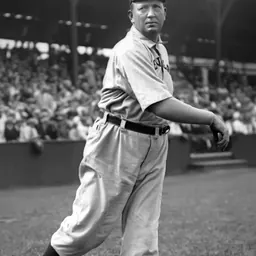


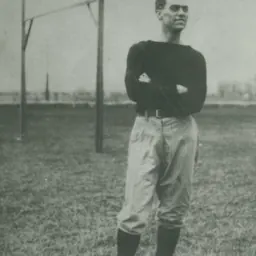
Contemporaries
People whose lives overlapped Marty Hogan's

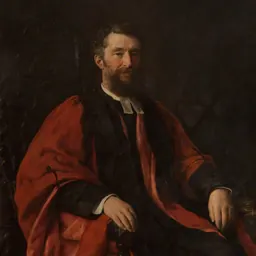



Frequently asked questions
Who was Marty Hogan?
American baseball player (1869-1923)
When was Marty Hogan born?
Marty Hogan was born on 25 October 1869 in Wednesbury.
When did Marty Hogan die?
Marty Hogan died on 15 August 1923 in Youngstown.
What was Marty Hogan's occupation?
Marty Hogan was a baseball player.
What nationality was Marty Hogan?
Marty Hogan was American.
Sources & further reading
Cite this page
APA: Biography.guide. (2026). Marty Hogan. https://biography.guide/marty-hogan/
MLA: "Marty Hogan." Biography.guide, https://biography.guide/marty-hogan/.
Chicago: "Marty Hogan." Biography.guide. https://biography.guide/marty-hogan/.
Data last updated: 2026-09-23 · Spot an error? Report a correction.
Portrait: Wikimedia Commons · author & licence
Page generated 2026-09-27 05:08 UTC