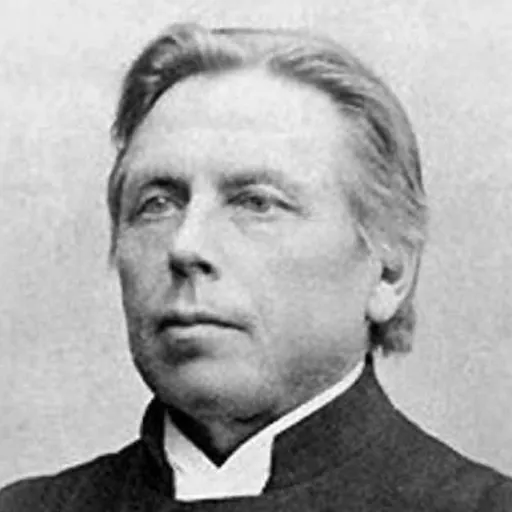
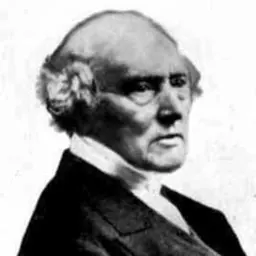
Martti Rautanen
Finnish missionary and scientific collector
About Martti Rautanen
Lived 1845 – 1926 (aged 80). Martti Rautanen was a Finnish translator, bible translator, priest, missionary, botanical collector and scientific collector.
Martti Rautanen and the congregation at the missionary station in Olukonda, 1899. Martti (Martin) Rautanen (10 November 1845 Tikopis , Ingria – 19 October 1926 Olukonda, South West Africa) was the pioneer of the Finnish Mission in Ovamboland, South West Africa.
Childhood and education Rautanen was born in a poor Finnish family in Ingria near St. Peterburg, Russia. Rautanen's family lived in the village of Tikanpesä in the parish of Novasolkka in the Yamburgsky Uyezd of Saint Petersburg Governorate. The family originated from Joroinen in the province of Savo in Eastern Finland, but had moved to Ingria. Rautanen considered himself a Russian as he was born and living in Russia. Encouraged by the pastor of his church and his mother, Rautanen left Ingria in 1863 for Helsinki to study at the preparatory school for missionaries organized by the Finnish Missionary Society.
He spoke several languages included Finnish, English, German, Dutch, Russian, Latin and Greek; he later learned Otjiherero and Oshindonga.
Missionary activities Rautanen departed from Finland with four colleagues on 24 June 1868 towards Ovamboland in present-day Namibia. Initially they worked with Carl Hugo Hahn of the German Rhenish Mission Society. From Walvis Bay they travelled via Hereroland where they arrived in April 1869 and spent there over a year. Finally, they reached Ovamboland in July 1870. The Finnish missionaries managed to start work primarily in the southeastern territory of the Ondonga tribe. The first mission station was founded that year at Omandongo, moving to Olukonda the following year. in 1885. The New Testament was published in 1903, but it took until 1920 before the whole Old Testament was translated and it was not printed until 1954. Rautanen's 'testament' for the Ovamboland people was a selection of texts published posthumously with the title Travel Rod in 1934. Rautanen also wrote Luther's Smaller Chatechism.
Scientific contributions Rautanen was also active in the study of ethnography. He respected and gave great value to the indigenous culture. His ethnographic collection is now deposited in the National Museum of Finland. Rautanen's contribution to scientific knowledge concerning Ovamboland is also considerable. He made meteorological observations and collected plants. His interest in plants followed on the 1885–86 visit by the Swiss botanist Hans Schinz; Rautanen was inspired and became an enthusiastic collector of plants and ethnographic material, collections which were later assimilated by museums in Finland, Germany and South Africa. In turn Schinz was impressed by Rautanen and named the genus Neorautanenia
Nakambale
Shortly prior to his death, Rautanen received an honorary doctorate in theology from the University of Helsinki. He loved to wear a skullcap, which for the locals resembled a small basket - okambale. His nickname was written on his tombstone. Rautanen is a respected person in present-day Namibia as well.
His diaries are held at the University of Turku.
The family’s home in Olukonda is now the Nakambale Museum.
Family
Rautanen married Frieda Kleinschmidt in 1872. She was the daughter of the German missionary Franz Heinrich Kleinschmidt; the couple had nine children, many of whom died at an early age due to malaria. Their daughter, Johanna was a teacher at Olukonda and died in 1966 at Onandjokwe.
Don’t just read it —
keep it.
Full-length biographies made to live with: read them, listen on the way to work, watch them tonight.
- E-book
- Audio
- Video
Instant download · yours to keep · every purchase keeps this site free
Important facts
People in Martti Rautanen's life
Named in this biography and alive at the same time


Related people
Same field, nearest in time


Contemporaries
People whose lives overlapped Martti Rautanen's


Frequently asked questions
Who was Martti Rautanen?
Finnish missionary and scientific collector (1845–1926)
When was Martti Rautanen born?
Martti Rautanen was born on 10 November 1845 in Tikopis.
When did Martti Rautanen die?
Martti Rautanen died on 19 October 1926 in Olukonda, Ovamboland.
What was Martti Rautanen's occupation?
Martti Rautanen was a translator, bible translator, priest, missionary, botanical collector and scientific collector.
What nationality was Martti Rautanen?
Martti Rautanen was Finnish.
Sources & further reading
Cite this page
APA: Biography.guide. (2026). Martti Rautanen. https://biography.guide/martti-rautanen/
MLA: "Martti Rautanen." Biography.guide, https://biography.guide/martti-rautanen/.
Chicago: "Martti Rautanen." Biography.guide. https://biography.guide/martti-rautanen/.
Data last updated: 2026-09-22 · Spot an error? Report a correction.
Portrait: Wikimedia Commons · author & licence
Page generated 2026-09-27 05:03 UTC