
About Martin Sandberger
Lived 1911 – 2010 (aged 98). Martin Sandberger was a German jurist, police officer and nazism.
Karl Martin Sandberger (17 August 1911 – 30 March 2010) was a German SS functionary during the Nazi era and a convicted Holocaust perpetrator. He was the commander of Sonderkommando 1a of Einsatzgruppe A, as well as of the Sicherheitspolizei and SD at the time of Nazi German occupation of Estonia during World War II. Sandberger perpetrated mass murder of the Jews in German-occupied Latvia and Estonia. As the Gestapo chief in Verona, he was also responsible for the arrest of Jews in Italy, and their deportation to Auschwitz concentration camp. Sandberger was the second-highest official of the Einsatzgruppe A to be tried and convicted. He was also the last-surviving defendant from the Nuremberg Military Tribunals. At the age of 20, he joined the Nazi Party and the SA. From 1932 to 1933, Sandberger was a Nazi student activist and student leader in Tübingen. On 8 March 1933, Sandberger and fellow student Erich Ehrlinger raised the Nazi flag in front of the main building at the University of Tübingen. (Like Sandberger, Ehrlinger would take charge of an Einsatzkommando in 1941, and in so doing, commit thousands of murders.)
By 1935, he had obtained his doctor of law degree. As a functionary of the Nazi student League, he eventually became a university inspector. In 1936. he became an enlisted member of the SS and came under the command of Gustav Adolf Scheel for the SD in Württemberg.
He began a career with the SD and, by 1938, he had risen to the rank of SS-Sturmbannführer (major). Sandberger worked as an assistant judge for the Interior Ministry of Württemberg and was appointed as a Regierungsrat (government councilor) in 1937. Sandberger received his knowledge of the Führer order from Bruno Streckenbach, an official with Department IV of the Reich Security Main Office (RSHA). According to Sandberger's testimony as an accused in the Einsatzgruppen trial after the war, Streckenbach gave a speech (at the Gestapo headquarters in Berlin on Prince Albertstrasse) about the Führer order, which Sandberger attended.
Transfer to Estonia
Sandberger entered Riga with Einsatzkommando 1a and 2. These organizations then engaged in destruction of synagogues, the liquidation of 400 Jews, and the setting up of groups for the purpose of fomenting pogroms. After the war, when on trial for war crimes, Sandberger's effort to evade responsibility was rejected by the tribunal: "Although it has been demonstrated that not only he was in Riga at the time they occurred, but he actually had a conversation about them with the Einsatzgruppe Chief Stahlecker before he left Riga."
Espionage activity In January 1944, Sandberger became head of the Department A (Organization and Administration) in the Reich Security Main Office Amt. VI (Ausland-SD, the foreign intelligence service); in this position he reported directly to Walter Schellenberg. He kept the domestic and foreign accounts and financial records of the organization. As the first assistant to Schellenberg, Sandberger acted as his liaison man with Heinrich Himmler.
With all the access he had had to highly secret information, after the war, under British interrogation, Sandberger tried to delay or avoid prosecution by disclosing what he knew. Until internal reports of the Einsatzgruppen were discovered, Sandberger was able to convince the British interpreters that his account of his activities in Tallinn as the Kommandeur der Sicherheitspolizei (or KdS) had involved "'no evidence of any particular criminal actions on his part.'" Judge Michael Musmanno pronounced the tribunal's sentence:
Despite political pressures, General Lucius D. Clay confirmed Sandberger's death sentence in 1949. McCloy had received political pressure to grant the reprieve from William Langer, U.S. Senator from North Dakota. Many of Langer's constituents were of German descent, and Langer felt that trial of anyone other than the highest Nazis was contrary to American legal tradition and helped Communism. Heuss in turn contacted the US Ambassador at that time James B. Conant with the request for pardon. Numerous pleas for leniency from influential individuals including Minister of Justice Wolfgang Haußmann and Landesbischof (bishop) Martin Haug were made. The renowned lawyer and vice-president of the West German parliament Carlo Schmid worried about Sandberger's conditions in Landsberg Prison and spoke out in favor of a commutation. Subsequently, through the mediation of Bernhard Müller, he received a position as legal counsel in the Lechler Group.
Until 1972, Sandberger was repeatedly called as a witness in Nazi war crimes trials, such as in 1958 in the trial against the "Einsatzkommando Tilsit", the so-called Einsatzgruppen trial, in Ulm. A prosecution by the public prosecutor's offices in Munich (1962) and Stuttgart (1971/72) for his responsibility for the "shooting of numerous persons, including communists, Jews and parachutists in the years 1941 – 1943" (investigation of the public prosecutor's office at the Regional Court of Stuttgart in June 1971, p. 1 – the group of Romani is not mentioned here) was discontinued. The reason was that Sandberger had already been convicted in 1948 in the trial before the International Military Tribunal in Nuremberg. This excludes prosecution by German judicial authorities in accordance with the 1955 Treaty on the Regulation of Questions of War and Occupation, the so-called Transition Treaty(see Bundesarchiv B 162/5199 p. 26). Sandberger was believed to be the highest-ranking member of the SS still known to be alive. He died on 30 March 2010, at the age of 98.
Don’t just read it —
keep it.
Full-length biographies made to live with: read them, listen on the way to work, watch them tonight.
- E-book
- Audio
- Video
Instant download · yours to keep · every purchase keeps this site free
Important facts
People in Martin Sandberger's life
Named in this biography and alive at the same time



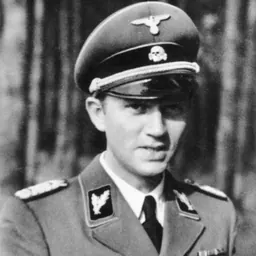
Related people
Same field, nearest in time



Contemporaries
People whose lives overlapped Martin Sandberger's





Frequently asked questions
Who was Martin Sandberger?
SS and RSHA officer (1911-2010)
When was Martin Sandberger born?
Martin Sandberger was born on 17 August 1911 in Charlottenburg.
When did Martin Sandberger die?
Martin Sandberger died on 30 March 2010 in Stuttgart.
What was Martin Sandberger's occupation?
Martin Sandberger was a jurist, police officer and nazism.
What nationality was Martin Sandberger?
Martin Sandberger was German.
Sources & further reading
· Wikipedia: Martin Sandberger
Cite this page
APA: Biography.guide. (2026). Martin Sandberger. https://biography.guide/martin-sandberger/
MLA: "Martin Sandberger." Biography.guide, https://biography.guide/martin-sandberger/.
Chicago: "Martin Sandberger." Biography.guide. https://biography.guide/martin-sandberger/.
Data last updated: 2026-09-20 · Spot an error? Report a correction.
Page generated 2026-09-27 05:23 UTC