
About Martin O'Hagan
Lived 1950 – 2001 (aged 51). Martin O'Hagan was a British columnist and journalist, known for The Troubles.
Owen Martin O'Hagan (23 June 1950 – 28 September 2001) was an Irish investigative journalist from Lurgan, Northern Ireland. After leaving the Official Irish Republican Army (Official IRA) and serving time in prison, he began a 20-year journalism career, during which he reported on The Troubles in Northern Ireland before being murdered, allegedly by Ulster Loyalist paramilitaries in September 2001.
Born in Lurgan to Catholic and republican parents, several members of his family became prominent in paramilitary activities and politics. After returning to Lurgan from West Germany, where his father had worked for the British Army, he left school to work at his family's television repair shop. He soon became involved in both the Official Sinn Féin (which, after renouncing paramilitary activity, evolved into the Workers' Party) and the Marxist-Leninist Official IRA. He was arrested and questioned over various crimes, including the murder of a Royal Ulster Constabulary police officer and a British Army soldier, but was eventually convicted and sentenced only for firearms offences in 1973.
After serving five years in Long Kesh prison, O'Hagan began a journalism career with Fortnight and the Sunday World. He reported on extortion, racketeering, narcotics trafficking, and other organized crimes committed by paramilitaries, like Robin Jackson. O'Hagan also worked with the Channel 4 programme Dispatches on alleged collusion in multiple sectarian murders by security forces and Loyalists (see Glenanne gang). He was abducted in 1989 by members of the Provisional IRA, and often seriously angered the Ulster Volunteer Force's Mid-Ulster Brigade leader Billy Wright by writing exposés about his unit's activities and accusing Wright of being a criminal informant for RUC Special Branch.
After Wright was killed in prison by the INLA in 1997, threats continued to be made against O'Hagan's life by members of the new Loyalist Volunteer Force (LVF), a terrorist organization of dissident Loyalists which Wright had founded to violently resist the Northern Ireland Peace Process. On 28 September 2001, while walking home from a pub with his wife, O'Hagan was shot from a moving car and died at the scene. The prime suspects remain members of the LVF, but no one, to date, has been convicted of committing the crime. Criminal prosecution of five LVF members was attempted in the late 2000s and early 2010s, but the case for the Crown collapsed after one defendant, who had turned supergrass, was ruled to be an unreliable witness. British security forces have repeatedly been accused of hindering prosecution of O'Hagan's murderers. Further accusations of a criminal conspiracy between Royal Ulster Constabulary officers and the LVF in O'Hagan's assassination have also been made by his fellow journalists. O'Hagan was one of only two journalists killed while working during The Troubles, He was also the last journalist to be killed in the United Kingdom before the murder of Lyra McKee by the New IRA in 2019. When O'Hagan was four his family returned to Lurgan, where he attended school and his father ran a television repair shop. He was fined £2 for the incident and let go. His mother had insisted he live in the Irish capital for a while to escape the political troubles of Lurgan, but this appears to have backfired. Back home from Dublin, O'Hagan had joined the Lurgan unit of the Official IRA, enjoying their socialist-republican policies and military wing. becoming assistant editor underneath Pollak.
O'Hagan soon began doing freelance work for The Irish Times, and in 1987 he joined the Belfast office of the Irish tabloid Sunday World, managed by Jim Campbell at the time. The paper reported on the sectarian violence of the Troubles, with a specific focus on the crimes of Robin Jackson (known as "The Jackal"), an Ulster Volunteer Force (UVF) leader who had been involved in various brutal killings. In 2000, he appeared at London's High Court during one of the libel cases, where he stated "I have always tried to be squeaky clean because people will always try to cast this up in my face".
While he often engaged in investigative journalism and serious stories, he was largely seen as a tabloid writer, with his colleague Jim McDowell saying "All he wanted was to be a hack". Bradbury later claimed to know the identity of O'Hagan's killer and had informed the Sunday Business Post.
Personal life O'Hagan was married to Marie , a Protestant woman who he met at the Carnegie Inn (better known as "Father Joes" or "Fa' Joes") in Lurgan. As one of the few "mixed" pubs in the town, the Catholic/Protestant couple would visit the pub often, including on the night of his murder. They had three daughters. on Lurgan's Market Street, arriving there at around 8 pm. Two hours later, they began to walk home, taking a different route than their normal one. At 10:30 pm, while walking down Westfield Gardens and near the Mourneview estate, a silver Subaru Impreza parked outside a neighbour's house began to slowly move forwards. A gunman leaned out the driver's window and shot towards the couple. Marie reported that O'Hagan had called out "It's Mackers" as he saw the shooter, suggesting that he knew who his killers were. O'Hagan pushed his wife into their neighbour's hedge, while he took three bullets in the back. Following the impact, he told his wife to phone an ambulance, but he died before she returned from making the call. A silver Ford Orion used by the shooters to escape was later found burned out on the Mourneview estate. Police suggested the Orion may have been left as a decoy.
Investigation Police stated that their chief suspects were members of the LVF and associates of Billy Wright.
O'Hagan's murder was later claimed by members of the LVF, who often operated as the Red Hand Defenders (RHD). They accused him of committing "crimes against the loyalist people". Hours before O'Hagan's death, Reid had warned the Ulster Defence Association (UDA) over its ceasefire breaches, but had not gone as far as fully condemning them. Martin McGuinness, then-Education Minister for Sinn Féin, called Reid "very foolish" for walking back on actions to declare the ceasefire broken, following O'Hagan's murder.
Bertie Ahern, the then-Taoiseach, called it "senseless and brutal", while Sir Reg Empey, the Acting First Minister of Northern Ireland, denounced O'Hagan's murder as "an attack on democracy itself". Upper Bann MLA and leader of the Ulster Unionist Party David Trimble stated that "[he was] shocked and appalled by this cowardly act, which must be condemned by all right-thinking people" and called on the British government to seriously consider whether the LVF ceasefires must be regarded as violated. More than 1,500 people attended, including: Jim Campbell, O'Hagan's colleague at the Sunday World Des Browne, Parliamentary Under-Secretary of State at the Northern Ireland Office Bríd Rodgers, local SDLP MLA A minute of silence was held by MLAs at Stormont in tribute to O'Hagan. A similar event happened in Lurgan five years earlier, when Billy Wright's men murdered a Catholic taxi driver as a "birthday present" for their leader.
Murder trial On 16 September 2008, four men appeared at Lisburn Magistrate's Court over O'Hagan's murder: 28-year-old Neil Hyde – a member of the LVF since 1996, 43-year-old Nigel William Leckey – accused of killing O'Hagan Following a request by police to interview him in June 2002, he fled to the Bellshill area of Glasgow, and then to a LVF-owned council house in Bargeddie.
At a bail hearing in October 2008, prosecution lawyers said it was alleged that Leckey had stored the car used by O'Hagan's killers. A witness, known as "Witness A", claimed that on the night of 28 September 2001, he was contacted by one of the accused to arrange a meeting the following morning. The accused had apparently lost control of the car following the shooting, and required help picking up debris from the scene. According to the witness, they then went to a yard owned by Leckey, who had cleaned the car. Leckey was granted bail by the judge, as he was not a "principal party" in the shooting.
In July 2010, murder charges were dropped against Drew King and three of the other men. In September of that year, King took the Sunday World to court, claiming damages for alleged harassment and misuse of private information. Jim McDowell, then-editor of the paper, had published information regarding King's relationships with women, which he defended as part of a character profile. In January 2012, Belfast Crown Court was informed that Hyde had agreed to become an "assisting offender" or supergrass in investigating O'Hagan's death. Hyde stated that he was inside a Lurgan flat on the evening of the murder: he was aware that a loaded gun was present, but was not involved in the killing. He gave the police the names of those in the flat, and also shared information regarding the murder of Graham Edward Marks in 2001. While Hyde originally agreed to testify against O'Hagan's killers, a decision was made by Director of Public Prosecutions Barra McGrory in January 2013 to dismiss the use of his witness statement as unreliable. In June 2013, the Public Prosecution Service for Northern Ireland appealed his lenient sentence with the changed circumstances, but they later dropped the review. The appeal was the first of its kind under the Serious Organised Crime and Police Act 2005.
Calls for investigation The NUJ has called for investigations into O'Hagan's death several times. On the 18th anniversary of O'Hagan's death, NUJ general secretary Michelle Stanistreet and Irish general secretary Séamus Dooley called for an independent inquiry focusing on the assassination itself and the failures of the police in securing a conviction. Dooley has reiterated his concerns multiple times, especially following the murder of Lyra McKee in 2019. On the 19th anniversary of his death, the NUJ released a statement calling for UK and Ireland leaders Boris Johnson and Micheál Martin to support an independent inquiry, and said the failure to convict O'Hagan's killers "emboldens those who see themselves as being above the law".
In September 2014, OSCE Representative on Freedom of the Media Dunja Mijatović called for UK authorities to launch an investigation into the murder, arguing that "the failure to prosecute can create an environment of impunity for those who might attack journalists".
In May 2015, O'Hagan's family announced a £50,000 reward for anyone who had information leading to the conviction of his killers.
Allegations of corruption and involvement In 2003, a security source claimed that a loyalist paramilitary questioned over O'Hagan's murder was an informer and Army intelligence agent. They claimed to have accessed files detailing the informer's handlers and the locations of their meetings, including Dungannon (where the gun used to kill O'Hagan was from). A PSNI detective refused to comment on the allegations, but families of those believed to have been killed by the informant had suspected his links previously.
Several of O'Hagan's former colleagues at the Sunday World have alleged police involvement in covering up his death: Jim Campbell suggested that police were reluctant to convict anyone due to members of the LVF being "paid police informers". He claimed the names of O'Hagan's assassins were known by the police within hours of his death, and had been warned that LVF members were "driving round Lurgan as if they were looking for someone". Richard Sullivan, the Sunday World Belfast Bureau Chief, confirmed the paper's exposing of his killers and promised to continue to "highlight the deficit in Martin's case".
On 28 May 2015, BBC aired a Panorama documentary entitled Britain's Secret Terror Deals, which investigated claims that British security forces colluded with paramilitary groups. PSNI Chief Constable George Hamilton denied any police cover-up regarding O'Hagan's death and the subsequent investigations. In the episode, former Police Ombudsman Nuala O'Loan said that state agencies had "operated outside the rules" and were responsible for the deaths of "hundreds and hundreds and hundreds of people".
In 2017, Séamus Dooley also hinted at links between the police and those responsible for the murder, saying the lack of conviction "cast a long shadow over the criminal justice system and policing in Northern Ireland".
Police Ombudsmen reports In October 2006, O'Hagan's siblings made a formal request to Police Ombudsman Nuala O'Loan, raising concerns that no one had been charged in the five years since the murder despite the police apparently knowing who was responsible. Eight years into the investigation, new Police Ombudsman Michael Maguire was able to secure police intelligence regarding the murders of O'Hagan and around 60 others, after he threatened the PSNI with a court case.
Effects on the Sunday World Since O'Hagan's death, Sunday World owner Independent News & Media has afforded security measures to its journalists, such as installing bulletproof windows and panic buttons in their houses.
Staff at the paper had received around 50 recorded threats by September 2011, such as former crime editor Paul Williams. In June 2018, the paper's Dublin office was sent a bottle labelled "sulphuric acid", which was seen an attack on its staff. The package was addressed to a former employee of the paper, and one administrator was injured while receiving it. In May 2020, the Sunday World and the Sunday Life were warned by police that the Ulster Defence Association were planning attacks on their journalists. Sunday World crime reporter Patricia Devlin, who like O'Hagan has reported on drug gangs and their paramilitary connections, has received threats and been doxed by fake accounts and criminals featured in her stories.
Don’t just read it —
keep it.
Full-length biographies made to live with: read them, listen on the way to work, watch them tonight.
- E-book
- Audio
- Video
Instant download · yours to keep · every purchase keeps this site free
Important facts
People in Martin O'Hagan's life
Named in this biography and alive at the same time



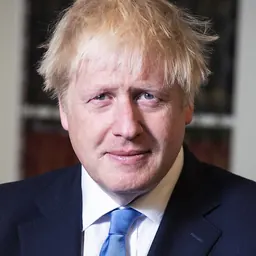
Related people
Same field, nearest in time
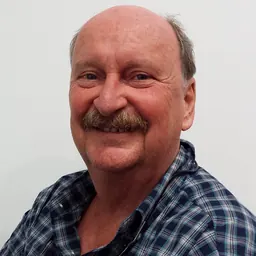
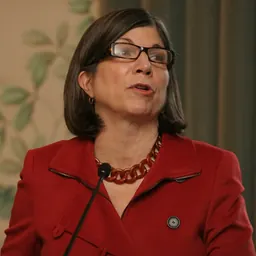
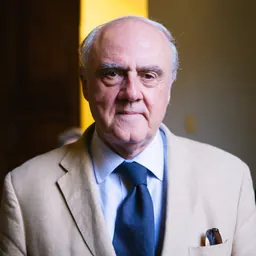
Contemporaries
People whose lives overlapped Martin O'Hagan's


Frequently asked questions
Who was Martin O'Hagan?
Irish investigative journalist
When was Martin O'Hagan born?
Martin O'Hagan was born on 23 June 1950 in Lurgan.
When did Martin O'Hagan die?
Martin O'Hagan died on 28 September 2001 in Lurgan.
What was Martin O'Hagan's occupation?
Martin O'Hagan was a columnist and journalist.
What was Martin O'Hagan known for?
Martin O'Hagan was known for The Troubles.
What nationality was Martin O'Hagan?
Martin O'Hagan was British.
Sources & further reading
Cite this page
APA: Biography.guide. (2026). Martin O'Hagan. https://biography.guide/martin-o-hagan/
MLA: "Martin O'Hagan." Biography.guide, https://biography.guide/martin-o-hagan/.
Chicago: "Martin O'Hagan." Biography.guide. https://biography.guide/martin-o-hagan/.
Data last updated: 2026-09-22 · Spot an error? Report a correction.
Page generated 2026-09-27 05:13 UTC