
Martin Hengel
German historian of religion
About Martin Hengel
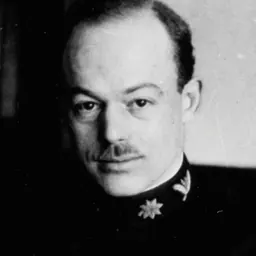
Lived 1926 – 2009 (aged 82). Martin Hengel was a German historian of religion, biblical scholar, university teacher, judaic scholar, new Testament scholar and protestant theologian.
Martin Hengel (14 December 1926 ) was a German historian of religion, New Testament scholar, and Lutheran theologian, focusing on the Second Temple period and Hellenistic period of ancient Judaism and early Christianity.
Early life Hengel was born in 1926 in Reutlingen, south of Stuttgart, at the time part of the Free People's State of Württemberg, Weimar Republic, and grew up in nearby Aalen. In 1943 he was conscripted as a 17-year-old schoolboy into the Wehrmacht and served in an anti-aircraft battery on the Western Front. In 1945, after one of the final battles of World War II, he threw away his weapons and uniform and walked home from France, completing his schooling in 1946.
In late 1947, Hengel began his studies in Christian theology at the University of Tübingen, moving to the University of Heidelberg in 1949. In 1951, he qualified as a Lutheran parish minister but in 1954 his father voiced his opposition to his ecclesiastical career, and insisted that he join "Hengella", the family's textile business in Aalen. St Andrews, Cambridge, Durham, Strasbourg, and Dublin. He was a corresponding member of the British Academy and the Royal Netherlands Academy of Arts and Sciences.
Career For a short period he was also able to lecture at a theological college, and served as an assistant to his professor Otto Michel in Tübingen, but this ended in 1957 when he was sent to manage a factory in Leicester for several years. He continued to work on his doctoral thesis in his spare time. Hengel graduated in 1959 with a Ph.D. He completed his postgraduate work on his Habilitation thesis, a requirement for academic teaching, at the University of Tübingen in 1967. His thesis was concerned with Second Temple Judaism and Hellenism. He was a professor at the University of Erlangen starting in 1968. Hengel specialized in the early period of Rabbinic Judaism, including early Christianity and the origins of Christianity. Throughout his writings, Hengel openly recognizes the challenges involved in developing a thorough history of early Christianity. Due to the fact that the sources available to scholars are often found surviving in fragments, as a result, "the sparseness of the sources vitiates our knowledge of large areas of the ancient world". In his article "Raising the Bar: A daring proposal for the future of evangelical New Testament scholarship", Hengel therefore challenges scholars to delve into more extensive biblical research to ensure proper understandings of the texts being established. Hengel's Christology strove to share an accurate illumination of who Jesus was and what he did and sought after as well as the notion that "Christianity emerged completely from within Judaism".
Not only did Hengel desire that scholars "work hand in hand" but also was known for supporting scholars of all backgrounds. Hengel argues in his writings that despite Paul's controversial rhetoric scholars, along with Jewish and Christian communities, must recognize the historical value of Paul's epistles and Luke's account of Paul's life within the Acts of the Apostles. Hengel recognizes the importance of this awareness because of the multifaceted insight provided about the Second Temple period and Hellenistic Judaism of the 1st century within these texts.
A large portion of Hengel's research on the Acts of the Apostles, focuses on the time in which Paul the Apostle spends between his time in Damascus and Antioch coining these years as "the unknown years". Between Acts and the letters of Paul, Hengel, among other scholars, attempts to piece together the extent of the missionary work of Paul the apostle. Hengel highlights Paul as an "apostle to all nations" (Rom 11:13) throughout his interpretations. He also highlights the miracle of the preservation of the letters of Paul and acknowledges, in correlation with the book of Acts (which set the letters within a historical context), we receive the "nucleus of quite a new form of theological writing in earliest Christianity… and thus also for the New Testament canon". He considered the traditional account that the Gospel of Mark was written by Peter's interpreter (John Mark, also known as Mark the Evangelist) to be essentially credible. He also believed that Luke the Evangelist was the companion of Paul's travels and author of the Gospel of Luke and the Acts of the Apostles.
Works
——— (1974). Property and Riches in the Early Church (1st English ed.). London: SCM Press (translated by John Bowden).
Don’t just read it —
keep it.
Full-length biographies made to live with: read them, listen on the way to work, watch them tonight.
- E-book
- Audio
- Video
Instant download · yours to keep · every purchase keeps this site free
Important facts
People in Martin Hengel's life
Named in this biography and alive at the same time



Related people
Same field, nearest in time

Contemporaries
People whose lives overlapped Martin Hengel's



Frequently asked questions
Who was Martin Hengel?
German historian of religion (1926–2009)
When was Martin Hengel born?
Martin Hengel was born on 14 December 1926 in Reutlingen.
When did Martin Hengel die?
Martin Hengel died on 2 July 2009 in Tübingen.
What was Martin Hengel's occupation?
Martin Hengel was a historian of religion, biblical scholar, university teacher, judaic scholar, new Testament scholar and protestant theologian.
What nationality was Martin Hengel?
Martin Hengel was German.
Sources & further reading
Cite this page
APA: Biography.guide. (2026). Martin Hengel. https://biography.guide/martin-hengel/
MLA: "Martin Hengel." Biography.guide, https://biography.guide/martin-hengel/.
Chicago: "Martin Hengel." Biography.guide. https://biography.guide/martin-hengel/.
Data last updated: 2026-09-26 · Spot an error? Report a correction.
Page generated 2026-09-27 05:16 UTC