
About Martin Drewes
Lived 1918 – 2013 (aged 94). Martin Drewes was a German aircraft pilot, writer and soldier.
Martin Drewes (20 October 1918 – 13 October 2013) was a German Luftwaffe military aviator and night fighter ace during World War II. He was credited with 52 victories of which 43 were claimed at night whilst flying variants of the Messerschmitt Bf 110 heavy fighter. The majority of his victories were claimed over the Western Front in Defence of the Reich missions against the Royal Air Force's Bomber Command.
Born in Lobmachtersen, Drewes grew up in the Weimar Republic and Nazi Germany. Following graduation from school, he joined the military service of the Army in 1937 and transferred to the Luftwaffe in 1939. He flew his first combat missions in early 1941. In May 1941, he participated in the Anglo-Iraqi War where he claimed his first aerial victory on 20 May 1941. In November 1941, Drewes transferred to the night fighter force, initially serving with Nachtjagdgeschwader 3 (NJG 3—3rd Night Fighter Wing). He claimed his first nocturnal aerial victory on the evening of 17 January 1943. In February 1943, Drewes was appointed Staffelkapitän (squadron leader) and transferred to Nachtjagdgeschwader 1 (NJG 1—1st Night Fighter Wing) in August 1943.
Since 1961 he had been a Lieutenant Colonel in the Reserves of the Luftwaffe (Bundeswehr).
Early life
Drewes was born on 20 October 1918 in Lobmachtersen, at the time in the district of Wolfenbüttel, present day a borough of Salzgitter, Lower Saxony. He was the son of pharmacist Wilhelm Drewes and his wife Margarete, née Hayder, and had an older sister Hanna and a younger sister Käthe. Drewes passed his Abitur (School Leaving Certificate) at the Reformrealgymnasium in Wolfenbüttel in the autumn of 1936. Drewes was a member of the Hitler Youth from 1931 to 1 November 1937, from December 1936 full-time (paid) youth leader (Hauptamtlicher Jugendführer).
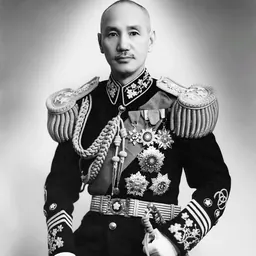
He joined the military service in the Army on 2 November 1937 as a Fahnenjunker. He initially served with Panzer-Regiment 6, a regiment of the 3rd Panzer Division, in Neuruppin and was posted to the Kriegsschule in Munich, Bavaria on 15 November 1938 as a Fähnrich. While stationed in Munich, Drewes befriended Chiang Wei-kuo, an adopted son of Republic of China President Chiang Kai-shek. In the Army, he commanded a PzKpfw I.
On 1 August 1939, Drewes was promoted to Leutnant (second lieutenant) and transferred to the Luftwaffe on 1 September. He was trained as a pilot, receiving his A/B-licenses in April 1940 at the Luftkriegsschule 3 (LKS 3—3rd air war school), Wildpark-West near Werder. On 1 May, his flight training progressed at the Flugzeugführerschule (C)5 where he received his C-Certificate on 30 August followed by attending the Blindflugschule 3 (3rd Blind Flying School) at Königsberg, East Prussia. On 16 October, he then trained as a Zerstörer (destroyer) pilot at the Zerstörerschule 1 (ZS 1—1st destroyer school) at Schleißheim near Munich.
On 27 March 1943, in Germany, Martin Drewes married Wulfhild Ellen Erna Wegener, when she assumed the name Drewes, with whom he remained married until their divorce on 16 November 1948. From this marriage, his daughter, Wulfhild Drewes, was born on 10 January 1944 in Cuxhaven, Lower Saxony. In honor of his first wife, Drewes painted the initials "WD" on the tail of one of his aircraft.
World War II
World War II in Europe began on Friday 1 September 1939, when German forces invaded Poland. On 8 February 1941, Drewes was posted to 4. Staffel (4th squadron) of Zerstörergeschwader 76 (ZG 76—76th Destroyer Wing). 4. Staffel was a squadron of II. Gruppe (2nd group) and was equipped with the Messerschmitt Bf 110 twin-engine heavy fighter, flying combat air patrols over the North Sea and German Bight.
II. Gruppe of ZG 76, also known as the "Shark Group" due to their distinct coloring scheme, was then transferred to Greece during the Balkans campaign. In May 1941, 4. Staffel of ZG 76 was order by Sonderkommando Junck (Special Force Junck), named after its commander Oberst Werner Junck and later renamed to Fliegerführer Irak (Flyer Command Iraq), to fly to Iraq. There, German forces under the cover name Special Staff F supported pro-Axis Iraqi forces during the Anglo-Iraqi War . In total, Drewes flew 36 combat missions, including 17 ground attack missions. On 20 May, he claimed his first aerial victory over a Royal Air Force (RAF) Gloster Gladiator biplane. His area of operations included Mosul, Kirkuk and lastly Aleppo, Syria. By 26 May, despite cannibalizing two machines damaged in a RAF raid on Mosul, no Bf 110 was left serviceable. That day, he was awarded the Iron Cross 2nd Class . Drewes, and two other pilots, was then flown to Rhodes, Greece on an Italian Savoia-Marchetti SM.79 medium bomber, tasked with bringing new aircraft to Iraq. The return flight never made it past Aleppo where the task force was ordered to retreat to Athens and then to Leeuwarden, the Netherlands.
In mid-June 1941, 4. Staffel of ZG 76 was again flying patrols from Leeuwarden and De Kooy Airfield. Drewes received the Front Flying Clasp of the Luftwaffe in Silver on 2 July 1941. On 29 August, he claimed his second aerial victory over a Supermarine Spitfire shot down over the sea. Drewes was promoted to Oberleutnant (first lieutenant) on 1 November. His II. Gruppe of ZG 76 was then converted to a night fighter unit and renamed III. Gruppe of Nachtjagdgeschwader 3 (NJG 3—3rd Night Fighter Wing).
Night fighter career
A map of part of the Kammhuber Line. The 'belt' and night fighter 'boxes' are shown.
Following the 1939 aerial Battle of the Heligoland Bight, RAF attacks shifted to the cover of darkness, initiating the Defence of the Reich campaign. By mid-1940, Generalmajor (Brigadier General) Josef Kammhuber had established a night air defense system dubbed the Kammhuber Line. It consisted of a series of control sectors equipped with radars and searchlights and an associated night fighter. Each sector named a Himmelbett (canopy bed) would direct the night fighter into visual range with target bombers. In 1941, the Luftwaffe started equipping night fighters with airborne radar such as the Lichtenstein radar. This airborne radar did not come into general use until early 1942.
In January 1942, III. Gruppe of NJG 3 moved from Stuttgart-Echterdingen to northern Germany, to airfields at Stade and Lüneburg. There, the unit was tasked with protecting Hamburg from air attacks. In February, Drewes flew missions in support of Operation Donnerkeil (11–13 February), an air superiority operation to support the Kriegsmarine (German Navy) Operation Cerberus. During the operation, the two battleships Scharnhorst and Gneisenau and the cruiser Prinz Eugen, docked in the port of Brest, successfully escaped from France and reached German ports. In the timeframe May to June 1943, he flew six specialized task force missions in Norway, including escort missions for the battleship Tirpitz and a transport for heavy water. Drewes claimed his first aerial victory as a night fighter pilot on the evening of 17 January 1943 when he shot down a Short Stirling bomber.
Staffelkapitän
In February 1943, Drewes was appointed Staffelkapitän (squadron leader) of 7. Staffel of NJG 3. At the time, this squadron was based at Copenhagen, Denmark. He claimed his second nocturnal aerial victory on over a Handley Page Halifax bomber in the vicinity of Store Heddinge on 14 March 1943. On 9 April, he was awarded the Iron Cross 1st Class .
For two months, Drewes was temporarily transferred to IV. Gruppe (4th group) of Nachtjagdgeschwader 1 (NJG 1—1st Night Fighter Wing) in June 1943. This Gruppe was based at Leeuwarden. On 15 August, the transfer was made permanent and Drewes was named Staffelkapitän of 11. Staffel, a squadron of IV. Gruppe of NJG 1. On 3 October 1943, his Bf 110 was hit by the return fire of Avro Lancaster bomber. The aircraft was severely damaged and burning, resulting in a forced landing at Allendorf-Haiger. Drewes claimed two Boeing B-17 Flying Fortress bombers shot down during daytime operations on 11 January 1944. For his previous achievements, he was awarded the German Cross in Gold on 24 February 1944.
Gruppenkommandeur
On 7 March, he was tasked with the leadership of III. Gruppe (3rd group) of NJG 1, becoming its acting Gruppenkommandeur (group commander). On 30–31 March 1944, Drewes claimed three Lancaster bombers shot down during the raid on Nuremberg. One of the aircraft shot down was Lancaster W5006 from No. 9 Squadron.
His adjutant in the group at the time was Oberleutnant Walter Scheel, who later became the President of West Germany (1 July 1974 – 30 June 1979). On the night of 21–22 July 1944, Drewes claimed two Lancaster bombers destroyed, but was also shot down in his Bf 110 G-4 (Werknummer 720410—factory number). Although Drewes was injured, he and his crew, Oberfeldwebel Georg "Schorsch" Petz and Oberfeldwebel Erich Handke, escaped by parachute.
At the end of hostilities he had flown 252 operations, and claimed a total of 52 victories (including a Spitfire, a Gladiator, seven American 4-engined bombers shot down in daylight operations, and 43 British bombers at night), most of them achieved with his crew, Petz and Handke. Drewes was decorated with Ritterkreuz and Eichenlaub. He was captured by British forces at the end of the war.
Later life
In February 1947, Drewes was released from captivity. He then left Germany, travelling to Italy. In Genua, he took the ship North King to Brazil, arriving in Rio de Janeiro on 20 August 1949. From 1950 to 1951, he worked as a pilot and aerial photography. There he built a career as an entrepreneur and married Dulce Hurpia, a Brazilian woman, who gave him a son, Klaus Drewes, a lawyer in Brazil. The long marriage ended only in 2010 by the death of his wife. He returned at least once each year on visits to Germany. He died on 13 October 2013 in Blumenau, Santa Catarina, southern Brazil, of natural causes.
Summary of career
Aerial victory claims
Foreman, Parry and Mathews, authors of Luftwaffe Night Fighter Claims 1939 – 1945, researched the German Federal Archives and found records for 47 nocturnal victory claims, not documenting those aerial victories claimed as a Zerstörer pilot. Mathews and Foreman also published Luftwaffe Aces – Biographies and Victory Claims, listing Drewes with 45 claims, including one as a Zerstörer pilot, plus four further unconfirmed claims. According to Drewes' own account, three further B-17 bombers claimed, one on 19 May 1943 and two on 26 July 1943 respectively, were blocked by the Luftwaffe command chain and have not been documented.
Chronicle of aerial victories Claim(total) Claim(nocturnal) Date Time Type Location Serial No./Squadron No. – 6. Staffel of Zerstörergeschwader 76 – 20 May 1941 12:00 Gladiator Iraknear Al-Faluja 1 29 August 1941 11:00? Spitfire off Den Helderoff Great Yarmouth over sea – 7. Staffel of Nachtjagdgeschwader 3 – 2 1 17 January 1943 22:32 Stirling Linden 3 2 14 March 1943 21:42 Halifax Store Heddinge DT620/No. 138 Squadron 19 May 1943 14:12 B-17 northwest of Heligoland – 11. Staffel of Nachtjagdgeschwader 1 – 4 3 26 June 1943 02:40 Lancaster south of Texel 26 July 1943 12:10 B-17 vicinity of Bremervörde 26 July 1943 12:58 B-17 vicinity of Leer 5 4 28 August 1943 03:19 Halifax Huy 6 5 31 August 1943 03:58 Halifax Maastricht 7 6 27 September 1943 23:50 Halifax Stadthagen 7? 26 November 1943 12:47 B-17 west of Lemmer 8 8 5 January 1944 12:32 B-24 north of Nordeney 9? 11 January 1944 13:15 B-17 west of Almelo 10? 11 January 1944 13:45 B-17 northwest of Rotterdam 9 11 14 January 1944 18:38 Lancaster Klazienaveen 10 12 22 January 1944? 00:46 Lancaster west of Sneek – III. Gruppe of Nachtjagdgeschwader 1 – 11 13 24 March 1944? 23:26? Lancaster north of Lippstadt 12 14 25 March 1944 00:10? Lancaster west of Rheine Lancaster LL694/No. 115 Squadron 13 15 25 March 1944 00:35? Lancaster west of Twente 14 16 31 March 1944 00:05? Lancaster northeast of Spa 15 17 31 March 1944 00:50? Lancaster Wetzlar Lancaster W5006/No. 9 Squadron 16 18 31 March 1944 01:20 Lancaster vicinity of Limburg Lancaster ND390/No. 97 Squadron 17 19 19 April 1944 00:01 Halifax northeast of Rouen Halifax LV956/No. 466 Squadron 18 20 19 April 1944 00:11 Halifax southwest of Dieppe 19 21 21 April 1944 00:40 Lancaster south-southwest of Paris 20 22 23 April 1944 00:27 Lancaster southeast of Rosières 21 23 25 April 1944 00:37 Lancaster west of Mannheim 22 24 27 April 1944 00:35? Lancaster Biberachnorth of Chaumont 23 25 27 April 1944 00:50? Lancaster north of ChaumontAmpres 24 26 28 April 1944 01:48 Lancaster southeast of Aachen 25 27 2 May 1944 00:45 Lancaster northwest of Paris 26♠ 28 4 May 1944 00:18? Lancaster south of Troyes 27♠ 29 4 May 1944 00:26? Lancaster northeast of Troyes 28♠ 30 4 May 1944 00:38 Lancaster Romilly-sur-Seine 29♠ 31 4 May 1944 00:44? Lancaster Nogent-sur-Seine 30♠ 32 4 May 1944 00:50? Lancaster southeast of Paris 31 33 13 May 1944 00:44 Lancaster northwest of St. Trond 32 34 13 May 1944 00:49 Lancaster north-northwest of St. Trond 33 35 13 May 1944 01:09 "Lancaster" south of GhentHalifax Mk III LW682 OW-M of the 426 Squadron 34♠ 36 22 May 1944 00:50 Lancaster Zwolle 35♠ 37 22 May 1944 00:58 Lancaster Deventer 36♠ 38 22 May 1944 01:38 Lancaster Eindhoven 37♠ 39 22 May 1944 01:50 Lancaster vicinity of Gouda 38♠ 40 22 May 1944 02:04 Lancaster vicinity of Breda 39 41 17 June 1944 02:05 Lancaster Amsterdam 40 42 17 June 1944 02:16 Lancaster west of Amsterdam 41 43 22 June 1944 02:32 Lancaster northwest of Schouwen 42 44 22 June 1944 02:35 Lancaster northwest of Schouwen 43 45 21 July 1944 01:11 Lancaster Apeldorn Halifax MZ511/No. 578 Squadron 44 46 21 July 1944 01:20 Lancaster west of Oldenzaal Lancaster PB174/No. 405 (Vancouver) Squadron 45 47 3 March 1945 01:24 Lancaster west of Münster
Promotions
2 November 1937 Fahnenjunker (Officer Candidate) 20 April 1938 Fahnenjunker-Gefreiter (Officer Candidate with Lance Corporal rank) 1 August 1938 Fahnenjunker-Unteroffizier (Officer Candidate with Corporal/NCO/Junior Sergeant rank) 1 March 1939 Fähnrich (Officer Cadet) 1 August 1939 Oberfähnrich (Senior Officer Cadet) 1 August 1939 Leutnant (2nd Lieutenant); simultaneously promoted 1 November 1941 Oberleutnant (1st Lieutenant) 20 April 1944 Hauptmann (Captain) with effect and Rank Seniority (RDA) from 1 May 1944 1 December 1944 Major
Awards and decorations Sudetenland Medal Pilot Badge Iron Cross (1939), 2nd and 1st Class 2nd Class (26 May 1941) 1st Class (9 April 1943) Front Flying Clasp of the Luftwaffe in Gold with Pennant in Bronze on 20 April 1941 in Silver on 2 July 1941 in Gold on 31 August 1942 in Gold with Pennant and Mission Number "200" (18 January 1945) Wound Badge (1939) in Black on 3 October 1943 Golden HJ Honour Badge (No. 7702) German Cross in Gold on 24 February 1944 as Oberleutnant in the 11./Nachtjagdgeschwader 1 Honour Goblet of the Luftwaffe (Ehrenpokal der Luftwaffe) on 31 March 1944 as Oberleutnant and pilot Knight's Cross of the Iron Cross with Oak Leaves Knight's Cross on 27 July 1944 as Hauptmann and Gruppenkommandeur of the III./Nachtjagdgeschwader 1 839th Oak Leaves on 17 April 1945 as Major and Gruppenkommandeur of the III./Nachtjagdgeschwader 1
Don’t just read it —
keep it.
Full-length biographies made to live with: read them, listen on the way to work, watch them tonight.
- E-book
- Audio
- Video
Instant download · yours to keep · every purchase keeps this site free
Important facts
People in Martin Drewes's life
Named in this biography and alive at the same time


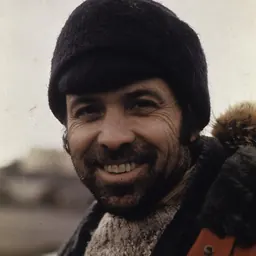
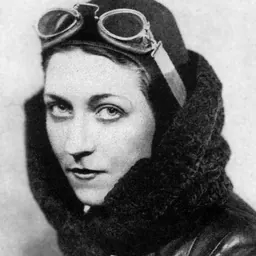
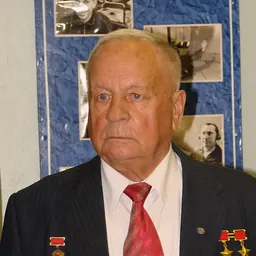
Related people
Same field, nearest in time


Contemporaries
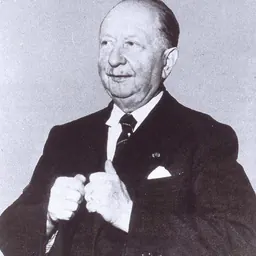
People whose lives overlapped Martin Drewes's


Frequently asked questions
Who was Martin Drewes?
German flying ace (1918–2013)
When was Martin Drewes born?
Martin Drewes was born on 20 October 1918 in Lobmachtersen.
When did Martin Drewes die?
Martin Drewes died on 13 October 2013 in Blumenau.
What was Martin Drewes's occupation?
Martin Drewes was an aircraft pilot, writer and soldier.
What nationality was Martin Drewes?
Martin Drewes was German.
Sources & further reading
Cite this page
APA: Biography.guide. (2026). Martin Drewes. https://biography.guide/martin-drewes/
MLA: "Martin Drewes." Biography.guide, https://biography.guide/martin-drewes/.
Chicago: "Martin Drewes." Biography.guide. https://biography.guide/martin-drewes/.
Data last updated: 2026-09-20 · Spot an error? Report a correction.
Page generated 2026-09-27 05:29 UTC