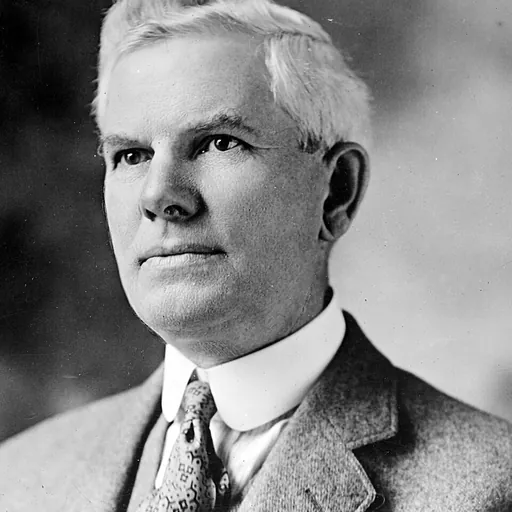
About Martin Barnaby Madden
Lived 1855 – 1928 (aged 73). Martin Barnaby Madden was an American politician and businessperson.
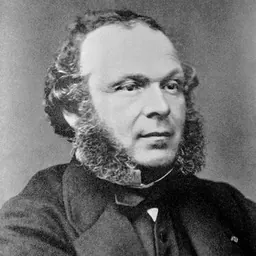
Martin Barnaby Madden (March 21, 1855 – April 27, 1928) was a Republican politician who served in the United States House of Representatives from 1905 until his death in 1928, representing Illinois's 1st congressional district. He became a leading figure in fiscal matters and served as chair of the United States House Committee on Appropriations.
Early life and Career Madden was born in Wolviston, County Durham, England. In 1869 he immigrated to the United States with his parents, who settled near Lemont, Illinois. He attended school in England and later studied in Chicago, graduating from Bryant and Stratton Business College in 1873; he also completed training at an engineering trade school. Madden also played a role in promoting the construction of Lake Front Park, which has been described by some commentators as one of Chicago's most beautiful parks. The amendment replaced the requirement that contractors obtain sworn statements from each material supplier before receiving final payment with a system under which contractors filed their own sworn statements subject to municipal verification, thereby reducing administrative burdens and the risk of delayed or withheld payments.
1897 U.S. Senate campaign Madden also ran for the United States Senate in 1897. As early as October of the previous year, Madden had already attracted notable attention and was frequently introduced as "Senator Madden". Owing to his business career and financial acumen, he attracted considerable support. Madden was also at one point backed by the newly elected Governor John Riley Tanner , and the election of Edward C. Curtis as Speaker of the Illinois House of Representatives was regarded as favorable to his candidacy. However, Madden also faced substantial opposition. His opponent, William E. Mason, also alleged that Madden had sought to secure votes by offering public offices in return. In addition, the newly elected President William McKinley opposed Madden's election, viewing it as "a slap" at his incoming national administration. Even more extreme, some people are willing to spend large sums of money to oppose Madden's election campaign. Unable to secure sufficient support, Madden was compelled to withdraw from the race. He subsequently endorsed Mason and served as Mason's campaign manager. Some analysts have suggested that Governor Tanner withdrew his support for Madden in response to widespread protests, a development they argue prompted Madden to withdraw from the race.
U.S. House of Representatives As early as 1902, Madden ran for election to the U.S. House of Representatives, but was defeated. Madden was elected to Congress in 1904 and was subsequently reelected, serving from March 4, 1905, until his death in 1928. In 1919, Madden introduced a House bill to regulate interstate commerce by guaranteeing "equal and identical" rights and accommodations in interstate transportation and prohibiting discrimination on the basis of race, color, or prior condition of servitude; contemporary coverage described it as an effort to abolish "Jim Crow" passenger cars, backed by a committee of African-American civic leaders. Madden was a supporter of President Calvin Coolidge. Shortly before his death, he was working to advance a Mississippi River flood-control bill, a measure aligned with Coolidge's legislative priorities. Contemporary congressional remarks described him as having been conducting appropriations hearings earlier that day before collapsing at his desk following a recess. he collapsed around noon while talking with Elliott W. Sproul, suffered an acute heart attack, and died within minutes despite physicians' efforts. The House adjourned in his honor. After Madden's death, Chicago Republicans selected Oscar Stanton De Priest to replace him on the ballot in Illinois's 1st district; De Priest went on to win the seat later in 1928.
Electoral history
Don’t just read it —
keep it.
Full-length biographies made to live with: read them, listen on the way to work, watch them tonight.
- E-book
- Audio
- Video
Instant download · yours to keep · every purchase keeps this site free
Important facts
People in Martin Barnaby Madden's life
Named in this biography and alive at the same time



Related people
Same field, nearest in time



Contemporaries
People whose lives overlapped Martin Barnaby Madden's


Frequently asked questions
Who was Martin Barnaby Madden?
American politician (1855-1928)
When was Martin Barnaby Madden born?
Martin Barnaby Madden was born on 21 March 1855 in Wolviston.
When did Martin Barnaby Madden die?
Martin Barnaby Madden died on 27 April 1928 in Washington, D.C..
What was Martin Barnaby Madden's occupation?
Martin Barnaby Madden was a politician and businessperson.
What nationality was Martin Barnaby Madden?
Martin Barnaby Madden was American.
Sources & further reading
· Wikipedia: Martin Barnaby Madden
Cite this page
APA: Biography.guide. (2026). Martin Barnaby Madden. https://biography.guide/martin-barnaby-madden/
MLA: "Martin Barnaby Madden." Biography.guide, https://biography.guide/martin-barnaby-madden/.
Chicago: "Martin Barnaby Madden." Biography.guide. https://biography.guide/martin-barnaby-madden/.
Data last updated: 2026-09-23 · Spot an error? Report a correction.
Portrait: Wikimedia Commons · author & licence
Page generated 2026-09-27 05:08 UTC