
About Martha Hughes Cannon
Lived 1857 – 1932 (aged 75). Martha Hughes Cannon was an American and British politician, physician and suffragette.
Martha Maria "Mattie" Hughes Cannon (July 1, 1857 – July 10, 1932) was a Welsh-American politician, medical doctor, Utah women's rights advocate, suffragist, and a polygamous wife. Her family immigrated to the United States as converts to the Church of Jesus Christ of Latter-day Saints (LDS Church) and traveled West to settle in the Utah Territory with other church members. She started working at the age of fourteen, and at sixteen she enrolled in the University of Deseret (now called the University of Utah), receiving a bachelor's degree in Chemistry. She later attended the University of Michigan and received an M.D.
She became the fourth of six wives in a polygamous marriage to Angus M. Cannon, a prominent Latter-day Saint leader during the anti-polygamy crusade. Cannon exiled herself to Europe so she wouldn't have to testify against her husband and others. Upon returning to Utah, Cannon worked as a doctor and fought for women's rights. She helped put women enfranchisement into Utah's constitution when it was granted statehood in 1896. On November 3, 1896, Cannon became the first female state senator elected in the United States, defeating her own husband, who was also on the ballot. Cannon was the author of Utah sanitation laws and was a founder and member of Utah's first State Board of Health.
Biography Early life Martha Maria Hughes Cannon was born near Llandudno, Caernarfonshire, Wales on July 1, 1857, the daughter of Peter Hughes and Elizabeth Evans. She was known by the nickname "Mattie". The Hughes family were converts to the LDS Church and emigrated to the United States with their two daughters, Mary Elizabeth and Martha Maria. They embarked from Liverpool, England on March 30, 1860, on the ship Underwriter and arrived in New York City, New York on May 1, 1860. Peter was very sick at the time, and Elizabeth gave birth to their third child, Annie Lloyd. They stayed in New York to earn money to travel the plains to Utah Territory. Erastus Snow, a church leader, invited the family to join a pioneer company funded by the LDS Church for the less fortunate. The family accepted the invitation and traveled by train to Florence, Nebraska, and left with the Joseph Horne company on July 11, 1861. Shortly before the family's arrival in the Salt Lake Valley, on September 3, 1861, Martha's sister, Annie Lloyd Hughes, died and was buried in an unmarked grave. She was 21 months old. The Joseph Horne company arrived in the Salt Lake Valley on September 13, 1861. Three days after they arrived in Salt Lake City, on September 17, 1861, Peter Hughes died. Elizabeth Hughes was left a widow with two young daughters at the age of 28. Thirteen months later, Elizabeth married James Patten Paul, a widower with four sons, and they were the parents of university professor and newspaper editor Joshua Hughes Paul. After Elizabeth's marriage to James P. Paul, Martha, at different times in her life, went by the surnames of both Paul and Hughes. Later in life, Paul encouraged Martha to follow her dream of becoming a medical doctor. She graduated from the University of Deseret in 1878 with a degree in chemistry.
On August 13, 1878, Hughes was one of four women set apart for medical studies and practice by the LDS Church. Church president John Taylor and his counselor, George Q. Cannon, set them apart. The other three women were Romania B. Pratt, Ellis R. Shipp, and Maggie Shipp. Pratt and Ellis Shipp had already received their medical degrees while Maggie Shipp and Hughes were heading out to earn theirs. Cannon expressed concern that because of the legal pressures, she might never "have any respectable married life." She then traveled to Washington D.C. to give a status report to a congressional committee on women's suffrage work in Utah.
Local and national newspapers gave play to the fact that a leading Mormon polygamist was defeated by his fourth wife.
On November 3, 1896, Martha Hughes Cannon became the first woman elected as a state senator in the United States with 10,288 votes while her husband only received 8,054 votes. The couple reported that no relationship issues were produced from the election. Cannon introduced three bills in her first month in state senate. In consequence of her bill, an Act Providing for Compulsory Education of Deaf, Dumb, and Blind Citizens, Governor Heber Wells appointed Cannon to the board of directors for the school for the Deaf and Dumb. During her second term as State Senator, she drafted a bill for the building of a hospital at the Deaf and Dumb school. Her second bill was an Act to Protect the Health of Women and Girl Employees. The bill protected women and girls by requiring employers to give female employees something to rest on when they weren't serving customers. At the time nothing was provided and many female employees were left exhausted. Her last bill from her first month in office was an Act Creating a State Board of Health and Defining its Duties. She fought against lobbyists trying to abolish the State Board of Public Examiners. The board was in charge of certifying the qualifications of doctors and midwives, preventing impersonators from potentially hurting patients. As a doctor, Cannon took personal interest in fighting against the lobbyists attempting to terminate an association that protected physicians. In 1898, at the invitation of officials of the National American Woman's Suffrage Association, two years after becoming the country's first woman state senator, Cannon spoke at the Seneca Falls 50th year celebration in Washington D.C. Cannon also testified before the U.S. House Committee on the Judiciary of the positive effects of women's franchise in Utah. Twenty-two years later, women's suffrage was added as the 19th amendment to the United States Constitution. Cannon lost only one bill: an Act Providing for the Teaching in the Public Schools of the Effects of Alcoholic Drinks and Narcotics on the Human System In 1902, she became a member of the psychology section of the Medico-Legacy Society of New York. The society's main focus was tuberculosis.
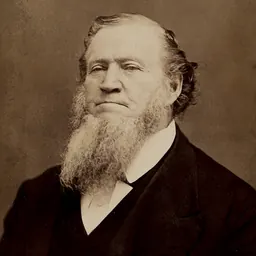
Legacy and honors In 1986 the new Utah Department of Health building was dedicated and named the Martha Hughes Cannon health building in Salt Lake City. An eight-foot-high bronze statue of Martha Hughes Cannon by Laura Lee Stay Bradshaw, dedicated in 1996, was housed in the Utah state Capitol rotunda. Her grandson, Robert J. Cannon, spoke at the dedication. After the Utah Capitol re-dedication in 2008, the bronze statue of Cannon was moved to the foyer of the Utah State Senate building on Utah Capitol Hill. There is also a bronze plaque honoring the "author of Utah sanitation laws" on a boulder next to a drinking fountain on the northeast corner of 200 West and South Temple. Since 1990, Utah officials have lobbied the U.S. Postal Service for a stamp in Cannon's honor. In July 2012, KUED produced an almost one-hour long documentary on Martha Hughes Cannon's life. In October 2015, legislators formed the Martha Hughes Cannon Caucus in an effort to encourage more women in Utah to participate in government. The Utah State Legislature voted in 2018 to gift a statue of Martha Hughes Cannon to the U.S. Capitol's National Statuary Hall, replacing the statue of Philo T. Farnsworth, gifted in 1990. The statue was officially unveiled on December 11, 2024, in Emancipation Hall in the United States Capitol Visitor Center, joining the statue of Brigham Young as Utah's two statues in the National Statuary Hall Collection.
In popular culture
In 2020, Her Quiet Revolution, a historical fiction novel about Cannon's life and work by American author Marianne Monson, appeared in commemoration of the 100th anniversary of U.S. women’s suffrage.
Don’t just read it —
keep it.
Full-length biographies made to live with: read them, listen on the way to work, watch them tonight.
- E-book
- Audio
- Video
Instant download · yours to keep · every purchase keeps this site free
Important facts
Family & relationships
People in Martha Hughes Cannon's life
Named in this biography and alive at the same time





Related people
Same field, nearest in time


Contemporaries
People whose lives overlapped Martha Hughes Cannon's


Frequently asked questions
Who was Martha Hughes Cannon?
American physician and politician (1857–1932)
When was Martha Hughes Cannon born?
Martha Hughes Cannon was born on 1 July 1857 in Caernarfonshire, Llandudno, Wales.
When did Martha Hughes Cannon die?
Martha Hughes Cannon died on 10 July 1932 in Los Angeles.
What was Martha Hughes Cannon's occupation?
Martha Hughes Cannon was a politician, physician and suffragette.
What nationality was Martha Hughes Cannon?
Martha Hughes Cannon was American and British.
Sources & further reading
· Wikipedia: Martha Hughes Cannon
· DBpedia: Martha Hughes Cannon
Cite this page
APA: Biography.guide. (2026). Martha Hughes Cannon. https://biography.guide/martha-hughes-cannon/
MLA: "Martha Hughes Cannon." Biography.guide, https://biography.guide/martha-hughes-cannon/.
Chicago: "Martha Hughes Cannon." Biography.guide. https://biography.guide/martha-hughes-cannon/.
Data last updated: 2026-09-20 · Spot an error? Report a correction.
Page generated 2026-09-27 05:34 UTC