
About Marta Sillaots
Lived 1887 – 1969 (aged 82). Marta Sillaots was an Estonian translator, writer and literary critic.
Marta Sillaots, born Marta Reichenbach (12 May 1887 – 15 July 1969) was an Estonian writer, translator, and literary critic.
Early life and education Marta Adolfine Reichenbach was born in Rakke into a family of eleven, the daughter of postal clerk Hindrik Reichenbach. After a short time in primary school, which was interrupted due to illness, Marta Reichenbach was enrolled in the Tallinn High School for Girls, where she studied from 1895 to 1904. In 1905, Sillaots passed the exams at the Tallinn Nikolai Gymnasium and received an invitation to be a home teacher.
Career From 1907 to 1912, Reichenbach worked as a teacher in several primary schools in Tallinn. She was a keen Esperantist. In 1907, Reichenbach founded the first Estonian Esperanto society with the young journalist Johannes Adolf Rahamägi. The first printed article of Reichenbach was in Esperanto. It appeared in 1908 in the magazine Estlanda Esperantisto. Reichenbach wrote under the pen name Marta Sillaots.
From 1909 Sillaots wrote newspaper articles. She emerged in 1912 as a literary critic in the magazines Eesti Kirjandus and Looming and wrote novels and children's books. Recurring themes in her prose are marriage, women's emancipation, and love.
In 1916, Sillaots chose the profession of a postal clerk and worked at the Tallinn post office until 1919. From 1920 to 1922, she was the foreign news editor at Tallinna Teataja. From 1922 Sillaots lived in Tallinn as a freelance writer and translator.
From 1923 to 1936, she changed her name to Marta Gerland. In 1936, her surname was estonianized as Rannat.
In 1938, Sillaots was admitted to the Union of Estonian Writers.
After the Soviet occupation of Estonia, Sillaots was arrested in 1950. From 1952 to 1955, she lived in exile in the Sverdlovsk Oblast in the Urals. Only in 1955, Sillaots was allowed to return to Tallinn.
Sillaots translated the works from over 60 great writers from their native language; German (Thomas Mann's Der Zauberberg), French (Henri Barbusse, Gustave Flaubert, Anatole France, Roger Martin du Gard, Guy de Maupassant, Romain Rolland), English (Charles Dickens, Mark Twain, John Galsworthy) and Russian (Fyodor Dostoyevsky, Maxim Gorky, Lev Tolstoy, Ivan Turgenev). In 1912, she published the first known literary critical work, which was a review of L. Onerva's collection of short stories Murdjooned. Marta Sillaotsa's first work of fiction was Algajad (1912). Marta Sillaots has written stories and novels about the woman: Anna Holm (1913), Fifty (1937), and The Four Fates (1938).
Marta Sillaots wrote important literary critical essays, such as Eduard Vilde naistüübid (1925), A. Kitzbergi tuodang (1925), AH Tammsaare looming (1927),
Sillaots started translating in 1909. In 1914 Sillaots published his first translated work, The Court of Four by Edgar Wallace. She has translated more than 60 valuable works from French, English, Russian and German literature.
Marta Sillaots and Evald Paikre's joint pseudonym was Tuulenõe. Sillaots was connected with Evald Paikre by a long creative friendship and deep mutual respect. Marta Sillaots used different pseudonyms. Each alias had its own sectoral and stylistic use. For example, when dealing with French culture, Marta Sillaots was Caran d'Ach according to a French cartoonist, and Miss Cherry, when dealing with English literature. In Estonia she was Molli Pill, and when discussing politics, she was Longue-vue and Demokraat.
Personal life Sillaots' brothers were zoologist and hydrobiologist Heinrich Riikoja and engineer Helmut Riikoja.
In 1923, Sillaots married Julius Woldemar Gerland, who brought daughters Elisabeth and Vilhelmine to the marriage. In 1936, Sillaots name was estonianized to Gerland Rannat.
Don’t just read it —
keep it.
Full-length biographies made to live with: read them, listen on the way to work, watch them tonight.
- E-book
- Audio
- Video
Instant download · yours to keep · every purchase keeps this site free
Important facts
People in Marta Sillaots's life
Named in this biography and alive at the same time


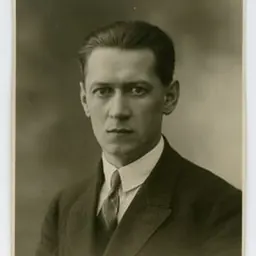



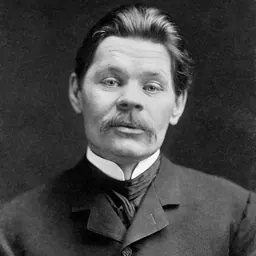

Related people
Same field, nearest in time

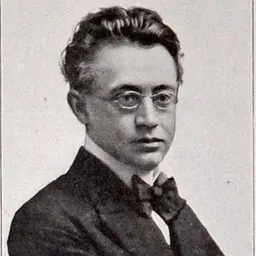

Contemporaries
People whose lives overlapped Marta Sillaots's



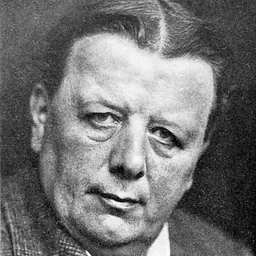

Frequently asked questions
Who was Marta Sillaots?
Estonian writer and translator (1887–1969)
When was Marta Sillaots born?
Marta Sillaots was born on 12 May 1887 in Rakke.
When did Marta Sillaots die?
Marta Sillaots died on 15 July 1969 in Tallinn.
What was Marta Sillaots's occupation?
Marta Sillaots was a translator, writer and literary critic.
What nationality was Marta Sillaots?
Marta Sillaots was Estonian.
Sources & further reading
Cite this page
APA: Biography.guide. (2026). Marta Sillaots. https://biography.guide/marta-sillaots/
MLA: "Marta Sillaots." Biography.guide, https://biography.guide/marta-sillaots/.
Chicago: "Marta Sillaots." Biography.guide. https://biography.guide/marta-sillaots/.
Data last updated: 2026-09-20 · Spot an error? Report a correction.
Page generated 2026-09-27 05:14 UTC