
About Marshall Taylor
Lived 1878 – 1932 (aged 53). Marshall Taylor was an American sport cyclist and writer.
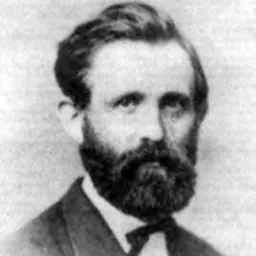
Marshall Walter "Major" Taylor (November 26, 1878 – June 21, 1932) was an American professional cyclist. He has been called "the first Black American global sports superstar."
He was born and raised in Indianapolis, where he worked in bicycle shops and began racing multiple distances in the track and road disciplines of cycling. As a teenager, he moved to Worcester, Massachusetts, with his employer/coach/mentor and continued his successful amateur career, which included breaking track records.
Taylor turned professional in 1896, at the age of 18, living in cities on the East Coast and participating in multiple track events including six-day races. He moved his focus to the sprint event in 1897, competing in a national racing circuit, winning many races and gaining popularity with the public. In 1898 and 1899, he set numerous world records in race distances ranging from the quarter-mile to the two-mile .
Taylor won the 1-mile sprint event at the 1899 world track championships to become the first Black American to achieve the level of world champion and the second Black athlete to win a world championship in any sport (following Canadian boxer George Dixon, 1890 ). Taylor was also a national sprint champion in 1899 and 1900. He raced in the U.S., Europe and Australia from 1901 to 1904, beating the world's best riders. After a -year hiatus, he made a comeback in 1907–1909, before retiring at age 32 to his home in Worcester in 1910.
Towards the end of his life Taylor faced severe financial difficulties. He spent the final two years of his life in Chicago, Illinois, where he died of a heart attack in 1932.
Throughout his career he challenged the racial prejudice he encountered on and off the track and became a pioneering role model for other athletes facing racial discrimination. Several cycling clubs, trails, and events in the U.S. have been named in his honor, as well as the Major Taylor Velodrome in Indianapolis and Major Taylor Boulevard in Worcester. Other tributes include memorials and historic markers in Worcester, Indianapolis, and at his gravesite in Chicago. He has also been memorialized in film, music and fashion.
Early life Marshall Walter Taylor was the son of Gilbert Taylor, a Civil War veteran, and Saphronia Kelter Taylor. His parents migrated from Louisville, Kentucky, and settled on a farm in Bucktown, Indiana, a rural area on the western edge of Indianapolis. He was one of eight children in a family of five girls and three boys. Around 1887, his father began working in Indianapolis as a coachman for a wealthy white family named Southard.
When Taylor was a child, he occasionally accompanied his father to work and soon became a close friend of the Southards' son, Daniel, Taylor, who remained in Indianapolis, returned to live at his parents' home and "was soon thrust into the real world." He received a 15-minute handicap (head start) in the road race because of his young age. Taylor subsequently traveled to Peoria, Illinois, to compete in another meet, finishing in third place in the under-16 age category.
Major Taylor encountered racial prejudice throughout his racing career from some of his competitors. In addition, some local track owners feared that other cyclists would refuse to compete if Taylor was present for a bicycle race and banned him from their tracks. In 1893, for example, after the 15-year-old Taylor beat a one-mile amateur track record, he was "hooted" and then barred from the track. In 1895, Taylor and Munger relocated from Indianapolis to Worcester which, at that time, was a center of the U.S. bicycle industry and included half-a-dozen factories and thirty bicycle shops. Munger, who was Taylor's employer, lifelong friend, and mentor, had decided to move his bicycle manufacturing business to the state of Massachusetts, which was also a more tolerant area of the country.
Munger and business partner Charles Boyd established the Worcester Cycle Manufacturing Company with factories in Worcester and Middletown, Connecticut. For Taylor, who continued to work for Munger as a bicycle mechanic and messenger between the company's two factory locations,
In 1896, Taylor entered numerous races in the Northeastern states of Massachusetts, New Jersey, and Connecticut. After winning a ten-mile road race in Worcester, Taylor competed in the Irvington–Millburn race in New Jersey, also known as the Derby of the East. Within half a mile of the finish line, someone startled Taylor by tossing ice water into his face and he finished in 23rd place. Taylor's first major East Coast race was in a League of American Wheelmen (LAW) one-mile contest in New Haven, Connecticut, where he started in last place but won the event. In August 1896, Taylor made a trip to Indianapolis, where he set an unofficial new track record of 2:11 for a distance of one mile at the Capital City velodrome, beating Walter Sanger's official track record of 2:19 . (Taylor was not allowed to compete with Sanger, a professional racer, in a head-to-head contest because he was still an amateur.) Taylor's final amateur race took place on November 26, 1896, in the 25-mile Tatum Handicap at Jamaica, New York. Taylor finished the race in 14th place.
Professional career 1896: First races
Taylor turned professional in 1896, at the age of eighteen, and soon emerged as the "most formidable racer in America."
From December 6–12, 1896, Taylor participated as one of 28 competitors in the six-day event. Although Taylor had just become a professional, he had achieved enough notoriety, possibly because of his stunning win on December 5, to be listed among the "American contestants" that also included A.A. Hansen (the Minneapolis "rainmaker") and Teddy Goodman. In addition, many "experts from abroad" participated in the meet such as Switzerland's Albert Schock, Germany's Frank J. Waller, Frank Forster, and Ed von Hoeg, and Canada's Burns W. Pierce. Several countries, including Scotland, Wales, France, England, and Denmark, were represented in the event. Taylor initially raced for Munger's Worcester Cycle Manufacturing Company. After the company went into receivership in 1897 he joined other racing teams. 1897 was the first full year in which Taylor competed on the professional racing circuit. Early in the season, at the Bostonian Cycle Club's "Blue Ribbon Meet" on May 19, 1897, Taylor rode a Comet bicycle to win first place in the one-mile open professional race. On June 26, he won a quarter-mile race at the track at Manhattan Beach, Brooklyn. Taylor also beat Eddie Bald in a one-mile race in Reading, Pennsylvania, but finished fourth in the prestigious LAW convention in Philadelphia.
As a professional racer, Taylor continued to experience racial prejudice as a black cyclist in a white-dominated sport.
On July 17 at Philadelphia, Taylor won his biggest victories of the season: first place in the one-mile championship and second place in the one-mile handicap races. On August 27, in a head-to-head race with Jimmy Michael of Wales, Taylor set a new world record of 1:41 for a one-mile paced match and beat the Welsh racer to the finish by .
Taylor was among several top cyclists who could claim the national championship in 1898; however, scoring variations and the formation of a new cycling league that year "clouded" his claim to the title.
During 1898–99, at the peak of his cycling career, Taylor established seven world records; the quarter-mile, the one-third-mile , the half-mile, the two-thirds-mile , the three-quarters-mile , the one-mile, and the two-mile distances. His one-mile world record of 1:41 from a standing start stood for 28 years.
1899: World sprint champion Taylor became the first Black American to win a world championship in any sport at the 1899 track world championships at the Vélodrome de Queen's Park in Montreal, Canada. At the 1899 world championships in Montreal, Canada, Major Taylor won the one-mile sprint, to become the first African American to win a world championship in cycling. He was the second black athlete, after Canadian bantamweight boxer George Dixon of Boston, to win a world championship in any sport. Taylor won the one-mile world championship sprint in a close finish a few feet ahead of Frenchman Courbe d'Outrelon and American Tom Butler. In addition, Taylor placed second in the two-mile championship sprint at Montreal behind Charles McCarthy and won the half-mile championship race.
Taylor was popular among the European race fans and news reporters: "Everywhere he went he was mobbed, talked about, or written up." In 1901, Taylor won 18 of the 24 European races he entered, notching up 42 victories when the individual heats are counted. A highlight of Taylor's European tour in 1901 was the two match races with French champion Edmond Jacquelin at the Parc des Princes in Paris, the winner in each decided over the best of three heats. Jacquelin won the first match, on May 16, two heats to nil, a wheel length sealing the win in the first heat, two lengths the gap in the second. Taylor triumphed in the second match, on May 27, two heats to nil, four lengths his margin of victory in the first heat, three the gap in the second. During his world tour in 1903, Taylor earned prize money estimated at $35,000 ($ in 2015 chained dollars).
1907–1910: Later years
Following a collapse from the mental and physical strain of professional competition, Taylor took a -year hiatus from cycling between 1904 and 1906, before returning to race in France. He set two world records in Paris in 1907 for the half-mile standing start at 0:42 and the quarter-mile standing start at 0:25 . Taylor also returned to Europe for the racing season in 1908 and in 1909. He finally broke his long-standing decision to avoid Sunday races in 1909 when he was nearing the end of his racing career.
Taylor's last professional race took place on October 10, 1909, in Roanne, France, in a match race against French world champion Charles Dupré. Taylor won the race, but he did not return to Europe for the 1910 season and retired from competitive cycling.
Taylor was still breaking records in 1908, but his age was starting to "creep up on him." and took up various business ventures.
Nearly 20 years after his retirement, Taylor wrote and self-published his autobiography, The Fastest Bicycle Rider in the World: The Story of a Colored Boy's Indomitable Courage and Success Against Great Odds: An Autobiography (1928). (The original version of Taylor's autobiography, printed by The Commonwealth Press in Worcester, Massachusetts, has a copyright date of 1928; however, other sources indicate that it was not published until 1929.)
Honors and tributes
Taylor's legacy remained largely unknown until 1982, when the Major Taylor Velodrome in Indianapolis opened for the city's hosting of the U.S. Olympic Festival. Annual events taking place in the velodrome or the wider Indy Cycloplex include the Major Taylor Racing League track series, and from 2015, the Major Taylor Cross Cup second division UCI cyclo-cross event. Taylor was posthumously inducted into the U.S. Bicycling Hall of Fame in 1989. In 1996 and 1997, Taylor was posthumously awarded with the USA Cycling Korbel Lifetime Achievement Award and the Massachusetts Hall of Black Achievement, respectively. In 2002, he was one of the nine track cyclists inducted into the UCI Hall of Fame, created to commemorate 100 years of the Paris–Roubaix one-day road race and the inauguration of the World Cycling Centre. In 2003, he was named a Sports Ethics Fellow by the Institute for International Sport. During the 2005 UCI Track Cycling World Championships in Los Angeles, a Peugeot bicycle that Taylor had owned and then was donated to the U.S. Bicycling Hall of Fame, was put on display inside the ADT Event Center. In 2009, a state historical marker was installed as a tribute to Taylor near the Indiana State Fairgrounds in Indianapolis, where the Capital City track once stood, and where he had set an unofficial track record in 1896.
In 1998, in Taylor's adopted hometown of Worcester, MA, where he had lived for 35 years, the Major Taylor Association was formed by locals with the goal of erecting a permanent memorial to Taylor outside the Worcester Public Library and telling his story. On July 24, 2006, the city renamed the Worcester Center Boulevard, a high-traffic downtown street, to Major Taylor Boulevard. At the same time, funding for the memorial was secured with the Massachusetts Legislature approving $205,000, signed by governor Mitt Romney. At the grand opening of Worcester's Applebee's restaurant in 2000, Taylor was selected as its "hometown hero" and has a display of his memorabilia. In 2002, the Educational Association of Worcester and the Worcester Public Schools, together with the Major Taylor Association, developed a curriculum guide on Taylor, which has since been expanded and used in schools nationwide.
In 1979, the first of what came to be numerous cycling clubs across the country named in Taylor's honor was organized in Columbus, Ohio. In 2008, a number of these clubs joined with other African-American clubs to form the National Brotherhood of Cyclists (NBC), a nonprofit organization that aims to further diversity in cycling. The Major Taylor Trail, a rail trail that navigates through South Side, Chicago, opened in 2007. Eleven years later, Chicagoan artist Bernard Williams oversaw the creation of a community mural honoring Taylor along the metal siding of the Little Calumet River bridge, which the trail crosses. Taylor is also celebrated along the Alum Creek Greenway Trail in Columbus, Ohio. In 2009, the Cascade Bicycle Club community organization of Washington state launched The Major Taylor Project, a youth cycling program.
A small museum devoted to Taylor opened in 2021 in the former Worcester County Courthouse. A mural, painted by Shawn Michael Warren, was dedicated in Indianapolis, in September 2021, to honor his legacy.
The Charles River Museum of Industry and Innovation, in Waltham, MA, has several displays dedicated to Major Taylor and his rivalry with Eddie McDuffee, both of whom rode Orient Bicycles, manufactured by the Metz Waltham Manufacturing Company.
In Dec. 2023, U.S. Rep. Jim Baird of Indiana, (R) and U.S. Rep. Jonathan L. Jackson of Illinois, (D), spearheaded an effort to award the Congressional Gold Medal to Taylor. The measure was, co-sponsored by U.S. Rep. James P. McGovern, D-Worcester. (Status of that unknown.)
In popular culture Actor Philip Morris portrayed Taylor in the 1992 television mini-series Tracks of Glory. Blues musician Otis Taylor (no relation) recorded "He Never Raced on Sunday," a song about Taylor for his 2004 album Double V. In 2007, Nike produced the Major Taylor "premium" collection of their most iconic sneakers in a light brown/neon yellow/white colorway. In the same year, SOMA Fabrications began making a set of bicycle handlebars called the Major Taylor Bar, which is a replica of 1930s drop handlebar that was named for Taylor. Dewshane Williams portrayed Taylor in the 2013 episode of television drama series Murdoch Mysteries, "Tour de Murdoch."
Major Taylor was used in a 2018-19 promotional campaign by the drinks brand Hennessy, part of a series focusing on "inspirational stories" of "culturally influential people". The campaign included TV commercials aired during the Super Bowl and the NBA Finals, featuring a voiceover from rapper Nas, as well as television documentary short The Six Day Race: The Story of Marshall "Major" Taylor; directed by Colin Barnicle, it features interviews with contemporary African-American athletes, road cyclist Ayesha McGowan and BMX rider Nigel Sylvester. Other parts of the campaign were a limited run replica track bicycle, a bronze sculpture of Taylor by Kadir Nelson and a series of tribute bicycle rides took place across the U.S. in November and December marking Taylor's birth date, and the creation of the $25,000 "MMT Higher Education Scholarship".
Graphic novel publisher Drawn and Quarterly announced plans to publish a biography of Taylor by comic artist Frederick Noland. This was originally planned for 2023 but an autumn 2026 publication date was announced at the 2025 Comic Con in San Diego, where the cover was revealed.
Marriage and family
Taylor's wife, Daisy Victoria Morris, was born on January 28, 1876, in Hudson, New York. Taylor married Morris in Ansonia, Connecticut, on March 21, 1902. Taylor met her around 1900 when she was living in Worcester, with her aunt and uncle.
While in Australia in 1904, Taylor and his wife had their only child, a daughter that they named Rita Sydney in honor of Sydney, where she was born on May 11. When Taylor, his wife, and daughter were not traveling, they lived in a large home on Hobson Avenue in Worcester that Taylor had purchased in 1900.
After his retirement from racing in 1910 and the failure of subsequent business ventures in the 1920s, Taylor and his wife became estranged. In 1930 she left him and moved to New York City. Around the same time Taylor left Worcester and moved to Chicago; he never saw his wife or daughter again.
Taylor's daughter Sydney, who graduated from the Sargent School of Culture in Boston in 1925 and the University of Chicago in 1936, taught physical education at West Virginia State University. She died in 2005 at age 101; her survivors include a son, Dallas C. Brown Jr., and his five children. The original scrapbooks were donated to the Indiana State Museum and Historic Sites in 1988.
Paced, standing start
Paced, standing start
Single-paced competition
Hampden Park, Springfield, MA
Paced
Paced
Paced
Paced
Paced
Paced
Paced
Paced
Paced
Paced
Paced
Paced
Paced
Paced
Paced
Paced
Paced
Paced
Paced
Paced
Paced
Motor-paced
Motor-paced
Motor-paced
Motor-paced
Unpaced
Madison Square Garden, New York City
Standing start
Standing start
Motor-paced
Don’t just read it —
keep it.
Full-length biographies made to live with: read them, listen on the way to work, watch them tonight.
- E-book
- Audio
- Video
Instant download · yours to keep · every purchase keeps this site free
Important facts
People in Marshall Taylor's life
Named in this biography and alive at the same time



Related people
Same field, nearest in time


Contemporaries
People whose lives overlapped Marshall Taylor's



Frequently asked questions
Who was Marshall Taylor?
American racing cyclist (1878-1932)
When was Marshall Taylor born?
Marshall Taylor was born on 26 November 1878 in Indianapolis.
When did Marshall Taylor die?
Marshall Taylor died on 21 June 1932 in Chicago.
What was Marshall Taylor's occupation?
Marshall Taylor was a sport cyclist and writer.
What nationality was Marshall Taylor?
Marshall Taylor was American.
Sources & further reading
Cite this page
APA: Biography.guide. (2026). Marshall Taylor. https://biography.guide/marshall-taylor/
MLA: "Marshall Taylor." Biography.guide, https://biography.guide/marshall-taylor/.
Chicago: "Marshall Taylor." Biography.guide. https://biography.guide/marshall-taylor/.
Data last updated: 2026-09-20 · Spot an error? Report a correction.
Page generated 2026-09-27 05:28 UTC