
About Marshall Sahlins
Lived 1930 – 2021 (aged 90). Marshall Sahlins was an American anthropologist and university teacher.
Marshall David Sahlins ( ; December 27, 1930 – April 5, 2021) was an American cultural anthropologist best known for his ethnographic work in the Pacific and for his contributions to anthropological theory. He was the Charles F. Grey Distinguished Service Professor Emeritus of Anthropology and of Social Sciences at the University of Chicago.
Biography Sahlins was born in Chicago, the son of Bertha (Skud) and Paul A. Sahlins. His parents were Russian Jewish immigrants. His father was a doctor while his mother was a homemaker.
Sahlins received his Bachelor of Arts and Master of Arts degrees at the University of Michigan where he studied with evolutionary anthropologist Leslie White. He earned his PhD at Columbia University in 1954. In 1957, he became assistant professor at the University of Michigan. In 1968, Sahlins signed the "Writers and Editors War Tax Protest" pledge, vowing to refuse tax payments in protest against the Vietnam War. In the late 1960s, he also spent two years in Paris, where he was exposed to French intellectual life (and particularly the work of Claude Lévi-Strauss) and the student protests of May 1968. In 1973, he took a position in the anthropology department at the University of Chicago, where he was the Charles F. Grey Distinguished Service Professor of Anthropology Emeritus. His commitment to activism continued throughout his time at Chicago, most recently leading to his protest over the opening of the university's Confucius Institute (which later closed in the fall of 2014). On February 23, 2013, Sahlins resigned from the National Academy of Sciences to protest the call for military research for improving the effectiveness of small combat groups and also the election of Napoleon Chagnon. The resignation followed the publication in that month of Chagnon's memoir and widespread coverage of the memoir, including a profile of Chagnon in The New York Times Magazine.
Alongside his research and activism, Sahlins trained a host of students who went on to become prominent in the field. One such student, Gayle Rubin, said: "Sahlins is a mesmerizing speaker and a brilliant thinker. By the time he finished the first lecture, I was hooked."
In 2001, Sahlins became publisher of Prickly Pear Pamphlets, which was started in 1993 by anthropologists Keith Hart and Anna Grimshaw, and was renamed Prickly Paradigm Press. The imprint specializes in small pamphlets on unconventional subjects in anthropology, critical theory, philosophy, and current events. He died on April 5, 2021, at the age of 90 in Chicago.
His brother was the writer and comedian Bernard Sahlins (1922–2013). His son, Peter Sahlins, is a historian.
Work Sahlins is known for theorizing the interaction of structure and agency, his critiques of reductive theories of human nature (economic and biological, in particular), and his demonstrations of the power that culture has to shape people's perceptions and actions. Although his focus has been the entire Pacific, Sahlins has done most of his research in Fiji (especially the island of Moala) and Hawaii.
Early work Sahlins's training under Leslie White, a proponent of materialist and evolutionary anthropology at the University of Michigan, is reflected in his early work. His 1958 book Social Stratification in Polynesia offered a materialist account of Polynesian cultures. In his Evolution and Culture (1960), he touched on the areas of cultural evolution and neoevolutionism. He divided the evolution of societies into "general" and "specific". General evolution is the tendency of cultural and social systems to increase in complexity, organization and adaptiveness to environment. However, as the various cultures are not isolated, there is interaction and a diffusion of their qualities (like technological inventions). This leads cultures to develop in different ways (specific evolution), as various elements are introduced to them in different combinations and on different stages of evolution. Historical Metaphors and Mythical Realities (1981), Islands of History (1985), Anahulu (1992), and Apologies to Thucydides (2004) contain his main contributions to historical anthropology.
Islands of History sparked a notable debate with Gananath Obeyesekere over the details of Captain James Cook's death in the Hawaiian Islands in 1779. At the heart of the debate was how to understand the rationality of indigenous people. Obeyesekere insisted that indigenous people thought in essentially the same way as Westerners and was concerned that any argument otherwise would paint them as "irrational" and "uncivilized". In contrast Sahlins argued that each culture may have different types of rationality that make sense of the world by focusing on different patterns and explain them within specific cultural narratives, and that assuming that all cultures lead to a single rational view is a form of eurocentrism.
Sahlins's final book was The New Science of the Enchanted Universe: An Anthropology of Most of Humanity. The book explores the worldwide phenomenon of "meta-persons." A reviewer defined metapersons as "supreme gods and minor deities, ancestral spirits, demons, indwelling souls in animals and plants—who act as the intimate, everyday agents of human success or ruin, whether in agriculture, hunting, procreation, or politics."
The book was published posthumously, and almost didn't get published at all. In fall 2020, Sahlins fell and became paralyzed. Then, near his 90th birthday, his mind fell into a dissociative state. Doctors gave him days to live. But he rallied and emerged from the dissociative state, determined to finish. He could not use his hands, so he began dictating pages to his son, historian Peter Sahlins. They finished a month before his death.
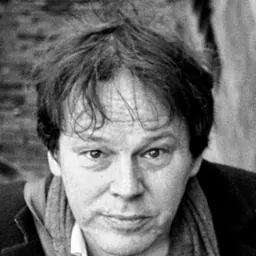
Legacy According to his obituary in the socialist magazine Jacobin, some of [his books] have profoundly influenced the way we think anthropologically, and also more generally in the social sciences. His analysis inspired a wide range of radical thinkers, including left and post-left anarchists. The ecological neo-primitivist John Zerzan owed much to Sahlins (“my single most important influence”), while Hakim Bey has repeatedly cited “The Original Affluent Society” as the major inspiration for his thinking. His impact on radical thought inside the academy was profound as well. He was a PhD adviser and mentor to David Graeber at the University of Chicago. Graeber’s anarchist leaning, political commitment, and ability to speak clearly to large audiences owe much to Sahlins, whom he held in the highest regard.
Selected publications Social Stratification in Polynesia. Monographs of the American Ethnological Society, 29. Seattle: University of Washington Press, 1958. Evolution and Culture, edited with Elman R Service. Ann Arbor: University of Michigan Press, 1960. Moala: Culture and Nature on a Fijian Island. Ann Arbor: University of Michigan Press, 1962. Tribesman. Foundations of American Anthropology Series. Englewood Cliffs, N.J.: Prentice-Hall, 1968. . New York: de Gruyter, 1972. The Use and Abuse of Biology: An Anthropological Critique of Sociobiology. Ann Arbor: University of Michigan Press, 1976. Culture and Practical Reason. Chicago : University of Chicago Press, 1976. Historical Metaphors and Mythical Realities: Structure in the Early History of the Sandwich Islands Kingdom. Ann Arbor: University of Michigan Press, 1981. Islands of History. Chicago: University of Chicago Press, 1985. Anahulu: The Anthropology of History in the Kingdom of Hawaii, with Patrick Vinton Kirch. Chicago: University of Chicago Press, 1992. How "Natives" Think: About Captain Cook, for Example. Chicago: University of Chicago Press, 1995. Culture in Practice: Selected Essays. New York: Zone Books, 2000. Waiting for Foucault, Still. Chicago: Prickly Paradigm Press, 2002. Apologies to Thucydides: Understanding History as Culture and Vice Versa. Chicago: University of Chicago Press, 2004. The Western Illusion of Human Nature. Chicago: Prickly Paradigm Press, 2008. What Kinship Is–and Is Not. Chicago: University of Chicago Press, 2012. Confucius Institute: Academic Malware. Chicago: Prickly Paradigm Press, 2015. On Kings, with David Graeber, HAU, 2017. The New Science of the Enchanted Universe: An Anthropology of Most of Humanity. Princeton University Press, 2022.
Awards Chevalier des Arts et des Lettres (Knight in the Order of Arts and Letters), awarded by the French Ministry of Culture Honorary doctorates from the Sorbonne and the London School of Economics Gordon J. Laing Prize for Culture and Practical Reason, awarded by the University of Chicago Press Gordon J. Laing Prize for How 'Natives' Think, awarded by the University of Chicago Press J. I. Staley Prize for Anahulu, awarded by the School of American Research
Don’t just read it —
keep it.
Full-length biographies made to live with: read them, listen on the way to work, watch them tonight.
- E-book
- Audio
- Video
Instant download · yours to keep · every purchase keeps this site free
Important facts
People in Marshall Sahlins's life
Named in this biography and alive at the same time


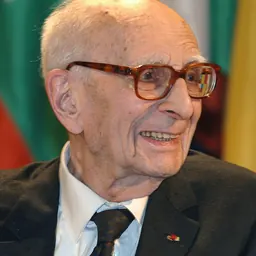



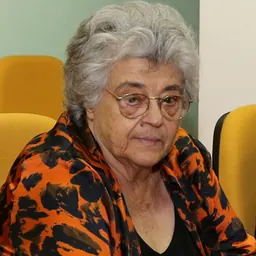
Related people
Same field, nearest in time


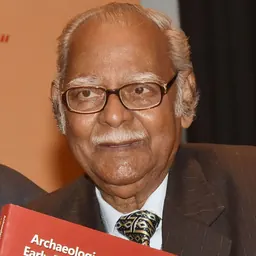

Contemporaries
People whose lives overlapped Marshall Sahlins's

Frequently asked questions
Who was Marshall Sahlins?
American anthropologist (1930-2021)
When was Marshall Sahlins born?
Marshall Sahlins was born on 27 December 1930 in Chicago.
When did Marshall Sahlins die?
Marshall Sahlins died on 5 April 2021 in Chicago.
What was Marshall Sahlins's occupation?
Marshall Sahlins was an anthropologist and university teacher.
What nationality was Marshall Sahlins?
Marshall Sahlins was American.
Sources & further reading
Cite this page
APA: Biography.guide. (2026). Marshall Sahlins. https://biography.guide/marshall-sahlins/
MLA: "Marshall Sahlins." Biography.guide, https://biography.guide/marshall-sahlins/.
Chicago: "Marshall Sahlins." Biography.guide. https://biography.guide/marshall-sahlins/.
Data last updated: 2026-09-21 · Spot an error? Report a correction.
Portrait: Wikimedia Commons · author & licence
Page generated 2026-09-27 05:01 UTC