
Marshall Ho'o
American t'ai chi ch'uan practitioner
About Marshall Ho'o
Lived 1910 – 1993 (aged 82–83).
Dr. Marshall Ho'o (May 6, 1910 – October 2, 1993) was an American practitioner of tai chi and traditional Chinese medicine, known for his pioneering efforts to introduce and promote those healing arts, for which he received numerous awards in recognition of his community service. As part of that career he also had small roles in several major films, led tai chi instruction on his own television show, and authored a book on tai chi.
Early life Marshall Ho’o was born to Wing Locke “Charles” Hoo and Yit Lin “Rose” Ju in Oakland, California, on May 6, 1910. His parents’ wedding in March 1909 made headlines in the Oakland Tribune for their adoption of a Christian wedding instead of a traditional Chinese ceremony. Ho’o's father died in 1912 (aged 22) from a pulmonary hemorrhage. Ho’o and his infant sister, Elizabeth, were raised by their paternal aunt and her husband after their father's death.
Early career Ho’o said that he began his "fighting career" during the Great Depression, fighting in bread lines for his family's food, and that this motivated his lifelong concern with social justice. After moving to Los Angeles in his late twenties he became active in organized labor, for example helping to start the first company newspaper and first union at Hughes Aircraft while working as an engineer. He also helped organize waterfront protests against the export of scrap metal to Japan in 1939, to prevent its use in Japanese aggression against China.
He partnered in a successful business, the School Days Equipment Company, while continuing his community activism, and also earned a ministerial degree with The Church of England from the University of St Andrews. By 1949 he was considered a leading member of the Chinese-American community, and was frequently invited by various groups and organizations to give lectures addressing such topics as race relations in America and current events in mainland China.
Martial arts and health In the 1930s he was introduced to tai chi in classes taught by Lo Sai Loan and Lo Yee Sing in a San Francisco Chinatown association cellar. After moving to Los Angeles, he returned to San Francisco regularly from 1944 through 1946 to train with Choy Hok Peng. Choy had learned Yang-style tai chi directly from Yang Chengfu and Chen Weiming. In the early 1950s Ho'o also began training in Kodokan judo and jujutsu in Los Angeles.
With business and activism his main focus, Ho'o's health had deteriorated by the age of 50 and he had developed bleeding ulcers. He sold his share of the school equipment company and moved to Guadalajara in Mexico to convalesce, where he practiced tai chi daily until his health problems began to clear up. Once he returned from Mexico, Ho’o devoted his life to the practice of martial arts and traditional Chinese medicine. founded the National Tai Chi Chuan Association (NTCCA) in 1962. From 1966 to 1967 Huang sponsored a visit across North America by tai chi master Tung Hu Ling, son of his teacher Tung Ying-chieh. Ho'o took on the management and covered much of the cost for the Los Angeles portion of the tour, a long stay during which Tung taught a full term of tai chi classes.
In 1973 Ho’o cofounded the Aspen Academy of the Martial Arts, a summer retreat in Aspen, Colorado that was "devoted to the teaching of Oriental martial arts and related disciplines in their true historical and philosophical context." Among the visiting instructors at the academy were Dan Inosanto, Koichi Tohei, Chungliang Al Huang, Baba Ram Das, Joo Bang Lee, Richard Bustillo, Remy Presas, Benjamin Lo, Martin Inn, Abraham Lui, John Kotsias, Robert Duggan and Howard Lee. Inosanto commented that the academy ran smoothly because of "the humanitarian element of Ho'o".
Ho'o held the post of Professor of Oriental History and taught tai chi at the California Institute of the Arts. He also taught courses at UCLA, Pomona College, California State University, Northridge and University of California, Irvine. In 1989 he moved to Yucaipa, California, and was Professor of Oriental Studies at the University of Redlands, and also taught at junior colleges in the area. He served as chairman of the East-West Acupuncture Society, and educational advisor to the Center of Chinese Medicine. He led a group of American doctors to China in 1978, and received numerous awards for his service to the community for his tai chi and other healing work, including awards from the National Acupuncture Association, Los Angeles Mayor Tom Bradley, California Secretary of State March Fong Yu, and State Senator Art Torres. In 1990 he studied healing techniques in China, and also visited tai chi masters as well as the Shaolin Monastery. On his last trip there in 1991, he did deeper research into Taoist philosophy.
He led tai chi instruction in his own weekly television series on KCET, channel 28, in Los Angeles. Premiering in October 1972, T'AI CHI CH'UAN from the Ch'ing Dynasty with Marshall Ho'o was so popular with viewers that by July 1973, KCET started broadcasting it four times a week. Other television stations from across the country also began airing the series.
Book and video His book Tai Chi Chuan was published in 1986 by Ohara Publications, Inc., under the Black Belt Books imprint. Ho'o and Victoria Mallory appeared in the book's photos and in an accompanying videotape distributed by Ohara as part of the Black Belt Magazine Presents series. The original title of the book was Tai Chi Chuan: The 27 Forms, and it was listed under both titles as O'Hara publication number 449. and in a cover story in the same issue he recounted his experiences with tai chi and his longstanding efforts to promote the art. He also explained that in addition to teaching simplified and traditional tai chi, he had developed his own personal "eclectic style" based on training in "six or so styles" and extracting what he considered "the best from each". his unique teaching style, and his legacy.
Death Ho'o died on October 2, 1993. His family said he died unexpectedly, standing on his feet. The official cause was arteriosclerotic cardiovascular disease. He was survived by his wife, Jill Goldstein Ho’o, his younger sister, Elizabeth Bowen (née Hoo), his seven children: Brian, Galen, Maya, China, Tai, Tola and Lincoln, and his granddaughter Emma.
Don’t just read it —
keep it.
Full-length biographies made to live with: read them, listen on the way to work, watch them tonight.
- E-book
- Audio
- Video
Instant download · yours to keep · every purchase keeps this site free
Important facts
People in Marshall Ho'o's life
Named in this biography and alive at the same time

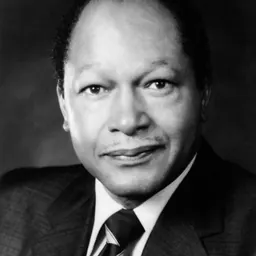



Contemporaries
People whose lives overlapped Marshall Ho'o's






Frequently asked questions
Who was Marshall Ho'o?
American t'ai chi ch'uan practitioner
When was Marshall Ho'o born?
Marshall Ho'o was born in 1910.
When did Marshall Ho'o die?
Marshall Ho'o died in 1993.
Sources & further reading
Cite this page
APA: Biography.guide. (2026). Marshall Ho'o. https://biography.guide/marshall-ho-o/
MLA: "Marshall Ho'o." Biography.guide, https://biography.guide/marshall-ho-o/.
Chicago: "Marshall Ho'o." Biography.guide. https://biography.guide/marshall-ho-o/.
Data last updated: 2026-09-20 · Spot an error? Report a correction.
Page generated 2026-09-27 05:09 UTC