
About Marshall Harvey Stone
Lived 1903 – 1989 (aged 85). Marshall Harvey Stone was an American mathematician and university teacher, known for Stone's representation theorem for Boolean algebras, Stone–Weierstrass theorem and Stone–von Neumann theorem.
Marshall Harvey Stone (April 8, 1903 – January 9, 1989) was an American mathematician who contributed to real analysis, functional analysis, topology and the study of Boolean algebras.
Biography
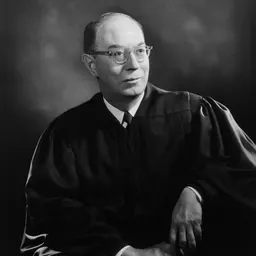
Stone was the son of Harlan Fiske Stone, who was the Chief Justice of the United States in 1941–1946. Marshall Stone's family expected him to become a lawyer like his father, but he became enamored of mathematics while he was an undergraduate at Harvard University, where he was a classmate of future judge Henry Friendly. He completed a PhD there in 1926, with a thesis on differential equations that was supervised by George David Birkhoff. Between 1925 and 1937, he taught at Harvard, Yale University, and Columbia University. Stone was promoted to a full professor at Harvard in 1937.
During World War II, Stone did classified research as part of the "Office of Naval Operations" and the "Office of the Chief of Staff" of the United States Department of War. In 1946, he became the chairman of the Mathematics Department at the University of Chicago, a position that he held until 1952. While chairman, Stone hired several notable mathematicians including Paul Halmos, André Weil, Saunders Mac Lane, Antoni Zygmund, and Shiing-Shen Chern. He remained on the faculty at this university until 1968, after which he taught at the University of Massachusetts Amherst until 1980.
In 1989, Stone died in Madras, India (now referred to as Chennai), due to a stroke. Following his death, many mathematicians praised Stone for his contributions to various mathematical fields. For instance, University of Massachusetts Amherst mathematician Larry Mann claimed that "Professor Stone was one of the greatest American mathematicians of this century," while Mac Lane described how Stone made the University of Chicago mathematics department the "best department in mathematics in the country in that period."
Accomplishments Stone made several advances in the 1930s: In 1930, he proved the Stone–von Neumann uniqueness theorem. In 1932, he published a 662 page long monograph titled Linear transformations in Hilbert space and their applications to analysis, which was a presentation about self-adjoint operators. Much of its content is now deemed to be part of functional analysis. In 1932, he proved conjectures by Hermann Weyl on spectral theory, arising from the application of group theory to quantum mechanics. In 1934, he published two papers setting out what is now called Stone–Čech compactification theory. This theory grew out of his attempts to understand more deeply his results on spectral theory. In 1936, he published a long paper that included Stone's representation theorem for Boolean algebras, an important result in mathematical logic, topology, universal algebra and category theory. The theorem has been the starting point for what is now called Stone duality. In 1937, he published the Stone–Weierstrass theorem which generalized Weierstrass's theorem on the uniform approximation of continuous functions by polynomials.
Stone was elected to the American Academy of Arts and Sciences in 1933 and the National Academy of Sciences (United States) in 1938. He was elected to the American Philosophical Society in 1943. He presided over the American Mathematical Society, 1943–44, and the International Mathematical Union, 1952–54. In 1982, he was awarded the National Medal of Science.
Selected publications
(50 pages)
Don’t just read it —
keep it.
Full-length biographies made to live with: read them, listen on the way to work, watch them tonight.
- E-book
- Audio
- Video
Instant download · yours to keep · every purchase keeps this site free
Important facts
People in Marshall Harvey Stone's life
Named in this biography and alive at the same time




Related people
Same field, nearest in time


Contemporaries
People whose lives overlapped Marshall Harvey Stone's
Frequently asked questions
Who was Marshall Harvey Stone?
American mathematician (1903–1989)
When was Marshall Harvey Stone born?
Marshall Harvey Stone was born on 8 April 1903 in New York City.
When did Marshall Harvey Stone die?
Marshall Harvey Stone died on 9 January 1989 in Chennai.
What was Marshall Harvey Stone's occupation?
Marshall Harvey Stone was a mathematician and university teacher.
What was Marshall Harvey Stone known for?
Marshall Harvey Stone was known for Stone's representation theorem for Boolean algebras, Stone–Weierstrass theorem, Stone–von Neumann theorem and Stone–Čech compactification.
What nationality was Marshall Harvey Stone?
Marshall Harvey Stone was American.
Sources & further reading
· Wikipedia: Marshall Harvey Stone
Cite this page
APA: Biography.guide. (2026). Marshall Harvey Stone. https://biography.guide/marshall-harvey-stone/
MLA: "Marshall Harvey Stone." Biography.guide, https://biography.guide/marshall-harvey-stone/.
Chicago: "Marshall Harvey Stone." Biography.guide. https://biography.guide/marshall-harvey-stone/.
Data last updated: 2026-09-21 · Spot an error? Report a correction.
Page generated 2026-09-27 05:00 UTC