
About Marko Car
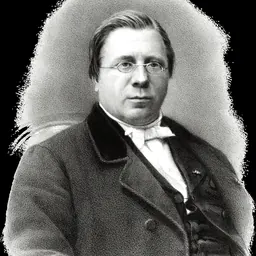
Lived 1859 – 1953 (aged 93). Marko Car was a Serbian literary critic, essayist, travel writer, writer and translator.
Marko Car (; 30 August 1859 – 1 December 1953) was a Serbian writer, politician and activist from the Bay of Kotor. He was a polyglot and an aesthetic essayist, writing numerous poems, novels, narratives, essays, and travel reports. During his lifetime, he wrote for many newspapers and magazines.
Biography Marko Car was born in 1859 in the town of Herceg-Novi in the Bay of Kotor, then a part of the Kingdom of Dalmatia province of the Austrian Empire. He received his basic education in the local Italian popular school, after which he moved to Kotor and finished the classical gymnasium.
He became famous as a writer for his work in 1883 entitled Za kišljive dnevi (During the Rainy Days).
He worked for the Matica srpska in Dubrovnik in 1910, the year he published "Naše Primorije," printed by the Serbian Dubrovnik Printing Press.
When the Kingdom of Serbs, Croats and Slovenes was created, Car moved to the new monarchy's capital of Belgrade in 1919, where he spent the interwar period. He worked for the Yugoslavian Ministry of Education as the Inspector of the Artist division until retirement in 1921.
After the April war and the Nazi occupation of the Kingdom of Yugoslavia in 1941, he fled to Italy across Zadar. After the war ended and the Communist Partisans won in 1945, he returned to Belgrade where he spent the rest of his life.
He died on 1 December 1953 in Belgrade, FR Yugoslavia. His remains were moved to Montenegro to the countryside of his birth and he was buried in the Savina Monastery, according to his own wishes.
He was a polyglot, translating from Italian and French into Serbo-Croatian.
Religious and national beliefs
Although born a Roman Catholic Christian, he converted before death to Eastern Orthodoxy, claiming that that was the only way to save the Catholic-Serb community from extinction and avoid assimilation into Croats, which he had claimed was occurring in the Bocca. His movement didn't have significant impact outside his native Dalmatian coastland, but in there a significant number of Catholics converted to Orthodox Christians considering it a confirmation of their Serbian national identity and affiliation.
Legacy A street in Herceg Novi's Old City bears his name in his honor. In it is also a bust raised in his honor by sculptor Petar Palavicini (also spelled Palaviccini) not long after Car's death.
Works Venecija U Latinima Moje simpatije Od Jadrana do Balkana Niz rodno primorje S bojnog i ljubabnog polja Sava Bjelanović Estetička pisma Ogledala i predavanja Eseji Jedan zaboravljeni pesnik mora Dubrovnik i okolina Savremene Italijanske pripovetke Naše primorije
Don’t just read it —
keep it.
Full-length biographies made to live with: read them, listen on the way to work, watch them tonight.
- E-book
- Audio
- Video
Instant download · yours to keep · every purchase keeps this site free
Important facts
People in Marko Car's life
Named in this biography and alive at the same time

Related people
Same field, nearest in time



Contemporaries
People whose lives overlapped Marko Car's




Frequently asked questions
Who was Marko Car?
Serbian writer (1859-1953)
When was Marko Car born?
Marko Car was born on 30 August 1859 in Herceg Novi.
When did Marko Car die?
Marko Car died on 11 January 1953 in Belgrade.
What was Marko Car's occupation?
Marko Car was a literary critic, essayist, travel writer, writer and translator.
What nationality was Marko Car?
Marko Car was Serbian.
Sources & further reading
Cite this page
APA: Biography.guide. (2026). Marko Car. https://biography.guide/marko-car-literary-critic/
MLA: "Marko Car." Biography.guide, https://biography.guide/marko-car-literary-critic/.
Chicago: "Marko Car." Biography.guide. https://biography.guide/marko-car-literary-critic/.
Data last updated: 2026-09-20 · Spot an error? Report a correction.
Page generated 2026-09-27 05:18 UTC