
About Marius Monnikendam
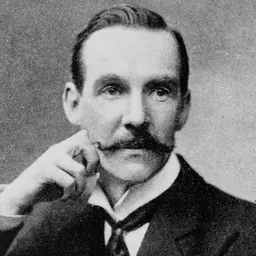
Lived 1896 – 1977 (aged 80). Marius Monnikendam was a Dutch composer, musicologist, organist and publicist.
Marinus Adrianus (Marius) Monnikendam (28 May 189622 May 1977) was a Dutch composer, organist, and music critic. He studied at the Amsterdam Conservatory. In 1925 Monnikendam went to Paris and attended Vincent d’Indy's Schola Cantorum. During this time, he published his first works for piano and cello. He then became a lecturer at the Rotterdam Conservatory and the Amsterdam Music Lyceum. Monnikendam composed mostly religious and secular works. He also published books on César Franck and Igor Stravinsky. His Lamentations of Jeremiah for chorus and orchestra, written in 1956 was broadcast by Radio Holland during the funeral services for both former Queen Wilhelmine and President John F. Kennedy (1963). His most popular work is the Toccata for Organ (1936).
His son was film director Vincent Monnikendam.
Life He was the son of diamond worker Juda Monnikendam and Catharina Cornelia Bierboom. As a child he lived opposite a church with a Cavaillé-Coll organ, which he often visited and which had a lasting influence on his future career as an organ composer. At the age of 11 he went to the boarding school and gymnasium of the Fathers of Monfort at Schimmert, where there was only a pump organ, on which a lot of Bach was played, which was a new revelation for him.
Monnikendam studied at the Amsterdam Conservatory with Sem Dresden and Jean-Baptiste de Pauw. In 1925, thanks to a scholarship from the state, he was able to study composition at the Schola Cantorum de Paris with Vincent d'Indy and Louis Aubert.
Composer As a composer Marius Monnikendam never conformed to any musical trend in particular. Compared with his first Te Deum, his second one shows a marked austerity and commitment. His third Te Deum (1961), written for male choir and orchestra, is strongly influenced by Stravinsky and Orff. His creative powers remain undiminished. His final compositions were three commissioned works. The old Dutch mystery play "Everyman" (with a new modern text by Jan Engelman and an English translation by A. Barnouw) was written in two versions, one for male choir and one for mixed choir. Monnikendam received a second commission by the Dutch Heart Foundation. Based on the human heartbeat, Monnikendam wrote an instrumental work Heart-Rhythm (1975) in which a link is made with space travel. On the occasion of the reopening as a concert hall of the restored New Church of The Hague (end of 1976) Monnikendam composed a Gloria for mixed choir, orchestra, organ and percussion. The work was commissioned by the Johann Wagenaar Foundation.
Works (selection) The following list contains a selection of Monnikendam's compositions of which most of the manuscripts are in the Music Library of the Gemeentemuseum in The Hague, the Music Library of the Dutch Radio and Donemus (74 compositions;
Orchestral works Symfonic Movement Arbeid (1931) Concerto for organ and strings (1938) Sinfonia super "Merck toch hoe sterck", piano and chamber orchestra (1943) Mouvement symphonique (1950) Concerto for Trumpet and Horn (1952) Variations symphoniques (1954) Concerto for two Trumpets, two Trombones and Organ (1956) Overture, for Grand Organ and Orchestra (1960) Vision, for chamber orchestra (1963) Suite, for orchestra (1963) Variations symphoniques super "Merck toch hoe sterck", for orchestra (1963) Concerto for piano and orchestra (1974) Concerto for organ and chamber orchestra (1977)
Oratorio Noé ou La destruction du premier monde, for 2 narrators, soprano, alto, baritone, mixed koor, boys choir (SA) and orchestra (1955) – text: Robert Morel
Works for choir Magnificat, for male choir (TTBB) and organ (1923) Missa Nova, for three-part mixed choir (STB) and organ (1928) Laudate Dominum, for two-part male choir and organ (1934) Boetpsalmen (Penance Psalms) (1938) Ave Maria, for five-part mixed choir (SATBrB) and organ (1943) Missa parvulorum, a duabus choris organo comitante (1944) Te Deum, for mixed choir and orchestra (1945) Sinfonia Sacra (1947–52) Ballade des Pendus (1949) Litaniae Lauretaniae, for four-part male choir and organ (1951) Missa parvulorum a duabus choris organo comitante (1951) Missa festiva, for mixed choir, organ, trumpet and trombone ad libitum (1954) Magnificat, for male choir (TTBB), soprano (solo) and instruments (1956) – also available in a version for mixed choir, soprano and two piano's Klaagzangen van Jeremia (Lamentations of Jeremiah), for narrator, alto, mixed choir and piano (1956) Veni creator, for male choir, boys' choir (ad libitum) and organ, with two trumpets and two trombones ad libitum (1957) Veni, Sancte Spiritus, for male choir (TTBB) and organ (1958) Symbolum – a recitative cred', for mixed choir, organ and two trumpets and two trombones ad libitum (1961) Psalm 50 "Have mercy on me, O, God", for three equal voices with organ (1963) Via Sacra, for boys' choir, mixed choir (SAATBB), narrator, percussion and organ (1969) Trois psaumes (Psalms 25, 23 and 148) pour le temps present, for soprano, alto, tenor, bas, mixed choir and orchestra (1971) Christmas cycle, six Christmas carols for mixed choir and organ (1973) Alleluia!, for mixed choir and organ (1975) Elckerlyc, for male choir (TTBB), boys' choir and orchestra (or: mixed choir (SATB), boys' choir and orchestra) (1975) – words: Jan Engelman Heart-Rhythm, for male choir (TTBB), narrator (if possible two), 3 percussionists, organ and double-bass (1975) – composed for the European Congress of Cardiologists in 1976 Gloria, for mixed choir, organ and orchestra (1976) Hymn for St. Chrystophore, for mixed choir and orchestra – words: Anton v. Duinkerken O, Roma, choir in unison and organ
Chamber music Sonate, for cello and piano (1925) Intrada and sortie – processional and recessional, for organ and 1 or 2 trumpets and 1 or 2 trombones (1959) Suite in C-major, for flute, oboe, clarinet, bassoon and harp (1960) Toccata-batalla, for 2 trumpets, 2 trombones, timpani and organ (or organ solo) (1972)
Works for organ Toccata (1936) – dedicated to Charles Tournemire Tema con variazione per la notte di natale (1951) – dedicated to Flor Peeters Choral (1951) Toccata (1957) 10 Inventiones (1959) Marcia funebre (1959) Rondeña, for organ pedal and timpani (1960) Sonata da chiesa (1961) Cortège (1963) Toccata II (1970) – dedicated to Flor Peeters Two themes with variations, variations on "Frère Jacques" and "Veni Creator Spiritus" (1971) Prelude "The bells" (1972) Fugue sur les petits et les grands jeux (1974) Postludium (super FeikE (A)Asma) (1974) – dedicated to Feike Asma Invocatio (1975) Voluntary (1975) Toccate concertante (1976) Toccate pentecosta – "Veni sancte spiritus, et emitte caelitus lucis tuae radium" (1977) 12 Inventions Choral
Works for piano Six inventions à deux voix (1928) Le carillon de cithère, from the movie: «Le mirioir parlant» (1938) Sonate biblique pour le fête de Noël, for piano four hands Sonatine (1968)
Works for carillon Theme with variations on the heart beat (1976) Fantasy on "O heer, die daer des Hemels tente spreyt – Valerius' gedenkclanck
Publications César Franck, Amsterdam : Uitgeversmaatschappij Holland, 1949. 204 p. Vijftig meesterwerken der muziek vol. 1, Den Haag : Dieben, 1953. 157 p. Vijftig meesterwerken der muziek vol. 2, Den Haag : Dieben, 1960. 132 p. Vijftig meesterwerken der muziek vol. 3, Den Haag : Dieben, 196?. 120 p. Igor Strawinsky, biografie, Haarlem: J.H. Gottmer, 1966. 278 p. Nederlandse componisten van heden en verleden(Dutch composers in the past and today), Amsterdam: A.J.G. Strengholt, 1968, 280 p.
Don’t just read it —
keep it.
Full-length biographies made to live with: read them, listen on the way to work, watch them tonight.
- E-book
- Audio
- Video
Instant download · yours to keep · every purchase keeps this site free
Important facts
People in Marius Monnikendam's life
Named in this biography and alive at the same time





Related people
Same field, nearest in time



Contemporaries
People whose lives overlapped Marius Monnikendam's

Frequently asked questions
Who was Marius Monnikendam?
Dutch composer and musicologist (1896–1977)
When was Marius Monnikendam born?
Marius Monnikendam was born on 28 May 1896 in Haarlem.
When did Marius Monnikendam die?
Marius Monnikendam died on 22 May 1977 in Heerlen.
What was Marius Monnikendam's occupation?
Marius Monnikendam was a composer, musicologist, organist and publicist.
What nationality was Marius Monnikendam?
Marius Monnikendam was Dutch.
Sources & further reading
· Wikipedia: Marius Monnikendam
Cite this page
APA: Biography.guide. (2026). Marius Monnikendam. https://biography.guide/marius-monnikendam/
MLA: "Marius Monnikendam." Biography.guide, https://biography.guide/marius-monnikendam/.
Chicago: "Marius Monnikendam." Biography.guide. https://biography.guide/marius-monnikendam/.
Data last updated: 2026-09-22 · Spot an error? Report a correction.
Page generated 2026-09-27 05:21 UTC