
About Marisa Mori
Lived 1900 – 1985 (aged 84). Marisa Mori was an Italian painter and visual artist.
Marisa Mori (March 9, 1900 – March 6, 1985) was an Italian painter and scenographer. She was one of many female artists in the Futurism movement.
Early life and education Marisa Mori was born in Florence as Maria Luisa Lurini. Her father, Mario Lurini, was working for Fondiaria-Sai, an insurance company. Her mother, Edmea Bernini, was a distant descendant of sculptor Gian Lorenzo Bernini. She had one older brother, Gastone Lurini, who died early on in World War I. In 1918 the family moved to Turin, where Marisa appears to have studied briefly under artist Leonardo Bistolfi. Having seen his work, Mori then requested teaching lessons from Felice Casorati, who ran a private school with several artists including Carlo Levi, Paola Levi-Montalcini and Nella Marchesini; she studied under him between 1925 and 1931. In 1920 she married Mario Mori, her cousin. She would recreate this work several times as an edible sculpture for experimental banquets across the country. Mori exhibited it in 1933 at the Glorificazione della cucina futurista exhibition in Milan She won a Silver Medal in 1933 for a gesso model made for a film set that was never realised. She became involved in Aeropittura (Aeropainting) practices and experienced acrobatic flight in a biplane over Rome, thanks to F.T. Marinetti who funded this 1934 adventure. In 1937 her work was included in the exhibition Les femmes artistes d'Europe at the Galerie nationale du Jeu de Paume in Paris, which travelled to New York. In the late 1930s, Mori began to question Futurism and its acceptance of fascist Race Laws. When the Levi-Montalcini family fled the Nazi occupation of Turin, her friend Paola Levi-Montalcini contacted Mori for help and the family (including Rita Levi Montalcini and Gino Levi Montalcini) were secretly sheltered by Mori in her home. In 1943, at the eve of the outbreak of Civil War, Mario Mori died.
Other artistic involvements Mori exhibited with Italian society Pro-Cultura Femminile: a group focused on elevating the cultural production of women. Through the Pro-Cultura Femminile, Mori exhibited in 1930 at the First Exhibition of Female Art and exhibited again in 1932 at the Exhibition of Modern Decorative Female Art. Mori died in 1985 in Florence, three days before her 85th birthday. All of her works are in private collections and none belong to museums. Most remain in the possession of the Mori Family Archive.
Don’t just read it —
keep it.
Full-length biographies made to live with: read them, listen on the way to work, watch them tonight.
- E-book
- Audio
- Video
Instant download · yours to keep · every purchase keeps this site free
Important facts
People in Marisa Mori's life
Named in this biography and alive at the same time


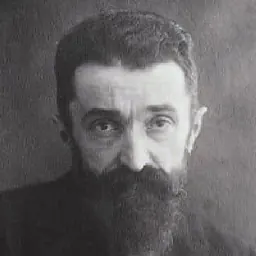

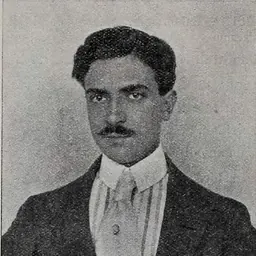
Related people
Same field, nearest in time

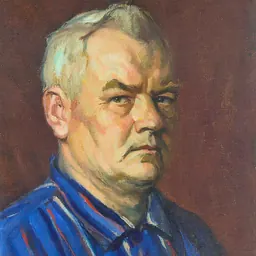
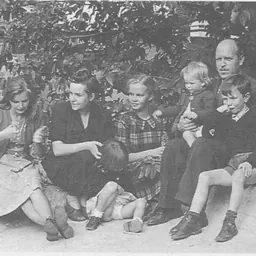
Contemporaries
People whose lives overlapped Marisa Mori's



Frequently asked questions
Who was Marisa Mori?
Italian painter (1900-1985)
When was Marisa Mori born?
Marisa Mori was born on 9 March 1900 in Florence.
When did Marisa Mori die?
Marisa Mori died on 6 February 1985 in Florence.
What was Marisa Mori's occupation?
Marisa Mori was a painter and visual artist.
What nationality was Marisa Mori?
Marisa Mori was Italian.
Sources & further reading
Cite this page
APA: Biography.guide. (2026). Marisa Mori. https://biography.guide/marisa-mori/
MLA: "Marisa Mori." Biography.guide, https://biography.guide/marisa-mori/.
Chicago: "Marisa Mori." Biography.guide. https://biography.guide/marisa-mori/.
Data last updated: 2026-09-20 · Spot an error? Report a correction.
Page generated 2026-09-27 05:00 UTC