
About Marion Bernstein
Lived 1846 – 1906 (aged 59–60). Marion Bernstein was a British poet and writer.
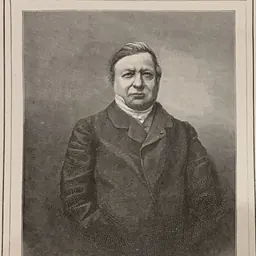
Marion Bernstein (16 September 1846- 6 February 1906) was a poet whose verse included darkly humorous poems that asserted women's rights. Most of her published work was printed in newspapers in Glasgow, most notably the Glasgow Weekly Mail. In 1876, her only published book of poetry, Mirren's Musings, was published. Bernstein's poetry has been included in several critical studies of Scottish poetry since the 1990s.
Biography Bernstein was born in London in 1846. Her father, Theodore Bernstein, was an Eastern European Jew who immigrated to England sometime in the 1830s. At age 13, Marion became unwell. Her illness was chronicled in an autobiographical poem, titled Mirren's Autobiography, published in 1880. It is impossible to know the exact cause of her infirmity but it has been asserted that she probably suffered from polio. By 1874, they had moved to Glasgow, probably because Marion's older sister (also called Lydia) had married Benjamin Malyon who became the owner of a small Glasgow printing company. In Glasgow, Marion supported herself by teaching piano. She remained in the city until her death.
Towards the end of her life and following the death of her mother and brother-in-law, Marion lived with her older sister and the two made a living as music teachers. In 1901 they had a joke at the expense of the census enumerator when they recorded themselves as professors - with Marion styling herself as a 'professor of theory and harmony'.
Poetry Bernstein's poetry highlighted the everyday vicissitudes of female experience, including domestic violence and the demands placed on women to be ideal wives and mothers, but it often treated these serious subjects with a degree of humour. Notably, she asserted women's right to the franchise, well ahead of the UK-wide campaigning which a few decades later achieved such a high profile. Much of her work was published in newspapers printed in Glasgow, most notably the Glasgow Weekly Mail. which suggests she had a keen readership despite the sometimes controversial subjects with which she dealt. Such writing amply displayed a combative spirit, which was undimmed by disability and the hardships of her early life. Her poems published in the press mostly commented on current affairs. She did have other interests that she expressed in her poetry, for example she was religious and many of her poems are concerned with aspects of her Christian faith. The poems in Mirren's Musings were written during a period of severely impaired mobility. This interest increased when her work was covered by Elspeth King in The Hidden History of Glasgow's Women. Leonard commented on Marion's capacity for expressing idiosyncratic opinions. For example, in her 1878 poem 'The Govan Rivetter's Strike', Bernstein was critical of a strike called by a group of Clydeside shipbuilders, leading Leonard to remark that a: 'radical in one tradition might be conservative in another'. Bernstein, though a pioneering feminist and someone whose writing often expressed sympathy for the poor and dispossessed, nevertheless was politically orthodox in other ways—certainly, she failed to support the striking shipyard workers in print. Without doubt, her main legacy lies with her verse on feminist themes, especially those arguing for the right to vote. An oft-quoted work is her fantasy piece A Dream published in Mirren's Musings (p.101) in which she promotes political equality for women:I dreamt that the nineteenth century
Had entirely passed away,
And had given place to a more advanced
And very much brighter day.
For Woman’s Rights were established quite,
And man could the fact discern
That he’d long been teaching his grandmamma
What she didn’t require to learn.
There were female chiefs in the Cabinet,
(Much better than males I’m sure!)
And the Commons were three-parts feminine,
While the Lords were seen no more! Marion Bernstein never married. Her surviving poetry demonstrates that despite the many disadvantages she experienced, she was a woman unafraid to express and defend her opinions. She died of breast cancer in 1906, survived only by her older, widowed sister.
Selected works
Don’t just read it —
keep it.
Full-length biographies made to live with: read them, listen on the way to work, watch them tonight.
- E-book
- Audio
- Video
Instant download · yours to keep · every purchase keeps this site free
Important facts
Related people
Same field, nearest in time

Contemporaries
People whose lives overlapped Marion Bernstein's




Frequently asked questions
Who was Marion Bernstein?
British poet
When was Marion Bernstein born?
Marion Bernstein was born in 1846 in London.
When did Marion Bernstein die?
Marion Bernstein died in 1906.
What was Marion Bernstein's occupation?
Marion Bernstein was a poet and writer.
What nationality was Marion Bernstein?
Marion Bernstein was British.
Sources & further reading
Cite this page
APA: Biography.guide. (2026). Marion Bernstein. https://biography.guide/marion-bernstein/
MLA: "Marion Bernstein." Biography.guide, https://biography.guide/marion-bernstein/.
Chicago: "Marion Bernstein." Biography.guide. https://biography.guide/marion-bernstein/.
Data last updated: 2026-09-26 · Spot an error? Report a correction.
Page generated 2026-09-27 05:14 UTC