
Mário Zagallo
Brazilian footballer
About Mário Zagallo
Lived 1931 – 2024 (aged 92). Mário Zagallo was a Brazilian association football player and association football coach.
Mário Jorge Lobo Zagallo (; 9 August 1931 – 5 January 2024) was a Brazilian professional football player, coordinator and manager, who played as a forward.
Zagallo holds the record for FIFA World Cup titles in general with four titles in total. He also holds the record for World Cup finals with five participations. He was the first person to win the World Cup as both a manager and as a player, winning the competition in 1958 and 1962 as a player and in 1970 as manager. In addition, he won the 1994 FIFA World Cup as assistant manager. Zagallo also coached Brazil in 1974 (finishing fourth) and in 1998 (finishing as runners-up) and was a technical assistant in 2006. He was the first of three men, along with Germany's Franz Beckenbauer and France's Didier Deschamps to have won the World Cup as a player and as a manager, and the only one who had done each more than once.
In 1992, Zagallo received the FIFA Order of Merit, the highest honour awarded by FIFA, for his contributions to football. He was named the ninth greatest manager of all time by World Soccer Magazine in 2013. He was the last surviving Brazilian player who participated in the 1958 World Cup final, and his death left Amarildo as the last surviving Brazilian player of the 1962 final.
Early life Mário Jorge Lobo Zagallo was born in Atalaia in the state of Alagoas, on 9 August 1931. from Zahlé. He later moved to Rio de Janeiro with his family when he was still eight months old.
As a young man, he committed to complete his military service in the Brazilian Army; he was notably deployed at the Maracanã Stadium when Uruguay defeated Brazil in the 1950 World Cup decisive match.
Playing career Zagallo during his playing spell at BotafogoZagallo started his football career in the youth sector of América, having turned professional and established himself within the Mengão 's first team, he helped the club win three consecutive titles in the Campeonato Carioca between 1953 and 1955. and eventually became a part of a team that included several other regular starters of the Brazilian national team, such as Garrincha, Nilton Santos and Didi.
In 1958, he was included by manager Vicente Feola in the Brazilian squad for the FIFA World Cup in Sweden:
He was also a part of the squad that won the 1962 FIFA World Cup in Chile,
Due to his characteristics and his skills, he received the nickname Formiguinha ("Little Ant" in Portuguese).
Zagallo's fluid 4–2–3–1 formation, which was often seen as a 4–2–4 or false 4–3–3 formation, famously used five number tens in attack and midfield: Pelé, Rivellino, Tostão, Jairzinho, and Gérson, with Gérson dictating play behind the attack, and Pelé and Tostão both also often dropping deep to operate behind the front line, in addition to joining the attack; Tostão's free role with Brazil during the 1970 World Cup under Zagallo, which allowed him to disorient defenders and get onto the end of passes or create space for teammates with his movement and runs off the ball, despite being deployed as a centre-forward on paper, has been likened in the media to the modern false 9 role. The full-backs – Carlos Alberto and Everaldo – would also often join the attack. Clodoaldo instead provided defensive cover in midfield in a holding role. His team placed less emphasis on the defensive aspect of the game than on the attacking side in the latter tournament, and often relied on a high back-line, reverting to a 4–4–1–1 off the ball. Although he gave his players instructions, Zagallo also gave them a lot of freedom on the pitch, and was known for his leadership and ability to motivate his players and create a united team environment, as well as a winning mentality. The team's fluidity in attack, and the tendency for the forwards to change positions caused problems for Italy in the 1970 World Cup final victory, whose more defensive catenaccio tactics used fixed man-to-man marking.
Considered to be one of the greatest managers of all time, he was nicknamed The Professor by his players throughout his coaching career, due to his tactical awareness and commanding presence on the bench,
During his stints as Brazil's head coach during the 1990s, Zagallo instead used a more defensive-minded set-up, following Brazil's success in the 1994 World Cup with a more conservative and pragmatic approach, in contrast to their lack of success in the tournament in the 1980s with a more traditional Brazilian attacking style. At the 1998 World Cup, Zagallo fielded a 4–2–2–2 formation with a double pivot in midfield, occupied by solid defensive midfielders such as Dunga and César Sampaio; the team would become a 4–4–1–1 when defending off the ball. His team made use of ball-playing goalkeepers (such as Taffarel) and defenders (such as Aldair) who would build plays from the back; he also made use of attacking full-backs – Cafu and Roberto Carlos – to contribute to the team's attacking plays. Rivaldo would act as an inverted right-winger, who would cut inside to shoot on goal or create chances for team-mates, while attacking midfielder Leonardo operated on the opposite side. Up-front, Zagallo made use of two strikers, with Bebeto partnering Ronaldo, with the latter being given the freedom to drop deep, link-up with the midfield, and create space for his teammates with his movement, in addition to undertaking attacking runs with the ball. In the 1997 Copa América, Confederations Cup, and Tournoi de France, Brazil were also known for the prolific Ro–Ro attacking partnership of Ronaldo and Romário under Zagallo.
Managerial career
In 1966, Zagallo started his managerial career at Botafogo, the club he had finished his playing career with. at the age of 38, he also became the second youngest coach to win the aforementioned title, behind only Alberto Suppici.
In 1989, Zagallo was hired by the United Arab Emirates for their qualification campaign for the 1990 FIFA World Cup. He led the amateurs to an unexpected first qualification to the tournament, but left for Vasco da Gama days before the World Cup began and was replaced by Carlos Alberto Parreira.
He then returned to the Brazilian national team as a coordinator and assistant coach, and helped the side win the 1994 FIFA World Cup while serving in those roles. Later that year he also won the Confederations Cup with Brazil, defeating Australia 6–0 in the final. At the 1998 FIFA World Cup the following year (Brazil had automatically qualified at the time as the defending champions), Brazil reached the final, but they lost to the host nation France 3–0.
In November 2002, Zagallo came out of retirement to coach Brazil again, following Luiz Felipe Scolari's exit after winning that year's World Cup. On 20 November, in his only game, the team won 3–2 in a friendly away to South Korea.
Personal life
Zagallo married Alcina de Castro on 13 January 1955 at the Church of Capuchins in Rio de Janeiro. They remained together until de Castro's death on 5 November 2012. Mário and Alcina had four children. He was a practicing Catholic.
Zagallo's surname was spelled Zagalo for most of his career, including by himself, until he told a reporter in the 1990s that his surname on his birth certificate was Zagallo. He was also the only Brazilian World Cup-winning forward to be known by his surname.
In July 2022, Zagallo was admitted to hospital with a respiratory infection. In August 2023, he was hospitalized for 22 days due to a urinary infection. Following a brief hospitalization in Rio de Janeiro, he died on 5 January 2024 due to multiple organ failure, resulting from the exacerbation of various pre-existing comorbidities. Zagallo was aged 92.
Managerial statistics
Honours Player Flamengo Rio de Janeiro State Championship: 1953, 1954, 1955
Flamengo Copa dos Campeões: 2001 Rio de Janeiro State Championship: 1972, 2001
Brazil FIFA World Cup: 1970;
Coordinator Brazil FIFA World Cup: 1994 FourFourTwo 27th Greatest Manager of All Time: 2020
Don’t just read it —
keep it.
Full-length biographies made to live with: read them, listen on the way to work, watch them tonight.
- E-book
- Audio
- Video
Instant download · yours to keep · every purchase keeps this site free
Important facts
People in Mário Zagallo's life
Named in this biography and alive at the same time

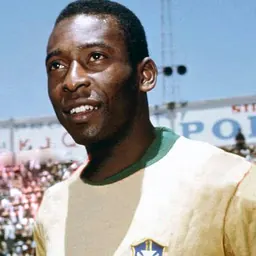
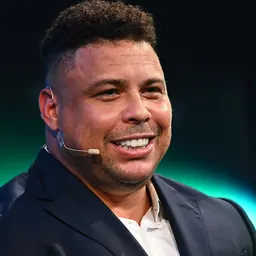

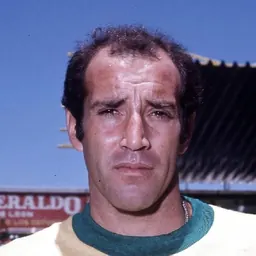


Related people
Same field, nearest in time



Contemporaries
People whose lives overlapped Mário Zagallo's
Frequently asked questions
Who was Mário Zagallo?
Brazilian footballer (1931–2024)
When was Mário Zagallo born?
Mário Zagallo was born on 9 August 1931 in Atalaia.
When did Mário Zagallo die?
Mário Zagallo died on 5 January 2024 in Rio de Janeiro.
What was Mário Zagallo's occupation?
Mário Zagallo was an association football player and association football coach.
What nationality was Mário Zagallo?
Mário Zagallo was Brazilian.
Sources & further reading
Cite this page
APA: Biography.guide. (2026). Mário Zagallo. https://biography.guide/mario-zagallo/
MLA: "Mário Zagallo." Biography.guide, https://biography.guide/mario-zagallo/.
Chicago: "Mário Zagallo." Biography.guide. https://biography.guide/mario-zagallo/.
Data last updated: 2026-09-27 · Spot an error? Report a correction.
Page generated 2026-09-27 05:17 UTC