
About Cafu
Born 1970. Cafu is a Brazilian association football player.
Marcos Evangelista de Morais (born 7 June 1970), known as Cafu , is a Brazilian former professional footballer who played as a right-back. Widely regarded as one of the greatest full-backs of all time, he was known for his pace and energetic attacking runs along the right flank. He is the most-capped player for the Brazil national team with 142 appearances.
At club level, Cafu won several domestic and international titles while playing in Brazil, Spain, and Italy; he is best known for his spells at São Paulo (1989–1995), Roma (1997–2003), and AC Milan (2003–08), teams with which he made history, although he also played briefly for Zaragoza, Juventude, and Palmeiras during a two-year spell from 1995 to 1997. In 1994, Cafu was crowned South American Footballer of the Year, and in 2004, was named by Pelé in the FIFA 100 list of the world's greatest living players. He was additionally named in the FIFPro World XI in 2005, and in 2020 was included in the Ballon d'Or Dream Team.
Cafu represented his nation in four FIFA World Cups between 1994 and 2006. He is the only player in history to have appeared in three consecutive World Cup finals and one of only 21 players to have won the World Cup more than once, winning the 1994 and 2002 editions of the tournament, the latter as his team's captain where he lifted the World Cup trophy. With Brazil, he also took part in four editions of the Copa América, winning the title twice, in 1997 and 1999; he was also a member of the national side that won the 1997 FIFA Confederations Cup.
Early life One of six children, Cafu was raised in the Jardim Irene favela of São Paulo. At the age of seven, he was able to attend a football academy and soon moved up to the junior sides of Nacional-SP, Portuguesa, and Itaquaquecetuba. He also played futsal for two years.
As a child, he received the nickname 'Cafu', in honor of the Brazilian winger Cafuringa.
In the early 1980s, he was rejected from the youth squads of Corinthians, Palmeiras, Santos, Atlético Mineiro, and Portuguesa, but it was not until 1988 that he made the youth squad of hometown club São Paulo, and subsequently won the Copa São Paulo youth tournament that year, but he did not play during the next season as São Paulo won the 1989 Campeonato Paulista.
Club career
Early career It was during this time, however, that São Paulo youth coach Telê Santana became Cafu's mentor. He suggested that Cafu move from right midfield to wingback, a spot into which Cafu made the transition with ease despite never previously playing the position. He had soon anchored onto the first team, as São Paulo won back-to-back Copa Libertadores and Intercontinental Cup in 1992 and 1993. In 1994, he was named the South American Footballer of the Year. Halfway through the 1994–95 season, Cafu joined Spanish side Real Zaragoza, winning the 1995 Cup Winners' Cup with them (though he had injury issues and did not play in the final). He then left Zaragoza to join Brazilian club Juventude.
Rise to prominence and success
1997-98: Debut at AS Roma After a brief stint back in Brazil with Palmeiras in 1996, Cafu returned to Europe once again the next year, this time with AS Roma, signing a deal worth 14,7 million Italian lire (€7.6 million). On 31 August 1997, he made his debut for the club in a league game against Hellas Verona, delivering an assist in that game. Under manager Zdeněk Zeman, he quickly earned his place in the starting XI and led the club to a fourth-place finish in Serie A, qualifying them for the UEFA Cup. In total, Cafu made 36 appearances, scoring his only goal in a league match against Inter Milan on 11 April 1998.
1998-2001: Starting XI and European success After a stellar FIFA World Cup, where he reached the final and only lost out to host nation France, Cafu continued to be a crucial member of the Giallorossi, despite missing out on multiple matches. The team finished in 6th place and reached the quarterfinals of the UEFA Cup, only losing out to Atlético Madrid 4–2 on aggregate. In 1999–2000, manager Zeman left and was replaced by Fabio Capello, but Cafu remained an integral member. He still led the club into European slots, placing 6th, and won the Scudetto the following year, helping the club in a dense title race with Lazio and Juventus.
2001-2003: Final years in Rome and move to AC Milan In the 2001–02 season, Roma played in the UEFA Champions League, since they won the league the year before. And Cafu made a big impact as a starter, giving the club crucial points by scoring the matchwinner in a game against Lokomotiv Moscow on 16 October 2001. And despite Roma was eliminated in the following round, he still helped them reach runner-up to Juventus. After captaining Brazil to the title in the 2002 FIFA World Cup, Cafu was still ever-present, and although he missed six of the last seven league matches, he made an impact, helping Roma finish 8th and still reach the Coppa Italia final.
That summer, he moved to AC Milan, after turning down a move to Japan with Yokohama F. Marinos. With the Rossoneri, he won his second career Scudetto in 2004, followed by his second Supercoppa Italiana, and he played in his first UEFA Champions League final in 2005. The following season, he made fewer appearances for Milan due to injury and difficulties in his personal life.
Despite his success with Milan, he continued to hold fond memories of his Roma years, and it was for that reason that on 4 March 2007 – the day after Milan eliminated Celtic in the first knockout round of the 2006–07 UEFA Champions League – he candidly revealed in a UEFA.com chat that he did not want Milan to be drawn against the Giallorossi in the quarter-final round. He got his wish, as Milan were drawn against Bayern Munich. Milan's successful Champions League campaign saw Cafu finally pick up a long-awaited winners' medal, in a rematch of the 2005 final.
Cafu signed a contract extension in May 2007 that would keep him with Milan until the end of the 2007–08 season, during which he won another UEFA Supercup, and his third world title at club level and now his first FIFA Club World Cup. On 16 May 2008, it was announced that Cafu and compatriot Serginho would be leaving Milan at the end of the season. In Cafu's last game of his Milan career, and of his professional career, he scored a goal in their 4–1 victory over Udinese. Milan vice-president Adriano Galliani stated that the door would be open to him to return to work for the club.
He is a member of the AC Milan and the Roma Halls of Fame.
Passport controversy Cafu was accused along with several other Serie A players, including Roma teammate Fábio Júnior and Gustavo Bartelt, countryman and later Milan teammate Dida, of using a forged passport in their attempt to dodge regulations regarding the number of non-European players allowed on Italian club rosters. However, the charge was cleared by the Italian Football Federation (FIGC) as Cafu's Italian passport was real and issued by Italian officials, but 13 others – including Dida – were banned. But Cafu faced another controversy that similar to Juan Sebastián Verón, accused that Cafu's wife, Regina used falsified documents to claim Italian nationality through Italian descent. Cafu acquired Italian nationality through marriage. In 2004, Cafu and Roma club president Franco Sensi went to court.
On 12 June 2006, less than 24 hours before Brazil were to begin their 2006 World Cup campaign against Croatia, Rome prosecutor Angelantonio Racanelli called for the imprisonment of Cafu, his wife and his agent for nine months following the resurfacing of a false-passport scandal. The very next day, however, Cafu, his wife and agent were acquitted of all charges.
International career
Cafu is the most-capped Brazilian men's player of all time with 142 appearances, including a record 20 World Cup games. He has won two World Cups in 1994 and 2002, as well as being the only player to participate in three consecutive World Cup final matches. Cafu had also written "100% Jardim Irene" on his shirt as an homage to his upbringing. Three days after World Cup victory, Cafu spent some time in Bangu on Amanajó Street alongside former Bangu AC coach and notable fan Pombo and his cousin, a long time Cafu's friend.
Cafu and Brazil fell short of high expectations placed on the squad four years later in 2006, as Brazil meekly exited in the quarter-finals after a 1–0 defeat by France. Coach Carlos Alberto Parreira was criticized for featuring fading veterans, most notably the 36-year-old Cafu and 33-year-old Roberto Carlos, in the starting eleven in lieu of younger players. Cafu was one of few Brazil players who spoke to the press in the midst of a hailstorm of criticism from Brazilian fans and media alike following the team's return home.
Style of play
Cafu is regarded as one of the best right-backs in the world during his career, as well as one of the best-ranked footballers. Cafu was an attacking full-back before it became common, influencing future players Dani Alves, Trent Alexander-Arnold, and Achraf Hakimi. He was well known for his incredible ability and stamina, as well as his ability to make overlapping attacking runs down the right flank and provide accurate crosses to teammates in the area.
In addition to his footballing ability, he was also known for his discipline, leadership, and his characteristically cheerful demeanor. Although he usually played as an attacking right-back, he was also capable of playing as a centre-back, due to his defensive skills, or in more advanced positions, and was often deployed as a right winger. During his time in Italy, he was given the nickname Pendolino, after the country's express trains.
Personal life Cafu is separated from his wife Regina Feliciano, whom he married in 1987. The couple had three children together: two sons (Danilo and Wellington) and a daughter (Michelle). On 4 September 2019, Danilo suffered a heart attack whilst playing football at his family home, after complaining about feeling unwell. Danilo was taken to a hospital where he later died.
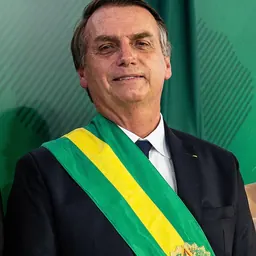
For the 2018 Brazilian general election, Cafu supported Jair Bolsonaro.
Career statistics
Club
Scores and results list Brazil's goal tally first, score column indicates score after each Cafu goal.
Honours São Paulo UEFA Cup Winners' Cup: 1994–95
Palmeiras Serie A: 2003–04 Supercoppa Italiana: 2004 UEFA Champions League: 2006–07 UEFA Super Cup: 2003, 2007 FIFA Club World Cup: 2007
Brazil FIFA World Cup: 1994, 2002, runner up: 1998 Copa América: 1997, 1999 FIFA Confederations Cup: 1997
Individual South American Team of the Year: 1992, 1993, 1994, 1995 South American Footballer of the Year: 1994 FIFA World Cup All-Star Team: 2002 (Reserve) FIFA World Cup Fans' All-Star Team: 2002 FIFA 100 UEFA Team of the Year: 2004, 2005 Sports Illustrated Team of the Decade: 2009 ESPN World Team of the Decade: 2009 AS Roma Hall of Fame: 2012 World Soccer Greatest XI of all time: 2013 AC Milan Hall of Fame Ballon d'Or Dream Team: 2020 IFFHS All-time Men's Dream Team: 2021 IFFHS South America Men's Team of All Time: 2021
Orders Officer of the Order of Rio Branco: 2008
Don’t just read it —
keep it.
Full-length biographies made to live with: read them, listen on the way to work, watch them tonight.
- E-book
- Audio
- Video
Instant download · yours to keep · every purchase keeps this site free
Important facts
People in Cafu's life
Named in this biography and alive at the same time





Related people
Same field, nearest in time



Contemporaries
People whose lives overlapped Cafu's
Frequently asked questions
Who is Cafu?
Brazilian association football player
When was Cafu born?
Cafu was born on 7 June 1970 in São Paulo, Itaquaquecetuba.
What is Cafu's occupation?
Cafu is an association football player.
What nationality is Cafu?
Cafu is Brazilian.
Sources & further reading
Cite this page
APA: Biography.guide. (2026). Cafu. https://biography.guide/cafu-association-football-player/
MLA: "Cafu." Biography.guide, https://biography.guide/cafu-association-football-player/.
Chicago: "Cafu." Biography.guide. https://biography.guide/cafu-association-football-player/.
Data last updated: 2026-09-20 · Spot an error? Report a correction.
Page generated 2026-09-27 05:33 UTC