
About Mario Torroella
Born 1935. Mario Torroella is a contemporary artist and painter.
Mario Torroella (born March 30, 1935) is a Cuban-American visual artist and architect based in Cambridge, Massachusetts. He is a co-founder of the firm HMFH Architects and a Fellow of the American Institute of Architects. His art is closely associated with the Cuban exile experience and has become well known in the broader international Cuban diaspora.
Early life Background
Mario Jaime Torroella y Martín-Rivero was born on March 30, 1935, in Havana's el Vedado neighborhood, then raised in the city of Marianao. His parents, Juan Torroella y Rooney and Graciela Martín-Rivero y Martínez, were both from prominent Cuban families and were educated in the United States. His mother was an artist educated first in the Corcoran School of the Arts and Design in Washington, D.C. and then at Havana's Academy of San Alejandro while his father attended Cornell University and returned to Cuba to become a contractor-architect. He graduated with his Bachelors of Arts in 1957 after which he enrolled in Harvard Graduate School of Design, receiving his master's degree in architecture in 1962. As Fidel Castro's regime became overtly aligned to Communism and under the Soviet sphere of influence, Torroella, his brother Luis, and the Martínezes each became involved in the clandestine counterrevolution against Castro, with each eventually resigning from their posts. Mario Torroella had come under suspicion from the Castro regime amidst widespread government crackdowns on dissent, leading Torroella to re-enroll in Harvard, leaving Cuba permanently on September 13, 1960.
Josep Lluís Sert mentorship
Upon returning to the Harvard Graduate School of Design, Torroella studied under prominent Spanish architect and HGSD Dean, Josep Lluís Sert, a close associate of several leading art and design figures of the 20th century, including Le Corbusier, Pablo Picasso, Alexander Calder, Joan Miró and others. The two bonded over their Cuban and Catalonian heritage and an admiration for the arts, leading Sert to become an influential mentor to Torroella that helped shape his early career.
Following Torroella's graduation in 1962, he was hired by Sert to work in his architecture firm, Torroella's first private sector architecture role in the United States. He remained with Sert through the early 1960s, during which time he also met his future wife Isabelle Berangere Gambier, a French citizen who went on to study fashion design in Paris. Torroella also continued to paint alongside his architecture career and began exhibiting his work. When he resigned from Sert's firm later in the decade to pursue other opportunities, Torroella gifted Sert one of his early works at Sert's residence in the presence of Calder.
In 1969 Torroella co-founded HMFH Architects with Harvard classmates. As a co-founder, principal, and design director, he led the firm to win several architecture awards, including the William Caudill Citation from the American School & University Magazine, as well as four Walter Taylor Awards from the AASA and the AIA.
In 1986 Torroella won the CINTAS Fellowship in architecture.
Another high-profile Torroella project is the Coastal Cement Corporation facility located within the Boston Marine Industrial Park in Boston, Massachusetts. The facility spans 14,000 square feet of office space and a bagging facility, as well as four large-scale storage silos. The silos make up the most noticeable portion of the complex with each reaching 120 feet, weighing 7,000 metric tons, and collectively holding 41,000 tons of cement. In addition to its scale, the project was noteworthy for showcasing Torroella’s signature use of color to offset Modernism’s tendency toward imposing and industrial aesthetics. Completed in 1989, Torroella led the HMFH Architects team as Design Director and utilized an unconventional application of vivid red accent coloring to add vibrancy and contrast the widespread gray of the concrete. Another departure from most industrial facilities was the extensive use of landscaping, which also added natural greens to the color scheme. These elements drew significant attention to the project, earning it the 1990 New England Regional Council/AIA Honor Award for New Commercial Construction, the Washington Waterfront Center’s national Excellence on the Waterfront Award, as well as the Excellence in Concrete Building Design Award from the Portland Cement Association & the Association of General Contractors.
In 2013 Torroella became a member of the College of Fellows of the American Institute of Architecture.
Art career
Torroella is largely self-taught in the arts, though he had been influenced by repeated exposure.
The themes and subjects explored in Torroella's work include alienation, violence, beauty, sorrow, mysticism, spirituality, and death. He has also explained the role of his background as an influence in much of his work, stating “I paint in order to communicate and/or alleviate an alienation brought about by coming from where extreme beauty and natural abundance have been the backdrop for a society which has often erupted in self-violence, thus causing great sorrow to all concerned” as well as membership in the College of Fellows of the American Institute of Architecture as of 2013. El Nuevo Herald, The Charlotte Observer, and The Lowell Sun. Additionally, Torroella has also been covered by a number of magazines including Architect Magazine, Architectural Record, Latin American Art, Art Now, and La Nuez, revista de arte y literatura.
In 1992 Torroella as his artwork were prominently covered on the “Mosaics in Boston” news feature broadcast on Boston's Channel 56.
His work is featured in several prominent public and private fine art collections including those of the Josep Lluís Sert, Cira Porta, and Marta Permuy as well as Harvard University, the University of Puerto Rico, the Museum of Contemporary Art of Velez-Malaga, and the Fundacion Maria Zambrano in Andalucia, Spain. The piece was notable for already having a public profile after having been previously featured on the cover of Ars Atelier magazine in 2012. The library’s permanent collection also features work by other prominent artists including Dale Chihuly, Salvador Dalí, and Peter Max. In 2025, Torroella was accepted into the permanent collection of the Museum of Fine Arts St. Petersburg with the work Dos Palmeras Con Fondo Rojo from 2017.
Personal life
Torroella met his wife Isabelle in 1963 in Cambridge during which time both lacked formal US citizenship. Torroella had internally displaced persons (IDPs) protection owing to his unique circumstances with Cuba, though as a French citizen Isabelle was required to return to France and they would remain in contact through correspondences and occasional visits. They married in 1971 while she was a fashion designer for Christian Dior, after which Torroella had attained dual US-French citizenship. By the end of the decade Isabelle served as Head of the Art Department for the School of Fashion Design (SFD) in Boston and featured in the American Art Directory. After retiring from her Paris fashion career, Isabelle Torroella is now an author. In 2004 she released the book Dare Asking Your Dreams for Answers, through Trafford Publishing.
The couple has two children: stylist and fashion editor Eugénie Torroella and writer Pablo Torroella.
Mario Torroella's eldest brother, Juan A. Torroella III (also known as John Torroella in the US), graduated from the U.S. Naval Academy in Annapolis, Maryland in 1955. Upon returning to Cuba he was employed by Esso (now Exxon) in Havana until the Cuban Revolution, when he transferred and relocated permanently to the United States. He remained with Exxon for the duration of his career until retiring in the early 2000s as an executive of their International Division four decades later, after which he relocated to the Brickell area of Miami. He died in 2010.
Mario Torroella's second elder brother, Luis, graduated from Dartmouth College and worked in Havana as a prominent economist, eventually heading the Ministry of Finance's table of economists. as well as ambassador to Mexico, Italy and Holland. He was included in the journal Historia de familias cubanas. Antonio Martin-Rivero's father, Pedro Martin Rivero, was a leader of the Cuban Independence movement and owned a pro-independence newspaper in Havana that was banished by the Spanish government, causing him to emigrate to Philadelphia. There he came in contact with José Martí, then a journalist in New York, and the two coordinated on the movement for the independence of Cuba. Martin-Rivero also participated in the 1868 “Grito de Yara.” More distantly, Mario Torroella's mother is descendant of Diego Velázquez de Cuéllar, the first Governor of Cuba.
Torroella's father, Juan Torroella y Rooney, is of Spanish and Irish ancestry. He was sent to the United States early in the Republic of Cuba's history by his father, Juan Torroella I, a Spaniard from Cataluña. He attended Cornell University before returning to Cuba to practice architecture. Torroella y Rooney's mother, Mario Torroella's paternal grandmother, was Irish and served as governess of the children of the influential Cuban businessman Vicente Martínez-Ybor, who started the tobacco industry in the region of Tampa now known as Ybor City. As governess, she was charged with the care of Martínez-Ybor's children, initially in their New York City residence shortly after she first arrived to the area from Ireland. She became acquainted with Juan Torroella I, a close friend of Martínez-Ybor, in Tampa and after their eventual marriage they settled permanently in Havana.
Don’t just read it —
keep it.
Full-length biographies made to live with: read them, listen on the way to work, watch them tonight.
- E-book
- Audio
- Video
Instant download · yours to keep · every purchase keeps this site free
Important facts
People in Mario Torroella's life
Named in this biography and alive at the same time

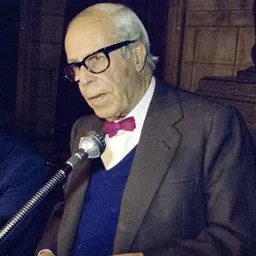
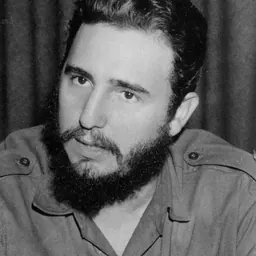

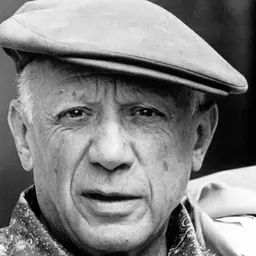

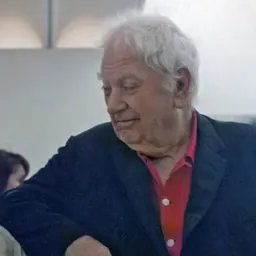

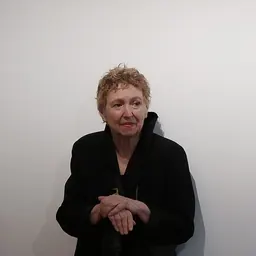
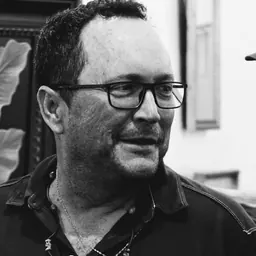
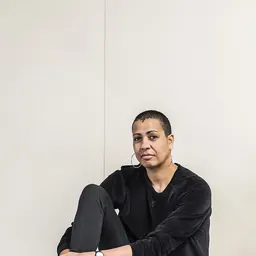
Related people
Same field, nearest in time



Contemporaries
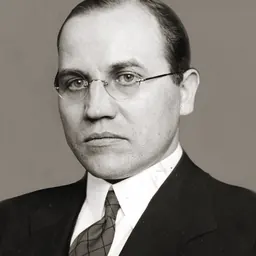
People whose lives overlapped Mario Torroella's




Frequently asked questions
Who is Mario Torroella?
Cuban artist and architect
When was Mario Torroella born?
Mario Torroella was born on 30 March 1935 in Havana.
What is Mario Torroella's occupation?
Mario Torroella is a contemporary artist and painter.
What nationality is Mario Torroella?
Mario Torroella's recorded nationality: Cuban-American, French citizenship.
Sources & further reading
Cite this page
APA: Biography.guide. (2026). Mario Torroella. https://biography.guide/mario-torroella/
MLA: "Mario Torroella." Biography.guide, https://biography.guide/mario-torroella/.
Chicago: "Mario Torroella." Biography.guide. https://biography.guide/mario-torroella/.
Data last updated: 2026-09-22 · Spot an error? Report a correction.
Page generated 2026-09-27 05:28 UTC