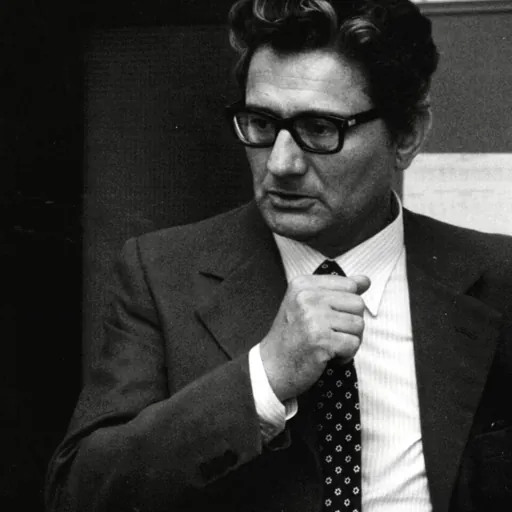
About Mario Rigutti
Lived 1926 – 2026 (aged 99). Mario Rigutti was an Italian astronomer.
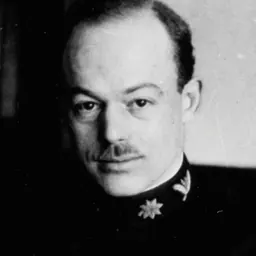
Mario Rigutti (19 August 1926 – 12 January 2026) was an Italian astronomer and science communicator. He served as the director of the Capodimonte Astronomical Observatory from 1969 to 1992 and was president of the Italian Astronomical Society.
Early life
Born in the working-class neighborhood of San Giacomo in Trieste to Giorgio Rigutti and Rosalia Coceani, Mario Rigutti spent part of his childhood there with his sisters Vittoria and Bruna. His father, a keen reader and freethinker, encouraged him to study nature, especially astronomy. However, his adolescence was not an easy one: the Second World War also engulfed Italy when he was fourteen. A naval engineer by training at the Nautical Institute, he was imprisoned twice: by the fascist police in 1944 and, after the war, by the Yugoslav occupation troops in 1945. On this occasion, he lost some dear friends who ended up in a Karst foiba, but he emerged unscathed, returning to live with his parents in one of the rooms in homes requisitioned by the municipality to house those left homeless by Allied bombings.
After attending a naval radio operator course, in 1946 he took the high school diploma exam at the Liceo scientifico to enter university. Wanting to become an astronomer, he followed the advice of Giovanni Battista Lacchini, whom he had met at the Trieste Astronomical Observatory then directed by Ettore Leonida Martin, and enrolled in the degree program in mathematics and physics. He spent his final year of studies in Florence, where he attended the Arcetri Observatory and graduated with Giorgio Abetti as his supervisor and Guglielmo Righini as his co-supervisor. His thesis, which took into account the most advanced experimental results on the solar spectrum obtained from the first observations conducted with V-2 rockets outside the Earth's atmosphere, was later published under the title "Mean Optical Depth and Temperature of the Solar Photosphere."
Once graduated, with no job or scholarship available, he had to return to Trieste, where he took up a position teaching mathematics at a middle school. After a few months, Giorgio Abetti offered him the opportunity to return to Florence as an assistant professor of astronomy, replacing Margherita Hack, who had moved to Milan.
Academic career In 1954, having won the relevant exam, he became a full member of the group of astronomers working at Arcetri. The following year, he married Carla Rossi, a literature student, and within a couple of years, Adriana, a future biologist and science communicator, and Enrico, a future surgeon, were born.
In 1960, he won a fellowship from the Canadian National Research Council (CNR), which took him and his family to Canada, where he stayed at the Dominion Observatory in Ottawa. There, he worked on the cyanogen molecule, a research that brought him into contact with future Nobel Prize winner Gerhard Herzberg and his wife Luise, as well as, among others, Jack Locke, head of the stellar division, and Vic Gaizauskas, an astronomer at the observatory.
In 1961, Mario Rigutti obtained a libera docenza in astrophysics and, thanks to a travel grant from the Organization for European Economic Cooperation (OEEC), spent a period in California, at the Astronomical Department of the University of Berkeley directed by John G. Phillips. At Berkeley, among other things, he had the opportunity to work with technologically advanced equipment for the photometric analysis of spectra and other data on photographic plates. Returning to Florence, he taught, by appointment, astrophysics for the Faculty of Science (1961–1969) and physics for the Faculty of architecture (1962–1964). During this period he observed four total solar eclipses: the first at Arcetri (1961), the other three while leading expeditions in Canada (1963), in Greece (1966) and in Brazil (1966).
In 1969, he was appointed to the chair of astronomy at the Faculty of Science at the University of Naples Federico II and assumed the direction of the Capodimonte Astronomical Observatory (Naples)—which had been on the brink of survival for decades—and that of Collurania in Teramo. Rigutti studied the Sun's outer layers (photosphere, chromosphere, corona), solar activity phenomena (flares, prominences), spectroscopic analysis of molecular bands with subsequent identification of lines in the Sun's spectrum, element abundances in the photosphere, and instrument design for both solar observation and laboratory analysis of experimental data.
Teaching and outreach Rigutti was interested in issues related to science education and popular science, which he considered essential to the development of an advanced country. For this particular activity, in addition to courses in Physics, Astrophysics, and History of Astronomy at the University of Florence, and Astronomy and Astrophysics at the University of Naples, he organized and directed numerous national and international conferences, symposia, workshops, and schools, including on behalf of the International Astronomical Union. He gave numerous lectures in cultural circles and schools, published and edited textbooks, and wrote a dozen popular science books and more than 300 articles and reviews in newspapers and magazines.
Death Rigutti died on 12 January 2026, at the age of 99.
Positions held During his career, Mario Rigutti was: Member since 1950 and then president of the Italian Astronomical Society from 1977 to 1981 Member of the European Solar Research Organization, Sun group (1968–1972)
Don’t just read it —
keep it.
Full-length biographies made to live with: read them, listen on the way to work, watch them tonight.
- E-book
- Audio
- Video
Instant download · yours to keep · every purchase keeps this site free
Important facts
People in Mario Rigutti's life
Named in this biography and alive at the same time
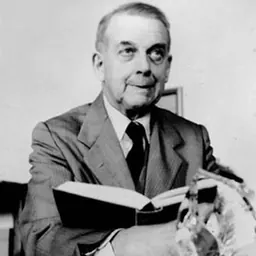
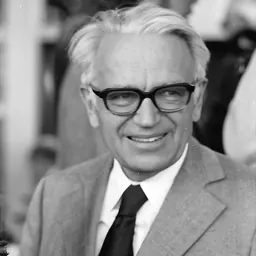

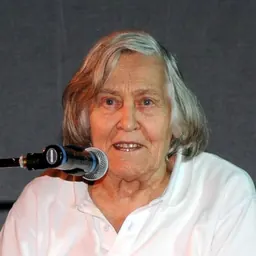


Related people
Same field, nearest in time


Contemporaries
People whose lives overlapped Mario Rigutti's

Frequently asked questions
Who was Mario Rigutti?
Italian astronomer
When was Mario Rigutti born?
Mario Rigutti was born on 19 August 1926 in Trieste.
When did Mario Rigutti die?
Mario Rigutti died on 12 January 2026 in Florence.
What was Mario Rigutti's occupation?
Mario Rigutti was an astronomer.
What nationality was Mario Rigutti?
Mario Rigutti was Italian.
Sources & further reading
Cite this page
APA: Biography.guide. (2026). Mario Rigutti. https://biography.guide/mario-rigutti/
MLA: "Mario Rigutti." Biography.guide, https://biography.guide/mario-rigutti/.
Chicago: "Mario Rigutti." Biography.guide. https://biography.guide/mario-rigutti/.
Data last updated: 2026-09-20 · Spot an error? Report a correction.
Page generated 2026-09-27 05:10 UTC