
About Mario Lanza
Lived 1921 – 1959 (aged 38). Mario Lanza was an American opera singer, film actor, singer and actor.
Mario Lanza ( ; ; born Alfredo Arnold Cocozza ; January 31, 1921 – October 7, 1959) was an American tenor and actor. He was a Hollywood film star popular in the late 1940s and the 1950s. Lanza began studying to be a professional singer at the age of 16. After appearing at the Hollywood Bowl in 1947, Lanza signed a seven-year film contract with Louis B. Mayer, the head of Metro-Goldwyn-Mayer, who saw his performance and was impressed by his singing. Prior to that, the adult Lanza sang only two performances of an opera. The following year he sang the role of Pinkerton in Puccini's Madama Butterfly in New Orleans.
His film debut for MGM was in That Midnight Kiss (1949) with Kathryn Grayson and Ethel Barrymore. A year later, in The Toast of New Orleans, his featured popular song "Be My Love" became his first million-selling hit. In 1951, he starred as tenor Enrico Caruso, his idol, in the biopic The Great Caruso, which produced another million-seller with "The Loveliest Night of the Year" (a song which used the melody of Sobre las Olas). The Great Caruso was the 11th top-grossing film that year.
The title song of his next film, Because You're Mine, was his final million-selling hit song. The song went on to receive an Academy Award nomination for Best Original Song. After recording the soundtrack for his next film, The Student Prince, he embarked upon a protracted battle with studio head Dore Schary arising from artistic differences with director Curtis Bernhardt and was eventually fired by MGM.
Lanza was known to be "rebellious, tough, and ambitious". He made three more films before dying of an apparent pulmonary embolism at the age of 38. At the time of his death in 1959, he was still "the most famous tenor in the world".
Early years
Born Alfredo Arnold Cocozza in Philadelphia, he was exposed to classical singing at an early age by his Abruzzese-Molisan Italian parents. His mother, Maria Lanza, was from Tocco da Casauria, a town in the province of Pescara in the region of Abruzzo. His father, Antonio Cocozza, was from Filignano, a town in the province of Isernia in the region of Molise.
By age 16, his vocal talent had become apparent. Starting out in local operatic productions in Philadelphia for the YMCA Opera Company while still in his teens, he later came to the attention of longtime (1924–49) principal Boston Symphony conductor Serge Koussevitzky. In 1942, Koussevitzky provided young Cocozza with a full student scholarship to the Berkshire Music Center at Tanglewood, Massachusetts. Reportedly, Koussevitzky later told him "Yours is a voice such as is heard once in a hundred years."
Opera career
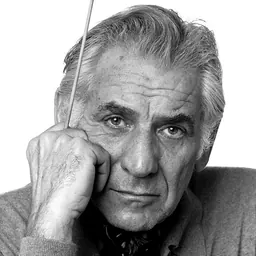
He made the first of his few appearances in opera as Fenton in Otto Nicolai's The Merry Wives of Windsor (in English) at the Berkshire Music Festival in Tanglewood on August 7, 1942, after a period of study with conductors Boris Goldovsky and Leonard Bernstein. During this time, Cocozza adopted the stage name Mario Lanza because of its similarity to his mother's maiden name, Maria Lanza.
The performances at Tanglewood won Lanza critical acclaim, with Noel Straus of The New York Times hailing the 21-year-old tenor as having "few equals among tenors of the day in terms of quality, warmth and power". Herbert Graf subsequently wrote in Opera News (October 5, 1942), "A real find of the season was Mario Lanza [...] He would have no difficulty one day being asked to join the Metropolitan Opera." Lanza sang Nicolai's Fenton twice at Tanglewood, in addition to appearing there in a one-off presentation of Act III of Puccini's La bohème with the noted Mexican soprano Irma González, baritone James Pease, and mezzo-soprano Laura Castellano. Music critic Jay C. Rosenfeld wrote in The New York Times of August 9, 1942, "Irma González as Mimì and Mario Lanza as Rodolfo were conspicuous by the beauty of their voices and the vividness of their characterizations." In an interview shortly before her own death in 2008, González recalled that Lanza was "very correct, likeable, with a powerful and beautiful voice".
Lanza's aspiring operatic career was interrupted in World War II when he was assigned to Special Services in the U.S. Army Air Corps. He appeared in the wartime shows On the Beam and Winged Victory. He also appeared in the film version of the latter (albeit as an unrecognizable member of the chorus). He resumed his singing career with a concert in Atlantic City, New Jersey, with the NBC Symphony Orchestra in September 1945 under Peter Herman Adler, who subsequently became his mentor. The following month, he replaced tenor Jan Peerce on the live CBS radio program Great Moments in Music, on which he made six appearances in four months, singing extracts from various operas and other works.
Lanza studied with Enrico Rosati for 15 months and then embarked on an 86-concert tour of the United States, Canada, and Mexico from July 1947 until May 1948 with bass George London and soprano Frances Yeend. Reviewing his second appearance at Chicago's Grant Park in July 1947 in the Chicago Sunday Tribune, Claudia Cassidy praised Lanza's "superbly natural tenor" and observed that "though a multitude of fine points evade him, he possesses the things almost impossible to learn. He knows the accent that makes a lyric line reach its audience, and he knows why opera is music drama." However, as his biographers Cesari and Mannering have established, Lanza was not overweight at the beginning of the production, and it was, in fact, a disagreement with director Curtis Bernhardt over Lanza's performance of one of the songs in the film that led to Lanza walking off the set. MGM refused to replace Bernhardt, and the film was subsequently made starring British actor Edmund Purdom, who lip-synched to Lanza's dubbed singing voice. He gave a total of 22 concerts on this tour, receiving mostly positive reviews for his singing. Later that year, on July 15, they had a religious ceremony at a Catholic church. They had four children: Coleen (born December 9, 1948, died 1997), Ellisa (born December 3, 1950), Damon (born December 12, 1952, died August 16, 2008), and Marc (born May 19, 1954, died 1993).
In April 1959, Lanza reportedly fell ill, mainly with heart problems as well as pneumonia. On September 25, 1959, he entered Rome's Valle Giulia clinic for the purpose of losing weight for an upcoming film. While in the clinic, he underwent a controversial weight loss program colloquially known as "the twilight sleep treatment", which required its patients to be kept immobile and sedated for prolonged periods. On October 7, Lanza died of an apparent pulmonary embolism at age 38. No autopsy was performed. Maria Caniglia, Franco Fabrizi, and Enzo Fiermonte attended the funeral services in Rome. Frank Sinatra sent his condolences by telegram. Lanza's body was returned to the US and entombed in the mausoleum at Holy Cross Cemetery in Culver City, California. He was referred to by some sources as the "new Caruso" after his "instant success" in Hollywood films, He was a big inspiration to fellow RCA Victor recording star Elvis Presley. A year after Lanza's death, Presley recorded an English translation of "O Sole Mio", which was popularized by Lanza. This song, "It's Now or Never", went on to be one of Presley's all-time best selling songs.
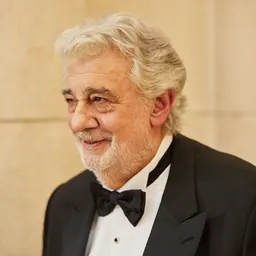
In 1994, José Carreras paid tribute to Lanza during a worldwide concert tour, saying, "If I'm an opera singer, it's thanks to Mario Lanza." Plácido Domingo stated, "Lanza's passion and the way his voice sounds are what made me sing opera. I actually owe my love for opera...to a kid from Philadelphia."
Because Lanza appeared on the operatic stage only twice, many critics felt that he needed to have had more experience in major theaters before he could have been considered an opera star. His films, especially The Great Caruso, influenced several future opera stars, including Joseph Calleja, José Carreras, Plácido Domingo, Luciano Pavarotti, and Vyacheslav Polozov. Hollywood gossip columnist Hedda Hopper concluded that "there had never been anyone like Mario, and I doubt whether we shall ever see his like again".
Monuments and honors
Mario Lanza Boulevard is a roadway in the Eastwick section of Lanza's native Philadelphia. The Mario Lanza Institute and Museum, which honors Lanza's legacy and also provides scholarships to young singers, is located at 1214 Reed Street in South Philadelphia. Philadelphia's Queen Street Park was renamed for Lanza in 1967. A Pennsylvania Historical and Museum Commission marker was placed to mark the home at 636 Christian Street in South Philadelphia where Lanza was born after it was demolished. In 1998, a Golden Palm Star on the Palm Springs, California, Walk of Stars was dedicated to him. Lanza was awarded two Stars on the Hollywood Walk of Fame: a Star for Recording at 1751 Vine Street, and a Star at 6821 Hollywood Boulevard for Motion Pictures.
Filmography Year Title Role Studio Notes Ref 1944 Winged Victory Twentieth Century-Fox also known as Moss Hart's Winged Victory 1949 That Midnight Kiss Metro-Goldwyn-Mayer 1950 Metro-Goldwyn-Mayer 1951 Metro-Goldwyn-Mayer 1952 Because You're Mine Metro-Goldwyn-Mayer 1954 Prince Karl Metro-Goldwyn-Mayer 1956 Serenade Warner Bros. 1957 Seven Hills of Rome Metro-Goldwyn-Mayer also known as Arrivederci Roma 1959 For the First Time Metro-Goldwyn-Mayer final film role
Box office ranking At the height of his career, Lanza was voted by exhibitors as being among the most popular stars in the country: 1951 – 13th most popular (US), 10th (UK) 1952 – 23rd (US), 6th (UK)
Select discography
Studio albums That Midnight Kiss (1949) Operatic Arias and Duets as Sung in "The Toast of New Orleans" (1950) Mario Lanza Sings Popular Songs from the M-G-M Technicolor Motion Picture "The Toast of New Orleans" (1950) Mario Lanza Sings Selections from "The Great Caruso" (1951) Mario Lanza Sings Christmas Songs (1951) Mario Lanza Sings Songs from M-G-M's Technicolor Motion Picture "Because You're Mine" (1952) Mario Lanza Sings the Hit Songs from "The Student Prince" and Other Great Musical Comedies (1954) Mario Lanza in "Serenade" (1956) Seven Hills of Rome (1958) For the First Time (1959)
Don’t just read it —
keep it.
Full-length biographies made to live with: read them, listen on the way to work, watch them tonight.
- E-book
- Audio
- Video
Instant download · yours to keep · every purchase keeps this site free
Important facts
People in Mario Lanza's life
Named in this biography and alive at the same time






Related people
Same field, nearest in time


Contemporaries
People whose lives overlapped Mario Lanza's


Frequently asked questions
Who was Mario Lanza?
American tenor and actor (1921-1959)
When was Mario Lanza born?
Mario Lanza was born on 31 January 1921 in Philadelphia.
When did Mario Lanza die?
Mario Lanza died on 7 October 1959 in Rome.
What was Mario Lanza's occupation?
Mario Lanza was an opera singer, film actor, singer and actor.
What nationality was Mario Lanza?
Mario Lanza was American.
Sources & further reading
Cite this page
APA: Biography.guide. (2026). Mario Lanza. https://biography.guide/mario-lanza/
MLA: "Mario Lanza." Biography.guide, https://biography.guide/mario-lanza/.
Chicago: "Mario Lanza." Biography.guide. https://biography.guide/mario-lanza/.
Data last updated: 2026-09-22 · Spot an error? Report a correction.
Page generated 2026-09-27 05:23 UTC