
Mario Capecchi
Molecular geneticist and Nobel laureate
About Mario Capecchi
Born 1937. Mario Capecchi is an American geneticist, inventor, university teacher and biophysicist, known for Knockout mouse.
Mario Ramberg Capecchi (; born October 6, 1937) is an Italian-born American molecular geneticist and a co-awardee of the 2007 Nobel Prize in Physiology or Medicine for discovering a method to create mice in which a specific gene is turned off, known as knockout mice. He shared the prize with Martin Evans and Oliver Smithies. Capecchi is Distinguished Professor of Human Genetics and Biology at the University of Utah School of Medicine.
Life
Mario Capecchi was born in Verona, Italy, as the only child of Luciano Capecchi and Lucy Ramberg, an Italian-born daughter of American-born Impressionist painter Lucy Dodd Ramberg and German archaeologist Walter Ramberg. His parents weren't married, and due to the turmoil in Europe caused by World War II, the details of his early life are unclear. In 1941 he and his mother were living near Bolzano, about 160 miles north of his father in Reggio Emilia when his mother was arrested and deported for pamphleteering and belonging to an anti-Fascist group. Prior to her arrest she had made contingency plans by selling her belongings and giving the proceeds to a nearby peasant family to care for her child. However, it was not long before Mario ended up on the streets of Bolzano. In July 1942, a few months before his fifth birthday, Italian records suggest he was reunited with his father in Reggio Emilia, which Mario did confirm but stated that he stayed with his father for only for a few brief periods and that he mostly lived on the streets until he was placed in an orphanage towards the end of the war. Mario almost died of malnutrition. His mother survived the war in Germany (part of the reason the details of his early life are unclear is that she would never talk about her experiences), and when it ended she began a year-long search for him. She finally found him on his ninth birthday in a hospital bed in Reggio Emilia ill with a fever and subsisting on a daily bowl of chicory coffee and bread crust. She took him to Rome, where he had his first bath since he had left her care and where, with money sent by his uncle, Edward Ramberg, an American physicist at RCA, they made arrangements to depart to the United States. He and his mother moved to Pennsylvania to live at an "intentionally cooperative community" called Bryn Gweled, which had been co-founded by his uncle. (Capecchi's other maternal uncle, Walter Ramberg, was also a prominent American physicist ). He graduated from George School, a Quaker boarding school in Bucks County, Pennsylvania, in 1956. but during the course of his studies, he became interested in molecular biology. His change of interest was driven by the preference of working with few scientists and conducting experiments that did not require the use of big machines. He subsequently transferred to Harvard to join the lab of James D. Watson, co-discoverer of the structure of DNA. Capecchi received his PhD in biophysics in 1967 from Harvard University, with his doctoral thesis completed under the tutelage of Watson. Capecchi was a Junior Fellow of the Society of Fellows at Harvard University from 1967 to 1969. In 1969 he became an assistant professor in the Department of Biochemistry at Harvard Medical School. He was promoted to associate professor in 1971. In 1973 he joined the faculty at the University of Utah. Since 1988 Capecchi has also been an investigator of the Howard Hughes Medical Institute. He is a member of the National Academy of Sciences. He has given a talk for Duke University's Program in Genetics and Genomics as part of their Distinguished Lecturer Series. He was the speaker for the 2010 Racker Lectures in Biology & Medicine and Cornell Distinguished Lecture in Cell and Molecular Biology at Cornell University. He is a member of the Italy-USA Foundation. After the Nobel committee publicly announced that Capecchi was awarded the Nobel prize, an Austrian woman named Marlene Bonelli claimed that Capecchi was her long-lost half-brother.
In May 2008, Capecchi met Bonelli, then 69, in Northern Italy, and confirmed that she was his sister.
Knockout mice
Capecchi was awarded the Nobel prize for creating a knockout mouse. This is a mouse, created by genetic engineering and in vitro fertilization, in which a particular gene has been turned off. For this work, Capecchi was awarded the 2007 Nobel prize for medicine or physiology, along with Martin Evans and Oliver Smithies, who also contributed. Capecchi has also pursued a systematic analysis of the mouse Hox gene family. This gene family plays a key role in the control of embryonic development in all multicellular animals. They determine the placement of cellular development in the proper order along the axis of the body from head to toe.
Honors
1969 – Eli Lilly Award in Biological Chemistry 1992 – Bristol-Myers Squibb Award for Distinguished Achievement in Neuroscience Research 1993 – Gairdner Foundation International Award for Achievements in Medical Sciences 1993 – Gairdner Foundation International Award 1994 – General Motors Cancer Research Foundation Alfred P. Sloan Jr. Prize 1996 – Kyoto Prize in Basic Sciences 1996 – German Molecular Bioanalytics Prize 1997 – Franklin Medal for Advancing Our Knowledge of the Physical Sciences 1998 – Feodor Lynen Lectureship 1998 – Rosenblatt Prize for Excellence 1998 – Baxter Award for Distinguished Research in the Biomedical Sciences 1999 – Helen Lowe Bamberger Colby and John E. Bamberger Presidential Endowed Chair in the University of Utah Health Sciences Center 2000 – Lectureship in the Life Sciences for the Collège de France 2000 – Horace Mann Distinguished Alumni Award, Antioch College 2000 – Italian Premio Phoenix-Anni Verdi for Genetics Research Award 2001 – Albert Lasker Award for Basic Medical Research, co-winner with Martin Evans and Oliver Smithies 2001 – Spanish Jiménez-Díaz Prize 2001 – Pioneers of Progress Award 2001 – National Medal of Science 2002 – John Scott Medal Award 2002 – Massry Prize from the Keck School of Medicine, University of Southern California 2003 – Pezcoller Foundation-AACR International Award for Cancer Research 2002–2003 – Wolf Prize in Medicine 2005 – March of Dimes Prize in Developmental Biology 2007 – Jacob Heskel Gabbay Award for Biotechnology and Medicine 2007 – Nobel Prize in Physiology or Medicine, co-winner with Martin Evans and Oliver Smithies 2012 – Honorary Doctorate Degree, University of Bologna Medical School, Italy 2013 – Honorary Doctorate Degree, Cardiff University, United Kingdom 2013 – Honorary Doctorate Degree, Ben-Gurion University, Israel 2013 – Trinity College Historical Society Gold Medal for Outstanding Contributions to Public Discourse, Dublin Ireland 2014 – Keynote Speaker at the Congress of Future Medical Leaders 2015 – American Association for Cancer Research Lifetime Achievement Award 2017 – ISTT Prize from the International Society for Transgenic Technologies 2024 – Honorary Doctorate Degree, Yale University, United States
Don’t just read it —
keep it.
Full-length biographies made to live with: read them, listen on the way to work, watch them tonight.
- E-book
- Audio
- Video
Instant download · yours to keep · every purchase keeps this site free
Important facts
People in Mario Capecchi's life
Named in this biography and alive at the same time
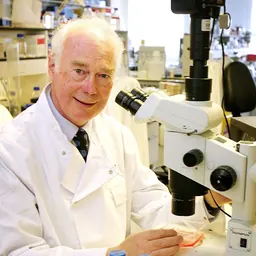
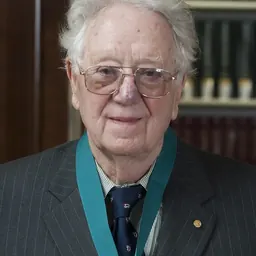

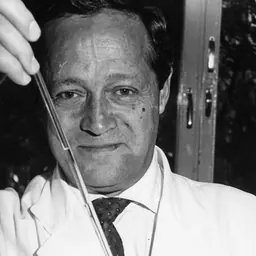



Related people
Same field, nearest in time


Contemporaries
People whose lives overlapped Mario Capecchi's



Frequently asked questions
Who is Mario Capecchi?
molecular geneticist and Nobel laureate
When was Mario Capecchi born?
Mario Capecchi was born on 6 October 1937 in Verona.
What is Mario Capecchi's occupation?
Mario Capecchi is a geneticist, inventor, university teacher and biophysicist.
What is Mario Capecchi known for?
Mario Capecchi is known for Knockout mouse.
What nationality is Mario Capecchi?
Mario Capecchi is American.
Sources & further reading
Cite this page
APA: Biography.guide. (2026). Mario Capecchi. https://biography.guide/mario-capecchi/
MLA: "Mario Capecchi." Biography.guide, https://biography.guide/mario-capecchi/.
Chicago: "Mario Capecchi." Biography.guide. https://biography.guide/mario-capecchi/.
Data last updated: 2026-09-20 · Spot an error? Report a correction.
Page generated 2026-09-27 05:19 UTC