
Marie Louise Habets
Belgikar erizaina, ahizpa erlijioso ohia eta langile humanitarioa
About Marie Louise Habets
Lived 1905 – 1986 (aged 80–81). Marie Louise Habets was a Belgian nurse, resistance fighter, humanitarian, nurse scientist and nun, known for The Nun's Story.
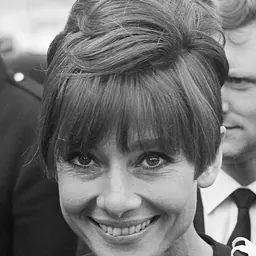
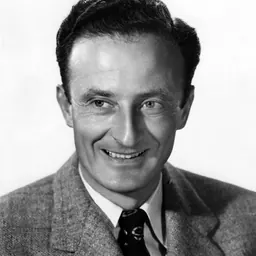
Marie Louise Habets (January 1905 – May 1986) was a Belgian nurse and former religious sister whose life was fictionalised as Sister Luke (Gabrielle van der Mal) in The Nun's Story, a bestselling 1956 book by American author Kathryn Hulme. The Belgian-born actress Audrey Hepburn portrayed Gabrielle van der Mal in the 1959 Fred Zinnemann film The Nun's Story, and was nominated for the Academy Award for Best Actress.
Life Habets was born in West Flanders in January 1905. In 1926, she entered the Sisters of Charity of Jesus and Mary, an enclosed religious order which cared for the sick and poor within their cloister. She was admitted to their convent on Molenaarstraat in Ghent, and then took the religious name Sister Xaverine.
In 1933, she was sent to the mission hospital in Belgian Congo which her congregation staffed for the colonial government. She contracted tuberculosis and returned to her home country in the summer of 1939, shortly before the start of World War II and the subsequent German invasion of Belgium. Her father was killed shortly after this, causing Sister Xaverine to develop such a hatred toward the Germans that she became involved with the Belgian Resistance. She came to feel that she could not obey the dictates of her faith for forgiveness and applied to the Holy See for a dispensation from her religious vows – a very rare request in her day. She was eventually granted this, and left the congregation on 16 August 1944 from their convent in Uccle.
Habets settled in Antwerp, which was liberated by Allied forces a few weeks later. She joined a British First Aid unit which nursed the soldiers wounded while fighting in the Battle of the Bulge. She was present in Antwerp when German forces massively bombarded the city soon after its liberation, killing and maiming some 10,000 people. After the end of the war in Europe, she was sent to Germany to help care for her fellow Belgians who had been imprisoned in concentration camps there. Their parallel lives are explored in "The Nun and the Crocodile: The Stories within The Nun's Story", a paper given by Debra Campbell at the Women and Religion section of the American Academy of Religion Annual Meeting on November 21, 2004.
Hulme papers Documents relating to Habets can be found among the Kathryn Hulme papers which are held at the Beinecke Library at Yale University in the United States.
These include a report by Habets about a repatriation transport from the displaced persons resettlement camp at Wildflecken, Bavaria, which set off for Poland on April 30, 1946. The report is written in English, which Habets did not speak fluently at the time; it was probably translated by Hulme. Read in conjunction with Chapter 14 of Undiscovered Country, it shows the high value placed by Hulme, an American who had not lived under enemy occupation, on the first-hand knowledge, experience and powers of observation of her Belgian colleague. There is also a report by Habets on caring for tuberculosis patients at Wildflecken.
Later life In late 1948, Habets had been promoted to Area Chief Nurse by the International Refugee Organization of the United Nations. After continuing to help displaced persons for the next several years, she decided that she had no desire to live in her homeland again, and requested an American visa. Hulme was her sponsor in this, and the visa was granted. After one last visit with her family, Habets and Hulme sailed from Antwerp to the United States on the SS Noordam, arriving in New York City during February 1951. They initially settled in Arizona, where she worked as a nurse in a hospital serving the Navajo people. They later moved to California, where she nursed Audrey Hepburn after a horse-riding accident which occurred during her filming of The Unforgiven.
Don’t just read it —
keep it.
Full-length biographies made to live with: read them, listen on the way to work, watch them tonight.
- E-book
- Audio
- Video
Instant download · yours to keep · every purchase keeps this site free
Important facts
People in Marie Louise Habets's life
Named in this biography and alive at the same time


Related people
Same field, nearest in time



Contemporaries
People whose lives overlapped Marie Louise Habets's


Frequently asked questions
Who was Marie Louise Habets?
belgikar erizaina, ahizpa erlijioso ohia eta langile humanitarioa
When was Marie Louise Habets born?
Marie Louise Habets was born in 1905 in Pittem.
When did Marie Louise Habets die?
Marie Louise Habets died on 1 May 1986 in Hawaii.
What was Marie Louise Habets's occupation?
Marie Louise Habets was a nurse, resistance fighter, humanitarian, nurse scientist and nun.
What was Marie Louise Habets known for?
Marie Louise Habets was known for The Nun's Story.
What nationality was Marie Louise Habets?
Marie Louise Habets was Belgian.
Sources & further reading
· Wikipedia: Marie Louise Habets
· DBpedia: Marie Louise Habets
Cite this page
APA: Biography.guide. (2026). Marie Louise Habets. https://biography.guide/marie-louise-habets/
MLA: "Marie Louise Habets." Biography.guide, https://biography.guide/marie-louise-habets/.
Chicago: "Marie Louise Habets." Biography.guide. https://biography.guide/marie-louise-habets/.
Data last updated: 2026-09-22 · Spot an error? Report a correction.
Page generated 2026-09-27 05:15 UTC