
About Marie-Antoine Carême
Lived 1784 – 1833 (aged 48). Marie-Antoine Carême was a French chef, culinary writer, draftsperson, illustrator, printmaker and pastry chef.
Marie-Antoine Carême (; 8 June 1783 or 178412 January 1833), also known as Antonin Carême, was a French chef and author who specialised in grande cuisine for the elite society.
Carême was born in Paris to a poor family and, when still a child, worked in a cheap restaurant. Later he became an apprentice to a leading Parisian pâtissier and quickly became known for his patisserie skills. He was deeply interested in architecture and was famous for his large pièces montéestable decorations sculpted in sugar, depicting classical buildings.
Working with leading chefs of the day, Carême extended his knowledge to cover all aspects of cooking, and became head chef to prominent people including Charles Maurice de Talleyrand-Périgord, Tsar Alexander I of Russia and the Prince Regent in Britain. He codified and to some extent simplified classical French cookery, insisted on the finest and most expensive ingredients, and was regarded as the foremost chef of his day.
Carême wrote a series of books, lavishly illustrated, intended to pass his skills on to other chefs providing grande cuisine for the elite of French, and other, society. His influence continued after his death; his approach was continued by Jules Gouffé, Urbain Dubois and Émile Bernard, reinvigorated by Auguste Escoffier and continued until it was overtaken by nouvelle cuisine in the second half of the 20th century.
Life and career Early years Marie-Antoine Carême, known throughout his life as Antonin Carême, was born in Paris. The date of his birth cannot be authenticated and is disputed. The day and month are generally accepted as 8 June and the year as either 1783 or 1784. He was one of the many children of Marie-Jeanne Pascal and Jean-Gilbert Carême. The French Revolution, starting in 1789, brought large-scale building work in Paris to a temporary halt, leaving Carême's father struggling to feed the family. Carême went to work at an early age at a Parisian gargotethe most basic and modest kind of restaurantthought to have been called . |group=n In the words of a biographer who accepts this version of events:
Bailly was conscious of the need to innovate and attract new customs. He wanted eye-catching pièces montéeselaborate displays of patisseriein his windows. Sculpting in sugar paste had been well known in the Ancien Régime but had become neglected after the revolution. Carême helped to revive the art, creating croquembouches and extravagant showpieces based on the ancient architecture he had studied in the library. He is credited with saying, later, "The fine arts are five in number: music, painting, sculpture, poetry and architectureof which the principal branch is confectionery". His enthusiasm, then and later in his career, sometimes led him to conflate in a single pièce montée details from several widely differing architectural eras and styles. In 1803 he opened his own shop in the rue de la Paix, trading there for a decade. They had no children, although Carême later had a daughter, Marie, with another woman, Agatha Guichardet.
In addition to his skills as a pastry-cook, Carême became expert in the other branches of cookery. He was influenced by earlier cooks and food writers, and studied Vincent La Chapelle's Le cuisinier moderne (1736), Joseph Menon's Soupers de la cour (1758) and Lémery's Traité des alimens (1792). He worked for or alongside leading Parisian chefs; he later wrote:
From 1803 to 1814 Carême worked as chef-pâtissier in the kitchens of Talleyrand at the Hôtel de Galliffet, under the head chef, Boucher. He continued to learn about the arts of cookery in general, and was engaged to cater for special events such as the festivities for the marriage of Jérôme Bonaparte to Catharina of Württemberg (1807) and of that of Napoleon to Marie-Louise of Austria (1810). Although of an age liable for conscription into the army, Carême was not called up; Talleyrand may have secured an exemption for him, but that is not certain.
Professional pinnacle After the defeat of Napoleon in 1814, the British and Russians occupied Paris. Talleyrand, anxious to be on friendly terms with the allies, invited Tsar Alexander I to stay with him and tasked Carême with delighting his guest with a continual series of fine meals. According to the biographer Marie-Pierre Rey, "Talleyrand's generous hospitality undoubtedly had positive effects on the tsar's mood and the magnanimity that he showed to the French state".
After staying with Talleyrand for some weeks, the tsar took up residence in the Élysée Palace, and requested that Carême should be his head chef there during his stay. The biographer Georges Bernier (fr) writes that this appointment put Carême at the pinnacle of his profession. Already a renowned pastry-cook, he had risen further, to be chef de cuisine to the most powerful man in Europe, reflecting his employer's status with suitable culinary magnificence. The following year, after Napoleon's brief return and final defeat at Waterloo, Alexander returned to Paris, and again secured Carême's services.
When the tsar assembled his troops for a grand review at Châlons-sur-Marne, Carême had to provide three banquets for 300 people each, despite enormous logistical difficulties. There were few supplies available locally and food, wines, linens, glassware and even herds of cattle and flocks of sheep had to be transported from Paris, over away. In addition, Carême had to cope with the tsar's preference for Russian servicea succession of individual coursesrather than the traditional French service, in which numerous dishes were set out on the table on hot plates and kept under cloches to keep warm.
In 1815 Carême published his first books. Le Pâtissier royal parisien was an illustrated two-volume compilation of recipes for a skilled pastry-cook. Le Pâtissier pittoresque focused on piéces montées, with over 100 of Carême's drawings of designs, together with what the food writer Barbara Wheaton calls "more or less sketchy instructions" for executing them. He hated the English weather, particularly the fogs, which exacerbated the respiratory problems he had after years of working in smoky kitchens. He returned to France in late 1817 with no firm plans for his immediate future.
St Petersburg, Paris and Vienna Tsar Alexander returned to Paris in 1818, en route to an international congress at Aix-la-Chapelle. Carême's friend Muller, comptroller of the tsar's household (and dedicatee of Le Pâtissier pittoresque), convinced Alexander that having Carême cook for the Russian delegation would enhance its standing, and approached him with the proposal that he should work for the tsar at Aix and then travel with him to Russia. Carême agreed to go to Aix, with a handsome salary and lavish budget, but declined to go on to Russia. Carême was chef to (clockwise from top left) Tsar Alexander I, the Prince Regent, Lord Stewart and Princess Bagration, among others. After briefly working in Austria and England for Lord Stewart, the British ambassador to Vienna, Carême decided to take up the tsar's offer, (According to one theory he did so at Talleyrand's behest, but this is far from certain.) Otherwise, by the time the tsar returned, Carême was disenchanted with Russia, its food and the arrangements at the court. He left at the end of August.
On his return to Paris, Carême became head chef to Princess Catherine Bagration, a distant cousin of the tsar and widow of the celebrated general Pyotr Bagration, killed at the Battle of Borodino in 1812. Carême enjoyed working for the princess, who lived in style and had a discerning appreciation of food, but poor health prevented her from entertaining on the extensive scale that would fully occupy a chef of his standing. Lord Stewart successfully urged Carême to return to work for him.
While working for Stewart, Carême introduced what became the international symbol of the chef: the toque hat. Until then, chefs had generally worn loose berets or cotton caps resembling nightcaps. Carême felt that the latter were reminiscent of the sickroom and "made us look ill" whereas the appearance of a chef should "announce the man in good health". The toque was quickly taken up by chefs in Vienna, and then in Paris and elsewhere. The following year he returned to the subject of catering in his Le maître d'hotel français, comparing old and new cuisine and detailing seasonal menus that he had presented in Paris, St Petersburg, London and Vienna. The title reflected Carême's firm conviction that the head chef should control and supervise not only the cooking of the food, but its service as well.
Last years Carême's last salaried post came in 1823 as chef to the banker James Rothschild and his wife Betty. Rothschild was by far the richest man in France, and Carême was as happy to work for a nouveau-riche employer as for royalty. The Rothschilds paid Carême a large salary, and allowed him substantial time off to continue writing his books. He published Le Cuisinier parisien in 1828.
By the end of the decade it was clear to his employers and to Carême that his health was in decline.Wheaton writes, "No doubt he was worn out by a life that began in deprivation and continued with the stress of organising so many high-visibility meals and with his decades of hard work in carbon-monoxide-laden kitchens; there is a moving passage in his last book in which he displays great sympathy for those working in kitchens, and describes vividly the terrible conditions with which they (and he) had to contend". He declined a final effort by the former Prince Regent, now George IV, to tempt him back to England, and retired to his house in the rue Neuve-Saint-Roch near the Tuileries.
In retirement, Carême worked on his last project, L'Art de la cuisine française au XIX siécle"The Art of French Cookery in the 19th Century". It was to be a five-volume work, extensively illustrated; he lived to complete the first three volumes. His pupil, Armand Plumerey, added the remaining two volumes that Carême had planned. He was buried in the Montmartre Cemetery. Wheaton comments that although he remains the most famous of 19th-century French chefs, there are two differing schools of thought about him. "Gastronomes and food writers have praised him as a great genius of haute cuisine", and have held him up as "an outstanding example of how a lowly apprentice, of a humble background, could rise to the topmost pinnacle of his profession". An opposing view is that he was conceited, his prose inelegant, his menus "pretentious and heavy" and his pièces montées an extravagant waste of ingredients. In Wheaton's judgement "the truth lies somewhere in between". His classifications were retained, with modifications, by later chefs including Auguste Escoffier,
The work of Carême was aimed at the elite of French and other societies. The food writer Stephen Mennell writes that Carême's cuisine was not merely haute but grande, and in one of his books the chef advised people of lesser means not to attempt his elaborate style of cooking: "Better to serve a simple meal, well-prepared, and not try to cover the bourgeois table with an imitation of the rich". He reacted against some traditional practices, such as garnishing meat with fish and vice versa, and he either invented or refined several features of French cookery, including choux pastry, vol-au-vents, profiteroles, and mille-feuilles.
Carême's influence continued after his death; his approach was continued by Jules Gouffé, Urbain Dubois and Émile Bernard, reinvigorated by Escoffier and continued until haute cuisine was supplanted by nouvelle cuisine and simpler styles of cooking in the second half of the 20th century.
Works by Carême YearTitleSubtitleSubtitle translatedPublisherRef 1815 Le Pâtissier royal parisienVol 1 and Vol 2 Traité élémentaire et pratique de la pâtisserie ancienne et moderne: suivi d'observations utiles aux progrès de cet art, et d'une revue critique des grands bals de 1810 et 1811 Elementary and practical treatise on ancient and modern pastry: followed by observations useful for the progress of this art, and a critical review of the great balls of 1810 and 1811 Dentu, Paris 1815 Le Pâtissier pittoresque Précédé d'un traité des cinq ordres d'architecture Preceded by a treatise on the five orders of architecture Didot, Paris 1821 Projets d'architecture, dédiés à Alexandre 1er, empereur de toutes les Russies Didot, Paris 1821 Projets d'architecture pour l'embellissement de Paris Didot, Paris 1822 Le Maître d'hôtel françaisVol 1 and Vol 2 Parallèle de la cuisine ancienne et moderne, considérée sous le rapport de l'ordonnance des menus selon les quatre saisons Parallel of ancient and modern cuisine, considered in relation to the order of menus according to the four seasons Didot, Paris 1828 Le Cuisinier parisien L'art de la cuisine française au 19 siècle The art of French cuisine in the 19th century Didot, Paris 1833–1847 L'art de la cuisine française au dix-neuvième siècleVolumes 1–3 by Carême; Volumes 4–5 by Plumerey Dentu, Paris
Notes, references and sources
Don’t just read it —
keep it.
Full-length biographies made to live with: read them, listen on the way to work, watch them tonight.
- E-book
- Audio
- Video
Instant download · yours to keep · every purchase keeps this site free
Important facts
People in Marie-Antoine Carême's life
Named in this biography and alive at the same time
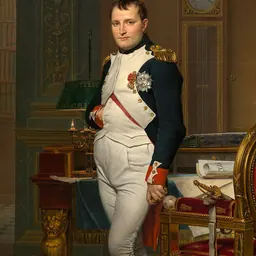


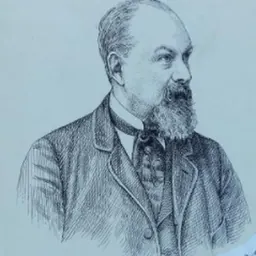
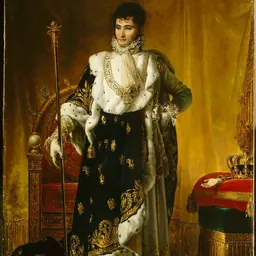

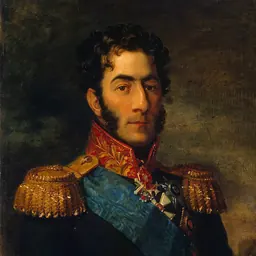
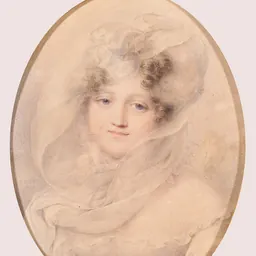
Related people
Same field, nearest in time


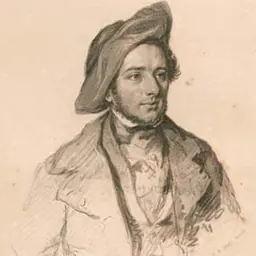


Contemporaries
People whose lives overlapped Marie-Antoine Carême's
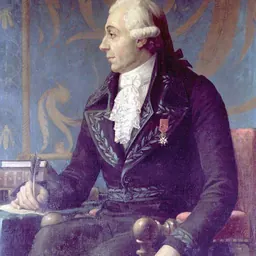
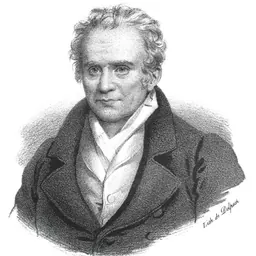


Frequently asked questions
Who was Marie-Antoine Carême?
French chef
When was Marie-Antoine Carême born?
Marie-Antoine Carême was born on 8 June 1784 in Paris.
When did Marie-Antoine Carême die?
Marie-Antoine Carême died on 12 January 1833 in Paris, rue Saint-Roch.
What was Marie-Antoine Carême's occupation?
Marie-Antoine Carême was a chef, culinary writer, draftsperson, illustrator, printmaker and pastry chef.
What nationality was Marie-Antoine Carême?
Marie-Antoine Carême was French.
Sources & further reading
· Wikipedia: Marie-Antoine Carême
· DBpedia: Marie-Antoine Carême
Cite this page
APA: Biography.guide. (2026). Marie-Antoine Carême. https://biography.guide/marie-antoine-careme/
MLA: "Marie-Antoine Carême." Biography.guide, https://biography.guide/marie-antoine-careme/.
Chicago: "Marie-Antoine Carême." Biography.guide. https://biography.guide/marie-antoine-careme/.
Data last updated: 2026-09-26 · Spot an error? Report a correction.
Page generated 2026-09-27 05:13 UTC