
About Marie Adèle Pierre Jules Tissot
Lived 1838 – 1883 (aged 45). Marie Adèle Pierre Jules Tissot was a French geologist.
Marie Adèle Pierre Jules Tissot (10 September 1838 – 25 November 1883) was a French mining engineer and geologist. He suspected the presence of deposits of phosphates in French North Africa, which were later discovered by the geologist Philippe Thomas. He is best known for a detailed geological map of the east of Algeria.
Life
Marie Adèle Pierre Jules Tissot was born on September 10, 1838. His parents were Claude Tissot, a postmaster, and Catherine Virginie Bernot. He entered the École Polytechnique in 1855, graduating 7th out of 144 pupils, then studied at the École des Mines de Paris. He became a member of the Corps des mines. Tissot was appointed Chief Engineer in Algeria, where his entire career was spent.
In 1873 Philippe Thomas, a young veterinary officer and geologist, found an exceptional limestone-marl zone in the Lower Eocene plateau at Aïn-Sba in the Fatah mountains south of Boghar. Some of the fossils were covered in a greenish or chocolate patina. He gave a sample to the military pharmacist at Boghar hospital for analysis, who found the substance was phosphate of lime. Thomas was stationed near Constantine, and was friends with Tissot between 1874 and 1880. When he told Tissot of his findings, Tissot was very interested. Tissot said he was not surprised, because he had always thought these marls or limestones must have phosphate since they produced the best corn fields in the province. Tissot reproduced this observation in a note on Algerian mineralogy he wrote for the Paris Exposition Universelle of 1878. Between 1880 and 1884 Thomas published several papers on his Algerian research, and with Tissot investigated the Eocene formations in the Constantine region.
Tissot's main task was map-making. He drew on the observations of his predecessors Charles Dubocq, Oscar Linder and Gustave Moevus to create a geological map of Constantine Province, published in 1881. It was a huge work, which took 20 years to complete, covering a large and difficult territory. His views on the origins of the world and the universe were so original that the administration refused to publish the explanatory text to his map. However, the map had considerable practical value.
Jules Tissot was exhausted by his work on the map, and died on 25 November 1883.
Publications
Don’t just read it —
keep it.
Full-length biographies made to live with: read them, listen on the way to work, watch them tonight.
- E-book
- Audio
- Video
Instant download · yours to keep · every purchase keeps this site free
Important facts
People in Marie Adèle Pierre Jules Tissot's life
Named in this biography and alive at the same time

Related people
Same field, nearest in time

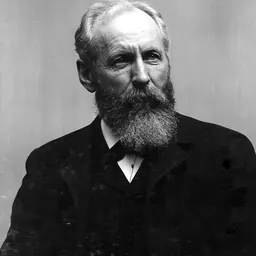




Contemporaries
People whose lives overlapped Marie Adèle Pierre Jules Tissot's

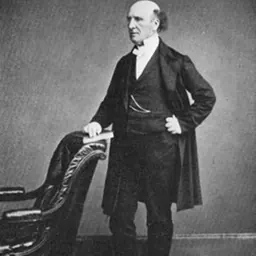
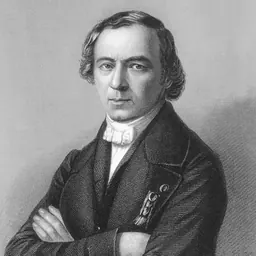
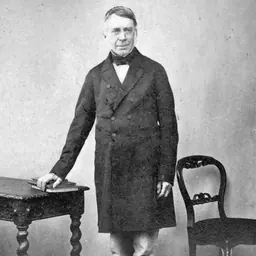
Frequently asked questions
Who was Marie Adèle Pierre Jules Tissot?
French geologist (1838-1883)
When was Marie Adèle Pierre Jules Tissot born?
Marie Adèle Pierre Jules Tissot was born on 10 September 1838 in Norges-la-Ville.
When did Marie Adèle Pierre Jules Tissot die?
Marie Adèle Pierre Jules Tissot died on 25 November 1883 in Constantine.
What was Marie Adèle Pierre Jules Tissot's occupation?
Marie Adèle Pierre Jules Tissot was a geologist.
What nationality was Marie Adèle Pierre Jules Tissot?
Marie Adèle Pierre Jules Tissot was French.
Sources & further reading
· Wikipedia: Marie Adèle Pierre Jules Tissot
· DBpedia: Marie Adèle Pierre Jules Tissot
Cite this page
APA: Biography.guide. (2026). Marie Adèle Pierre Jules Tissot. https://biography.guide/marie-adele-pierre-jules-tissot/
MLA: "Marie Adèle Pierre Jules Tissot." Biography.guide, https://biography.guide/marie-adele-pierre-jules-tissot/.
Chicago: "Marie Adèle Pierre Jules Tissot." Biography.guide. https://biography.guide/marie-adele-pierre-jules-tissot/.
Data last updated: 2026-09-22 · Spot an error? Report a correction.
Page generated 2026-09-27 05:15 UTC