
About Mariano Saldanha
Lived 1878 – 1975 (aged 96–97). Mariano Saldanha was a teacher.
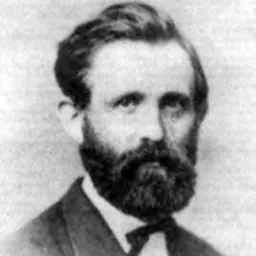
Mariano Jose Luis de Gonzaga Saldanha (1878 – 1975) was an Indian writer and teacher. Born in Uskai (Ucassaim) village in Portuguese Goa, he studied medicine and pharmacy, but went on to become a teacher of Marathi and Sanskrit at the Lyceum in Goa (1915–1929) and of Sanskrit and Konkani at Lisbon, at the university and at the Advanced School of Colonial Administration (Instituto Superior de Estudos Ultramarinos) (1929–1946). In 1946-48, he was Deputy Director of the new institute of African and Oriental languages in Lisbon.
Early life Saldanha owed his linguistic education to his priest-uncles in Goa, who had made a mark in the field of higher education in Goa. The younger one was Manuel Jose Gabriel de Saldanha, author of Historia de Goa (Nova Goa, 1926, repr. New Delhi, 1990). The older one was running a Lyceum in Mapusa. Saldanha took his first strides in the academic field in this lyceum, and discovered his life orientation. He himself acknowledged, in a writing of 1955, that it was his older uncle who got the idea of teaching him Marathi, that this was the beginning of his career as teacher of Indian languages. Saldanha went on to study medicine and pharmacy at the Escola Medico-Cirurgica of Goa.
Advocate of Konkani In his Presidential Address at the 5th Conference of the Konkani Bhasha Mandal at Bombay in 1952, he held that Marathi and Konkani were independent sister languages. He also, at this early date, advocated primary education in Konkani for Goans. He also made a plea for the adoption of the Roman script in the system of transliteration invented by Thomas Stephens and followed by other writers in the 17th century in Goa. However, his advocacy of Konkani did not translate into hostility to Marathi.
Personal Collection Saldanha donated his large personal collection to the Xavier Centre for Historical Research Library.
The Thomas Stephens Konknni Kendr, adjacent to the Xavier Centre of Historical Research at Alto Porvorim, Goa, possesses a manuscript copy of the Krista Purana by Thomas Stephens in Roman script, with the name "M.C. Saldanha" in pencil on one of the first pages, and also on the spine of the leather binding. Besides, the volume bears a stamp indicating that it was bound in Kodialbail, Mangalore. It is known that J.L. Saldanha, who produced the 1907 edition of the Khristapurana, had borrowed a manuscript copy of the Khristapurana from a Mr. Marian Saldanha, whom he describes as "an enthusiast of Purannic literature." However, more work will have to be done before the TSKK copy can be identified as having come from the collection of Mariano Saldanha. Unfortunately, the TSKK has not kept records of provenance.
Don’t just read it —
keep it.
Full-length biographies made to live with: read them, listen on the way to work, watch them tonight.
- E-book
- Audio
- Video
Instant download · yours to keep · every purchase keeps this site free
Important facts
People in Mariano Saldanha's life
Named in this biography and alive at the same time


Related people
Same field, nearest in time


Contemporaries
People whose lives overlapped Mariano Saldanha's




Frequently asked questions
Who was Mariano Saldanha?
Indian teacher
When was Mariano Saldanha born?
Mariano Saldanha was born in 1878.
When did Mariano Saldanha die?
Mariano Saldanha died in 1975.
What was Mariano Saldanha's occupation?
Mariano Saldanha was a teacher.
Sources & further reading
Cite this page
APA: Biography.guide. (2026). Mariano Saldanha. https://biography.guide/mariano-saldanha/
MLA: "Mariano Saldanha." Biography.guide, https://biography.guide/mariano-saldanha/.
Chicago: "Mariano Saldanha." Biography.guide. https://biography.guide/mariano-saldanha/.
Data last updated: 2026-09-20 · Spot an error? Report a correction.
Page generated 2026-09-27 05:00 UTC