
Mariano Ospina Rodríguez
Colombian politician (1805–1885); President of Colombia from 1857 to 1861
About Mariano Ospina Rodríguez
Lived 1805 – 1885 (aged 79). Mariano Ospina Rodríguez was a politician, journalist, lawyer, entrepreneur and jurist.
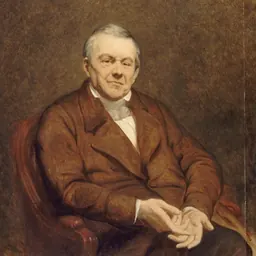
Mariano Ospina Rodríguez (October 18, 1805 - January 11, 1885) was a Colombian politician, journalist and lawyer, founder of the Colombian Conservative Party and later President of Colombia between 1857 and 1861 during the Granadine Confederation.
Biographic data
Ospina was born in Guasca, Viceroyalty of New Granada, on October 18, 1805. His parents were Santiago Ospina and Urbina Rodríguez.
Military career
In 1828, soon after graduating with a law degree, Ospina associated himself with a group of intellectuals, ideologists and politicians who did not agree with the ideas of General Simón Bolívar in proclaiming himself as Dictator of Colombia. Consequently, this group of intellectuals, students and military officers planned a coup d'état against Bolívar. On the night of September 25, 1828, an elite group of militants and military officers assaulted the Palacio de San Carlos (government palace). Ospina was among the militia that assaulted the palace. The coup d'état failed, and Ospina escaped alive. The events of this failed coup d'état against Bolívar are known in Colombian History as the Noche Septembrina (the night of September).
Founder of the Colombian Conservative Party
Also an educator, journalist, lawyer, political leader and a statesman, Ospina was one of the founders of the Colombian Conservative Party. In 1848, in association with José Eusebio Caro, and after months of deliberation, they wrote the ideological platform and fundamental program of the conservative party. They both created the newspaper called La Civilización to promote their political ideas. He was one of the leaders of the Conservative forces in the lost Colombian Civil War of 1851.
Member of Parliament Ospina was elected to Congress in 1849 and later, in 1854, he was elected Governor of the State of Antioquia. A few years later, in 1857 he was elected as the 14th president of Colombia.
The pioneer of coffee in Colombia
Ospina was one of Colombia's earliest and most profoundly influential coffee pioneers, with an entrepreneurial spirit and tenacity. He began his quest in 1835, seeking the best lands and terroir for growing coffee within the lush mountains of the province of Antioquia. He established his first experimental plantation in 1835, in the municipality of Fredonia, Antioquia, where he pursued coffee growing with passion and a scientific interest. As a result of Ospina's careful investigations and studies, Colombia began producing some of the best coffees in the world, the Coffea arabica species.
After his presidency, in 1862, he and his brother Pastor escaped from prison (imprisoned by the dictator Tomás Cipriano de Mosquera) into exile. They were granted asylum in Guatemala and there they planted coffee and operated a "Scientific and Industrial College". By 1865, he had expanded his coffee enterprise to Guatemala and, in so doing, became one of the first coffee growing pioneers in Central America.
With his experience and knowledge about coffee production, he devoted himself to promoting coffee cultivation growing of coffee to the farmers and peasants of Colombia. In 1880 he established the first public University in Colombia (Escuela Nacional de Minas de Medellín) and published his first textbooks about "efficient and effective coffee growing techniques". The nation profited from Ospina's efforts, research and teachings. His knowledge, vision, and persistence facilitated the development of coffee growing into Colombia's main export crop, transforming forever the nation's economy.
After Ospina and his brother Pastor escaped from prison into exile, in 1862, they planted coffee and operated a "Scientific and Industrial College" in Guatemala. based on his extensive research and experience. Ospina Rodríguez dedicated much of his efforts to teaching and to the promotion of useful knowledge. In 1931, a second instruction manual for coffee growers was published under the direction of Mariano Ospina Pérez as general manager of the National Federation of Coffee Growers of Colombia. The first mechanized pulpers and mills were introduced and operated in these plantations.
The pioneer of coffee in Guatemala
In the 1860s, two prominent families from Antioquia, Colombia, the Ospinas and the Vásquez, settled in Guatemala. Thanks to their ability to insert into Guatemala's political and economic activities, their entrepreneurial spirit, their access to international credit, and their solid family alliances, they were able to distinguish themselves when coffee plantations were spreading out. In particular, their experience as the owners of "Las Mercedes", one of the largest and most famous coffee plantations of Central America in those times.
In 1863, Ospina, former president of the Granadine Confederation (now Colombia), arrived in Guatemala with his wife Enriqueta Vásquez, his four younger children and his brother Pastor. They had been granted political asylum by the Guatemalan government. They settled in the Pacific piedmont region called "Costa Cuca", where they established their main coffee plantation "Las Mercedes". This coffee plantation became known throughout Central America as the most productive and best managed.
The history of the appearance of the Central American nations in the world economy is related to the development and exports of agricultural products, mainly of the coffee industry, during the second half of the 19th century. This period of economic development and expansion has been called "the second conquest of Latin America". During this period (1860–1930), the economic activity of trade and commerce between Western Europe, the United States and Latin America reached a new all time highs.
Given the fact that the coffee industry became the platform and engine of economic development in Guatemala, which in turn promoted and advanced other sectors such as the financial institutions and banking, public works, and the modernization of agriculture and manufacturing, the Ospina brothers were regarded as equals with the "Founding Fathers" of the Republic of Guatemala. They relocated in the town of Fredonia, Antioquia, where they continued with their coffee business, enterprise and plantations.
Don’t just read it —
keep it.
Full-length biographies made to live with: read them, listen on the way to work, watch them tonight.
- E-book
- Audio
- Video
Instant download · yours to keep · every purchase keeps this site free
Important facts
Family & relationships
People in Mariano Ospina Rodríguez's life
Named in this biography and alive at the same time



Related people
Same field, nearest in time




Contemporaries
People whose lives overlapped Mariano Ospina Rodríguez's






Frequently asked questions
Who was Mariano Ospina Rodríguez?
Colombian politician (1805–1885); President of Colombia from 1857 to 1861
When was Mariano Ospina Rodríguez born?
Mariano Ospina Rodríguez was born on 12 November 1805 in Guasca.
When did Mariano Ospina Rodríguez die?
Mariano Ospina Rodríguez died on 11 January 1885 in Cali.
What was Mariano Ospina Rodríguez's occupation?
Mariano Ospina Rodríguez was a politician, journalist, lawyer, entrepreneur and jurist.
What nationality was Mariano Ospina Rodríguez?
Mariano Ospina Rodríguez's recorded nationality: Spanish Empire, Gran Colombia, Republic of New Granada.
Sources & further reading
· Wikipedia: Mariano Ospina Rodríguez
· DBpedia: Mariano Ospina Rodríguez
Cite this page
APA: Biography.guide. (2026). Mariano Ospina Rodríguez. https://biography.guide/mariano-ospina-rodriguez/
MLA: "Mariano Ospina Rodríguez." Biography.guide, https://biography.guide/mariano-ospina-rodriguez/.
Chicago: "Mariano Ospina Rodríguez." Biography.guide. https://biography.guide/mariano-ospina-rodriguez/.
Data last updated: 2026-09-20 · Spot an error? Report a correction.
Page generated 2026-09-27 05:22 UTC