
About Marianne Oswald
Lived 1901 – 1985 (aged 84). Marianne Oswald was a French actor, singer, film actor, screenwriter, film director and manufacturer.
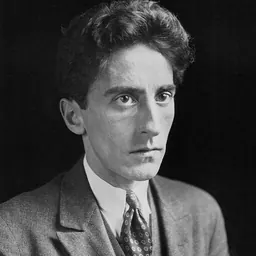
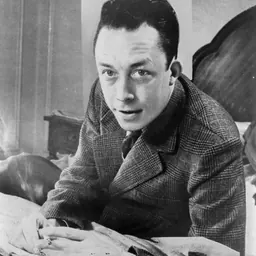
Marianne Oswald (January 9, 1901 – February 25, 1985) was the stage name of Sarah Alice Bloch, a French singer and actress born in Sarreguemines in Alsace-Lorraine. She took this stage name from a character she much admired, the unhappy Oswald in the Ibsen play Ghosts. She was noted for her hoarse voice, heavy half-Lorraine, half-German accent, and for singing about unrequited love, despair, sadness, and death. She sang the songs of Kurt Weill and Bertolt Brecht. She was friends with Jean Cocteau, Jacques Prévert, François Mauriac, and Albert Camus. In fact, the text for one of her album covers was written by Camus. She was an inspiration for the composers Francis Poulenc and Arthur Honegger.
Biography Marianne Oswald's parents were Jewish immigrants, exiles from Poland. Both parents died young and she became an orphan in 1917 at the age of 16. Initially she was sent to a boarding school in Munich, but by 1920 she found her way to Berlin where she began singing in the thriving cabarets of the period. During this time, an operation to remove a goiter—she called it "having my throat cut"—left her with a permanent hoarse voice which would have a major, and not entirely negative, effect on her singing career. Many years later, the French singer Barbara records in her memoirs her amazement when a friend introduced her to this artist "fierce, modern, desperate, staggering".
In June 1932 she made her first two recordings—with the recording company Salabert: En m'en foutant (In did not care) and Pour m'avoir dit je t'aime (I love you for telling me). She attracted the attention of Jean Bérard, president of Columbia Records France, and this led to her recording two songs written by , La Complainte de Kesoubah and Le Grand Étang. (Tranchant would later write the songs Appel and Sans repentir especially for her.) Then, in 1934, Jean Cocteau wrote for her Anna la bonne, a spoken song inspired by the sensational news story of the Papin sisters, two servants, who in 1933 senselessly massacred their employers, mother and daughter. Anna la bonne would later be the basis for a 1959 short film of the same name starring Oswald and directed by Claude Jutra. In March 1934 she recorded Le Jeu de massacre, with lyrics by Henri-Georges Clouzot and music by Maurice Yvain.
In 1934, when Oswald sang Jean Tranchant's composition appel (the summons), with its pacifist theme, she was booed off the stage by anti-semites in the audience. The poet and screenwriter Jacques Prévert immediately came to her defense, and this encounter was the beginning of a long and fertile collaboration between the poet and the singer. Prévert responded by writing a poem, La chasse à l'enfant (The hunt for the child), which was set to music by Joseph Kosma, and recorded by Marianne Oswald in October 1936. Prévert also intended to make the story into a movie, but this never came to pass.
In 1935 Oswald married a Monsieur Colin, a Catholic-born Frenchman. But their union did not survive the war and the racist laws characteristic of the period. Critics praised her performance as "intriguing and nuanced". While in the United States, she published a memoir in English, One small voice, in 1945. All together, she remained in America for almost seven years.
In 1946 she returned to France. During her six years of exile in America, the taste of the Parisian audience had changed. Marianne Oswald's outré style was no longer welcome in the cabarets. She turned to radio and was the subject of a series of programs presented by Cocteau, Camus, Seghers, Ribemont-Dessaignes, Gaston Bonheur, and television producer/director Jean Nohain. Working with Remo Forlani, she also produced television programs for children, in particular, Terre des Enfants (Children of Earth). A plaque with her name was affixed to the corner of Church Street and Rue de Verdun, at the very spot occupied by the building in which she had been born, and which had been destroyed during the war.
Discography L’Art de Marianne Oswald [1932-1937], EPM 982272 (1991).
Don’t just read it —
keep it.
Full-length biographies made to live with: read them, listen on the way to work, watch them tonight.
- E-book
- Audio
- Video
Instant download · yours to keep · every purchase keeps this site free
Important facts
People in Marianne Oswald's life
Named in this biography and alive at the same time




Related people
Same field, nearest in time

Contemporaries
People whose lives overlapped Marianne Oswald's


Frequently asked questions
Who was Marianne Oswald?
French singer actress (1901–1985)
When was Marianne Oswald born?
Marianne Oswald was born on 9 January 1901 in Sarreguemines.
When did Marianne Oswald die?
Marianne Oswald died on 25 February 1985 in Villecresnes, Limeil-Brévannes.
What was Marianne Oswald's occupation?
Marianne Oswald was an actor, singer, film actor, screenwriter, film director and manufacturer.
What nationality was Marianne Oswald?
Marianne Oswald was French.
Sources & further reading
Cite this page
APA: Biography.guide. (2026). Marianne Oswald. https://biography.guide/marianne-oswald/
MLA: "Marianne Oswald." Biography.guide, https://biography.guide/marianne-oswald/.
Chicago: "Marianne Oswald." Biography.guide. https://biography.guide/marianne-oswald/.
Data last updated: 2026-09-25 · Spot an error? Report a correction.
Page generated 2026-09-27 05:12 UTC